
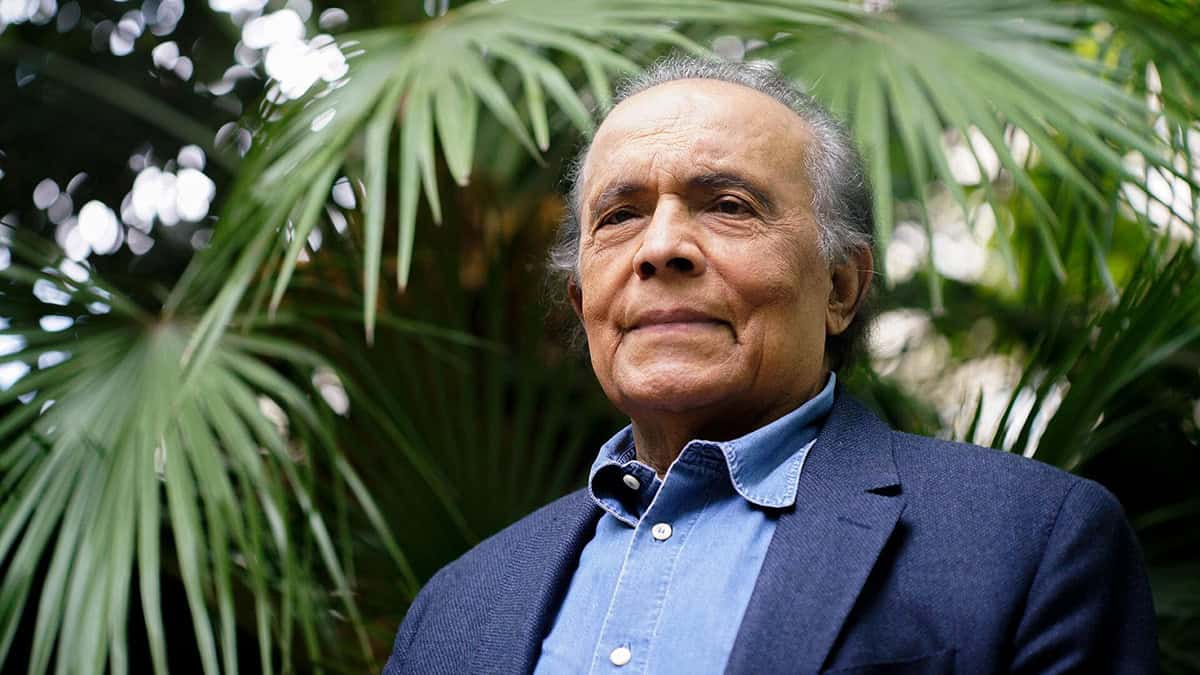
Lakis Halkias, the singer and multi-instrumentalist whose career stretched from Epirote folk music and rebetiko to laiko and major works of Greek art song, died on Sunday, August 2, at age 82. His family announced his death but did not disclose a cause.
His funeral will be held at noon on Thursday, August 6, at the Church of Agioi Theodoroi in the First Cemetery of Athens. The public may pay respects in the cemetery hall beginning at 10 a.m., and the funeral will be conducted at public expense.
The family asked that donations be made to ELEPAP, a Greek nonprofit providing rehabilitation and support to people with disabilities, instead of sending wreaths.
Born Michail “Lakis” Halkias in Ioannina in 1943, he was the son of clarinetist Tasos Halkias and a fourth-generation member of the Halkias musical family. He began singing at age seven, became a professional performer at 16, and made his first recordings at 18, singing compositions by Theodoros Dervenotis with lyrics by Kostas Virvos.
Halkias also played guitar, bouzouki, lute, tzouras and oud. During the 1960s, he appeared with Sotiria Bellou, Stelios Kazantzidis, Grigoris Bithikotsis and Giorgos Zambetas. He also worked with rebetiko musicians Markos Vamvakaris, Giannis Papaioannou and Vasilis Tsitsanis.
During the summers, he continued performing with the Halkias family ensemble at village festivals, weddings and other community gatherings, maintaining his connection to the music of Epirus as his professional career expanded.
Halkias left Greece for the United States and Canada in 1967 and remained in North America until 1971. According to his official biography, he worked with Anthony Quinn on a Sacramento television presentation of Zorba, connected to the work of composer Mikis Theodorakis and writer Nikos Kazantzakis.
Those four years gave Halkias’ career a direct connection to North America and the Greek Diaspora. He later performed abroad in Australia, Switzerland, Egypt and other countries. His official biography records that he returned to Australia in 2004 at the invitation of Melbourne’s Greek community and the Antipodes Festival, while also appearing at festivals in Sydney and Adelaide.
After returning to Greece in 1971, Halkias began a long association with composer Giannis Markopoulos. He sang in works including Stratis Thalassinos, based on poetry by George Seferis, as well as Thiteia, Metanastes and Thessalikos Kyklos.
Halkias also appeared with Nikos Xylouris and Irene Papas in Markopoulos’ recording of Dionysios Solomos’ The Free Besieged, released in 1977.
His work drew on both traditional music and major works of Greek poetry and literature. That range was central to his most ambitious personal undertaking, 2,500 Years of Greek Music: From Homer to the Present.
Halkias spent about eight years researching and developing the project, which traced Greek music from Homer to the present. The complete work was presented at the Athens Concert Hall on April 11, 1995, where it was recorded live. Later productions were presented at the Odeon of Herodes Atticus and abroad.
In a statement following his death, Greek Culture Minister Lina Mendoni described Halkias as a link between tradition and renewal. She cited both his performances of traditional folk material and his interpretations of Greek poetry set to music, identifying 2,500 Years of Greek Music as the culmination of his personal work.
From village festivals and family ensembles to recording studios and major concert halls, Halkias maintained a career rooted in the music of Epirus while working across several forms of Greek song. His years in North America and later performances abroad carried that work to listeners beyond Greece.