
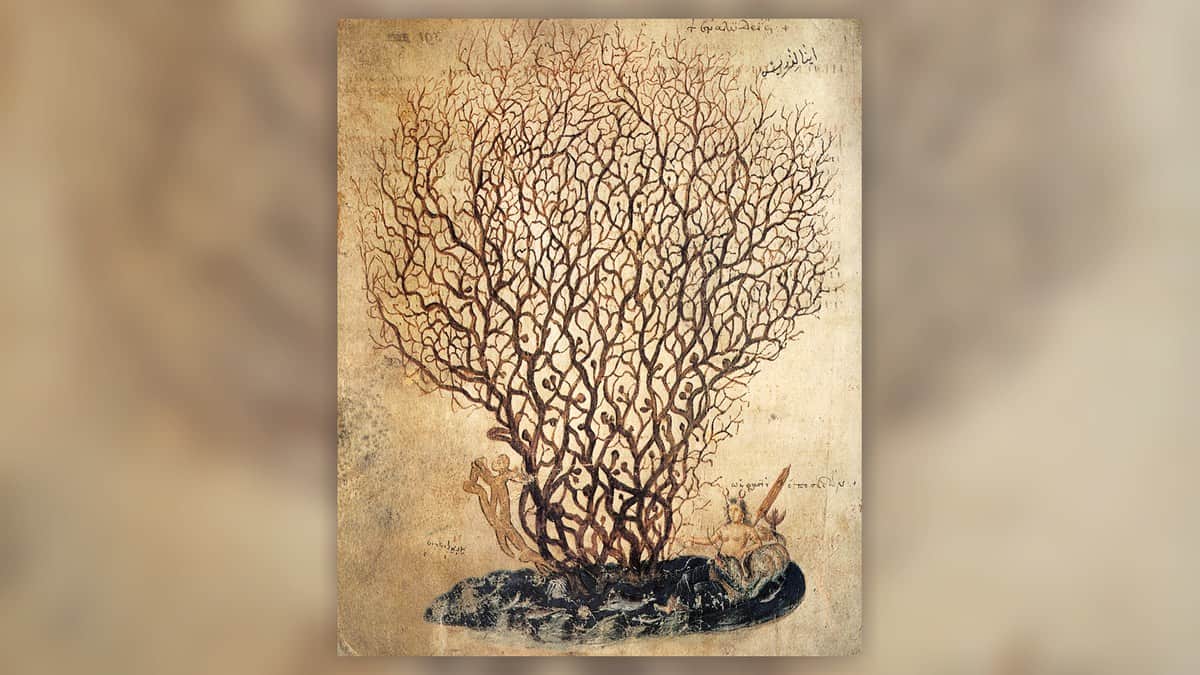
Before a treatment reached a patient in medieval Cyprus, it might have gone through fire.
A new study of John the Physician’s Therapeutics, a late 13th-century Cypriot medical handbook, looks at the materials behind that process: plants, minerals, shells, animal matter, and substances burned or charred before they were used. The researchers did more than read the recipes. They tested how some materials changed when heated, crushed, or mixed, asking what those changes might have meant for medicine in its own time.
The study was published in Proceedings of the Geologists’ Association, which may seem like a surprising home for a medieval medical text. But many of the questions are material ones: which minerals appear in the handbook, which could have come from Cyprus, and what happened when shells, bones, stones, plants, and sponges were processed for medical use.
The experiments bring the text close to the hand. Cuttlefish bone was charred at different temperatures and examined under a microscope. Mussel shells were burned and still showed parts of their fibrous structure. Sponges kept string-like structures after charring at lower heat, then changed into a more melted, hole-filled structure at higher heat. Date and olive stones became more porous after charring. Cypress leaves and ivy roots left ash, charcoal, and mineral traces.
A shell was not simply placed in a remedy as a shell. It was changed first. A plant was not only gathered. It had to be identified through inherited medical tradition, prepared, and fitted into a recipe. The work of medicine included reading, but also burning, grinding, soaking, mixing, and applying.
The authors stop short of claiming that medieval medicine was modern medicine in disguise. Some historical ingredients are now known to be harmful. Their more careful conclusion is that at least some recipes in the handbook had “potential practical medicinal value,” especially when studied through chemistry, geology, botany, and the history of pharmacy.
Between lost wisdom and superstition, John’s handbook offers something more human. It shows people working with the knowledge they inherited and the materials they had.
The text is valuable because it preserves practice, not only theory. Barbara Zipser’s edition, John the Physician’s Therapeutics: A Medical Handbook in Vernacular Greek, describes it as a 13th-century medical handbook holding important evidence on “medicine as craft.” Its vernacular version includes commentary, cases, and procedures often missing from more formal medical writing.
Language is part of the evidence. Because the text survives in vernacular Greek, it preserves medical words closer to everyday use. It tells scholars not only what medicines were made from, but how medical knowledge could be explained outside the most polished literary register. For the Greek-speaking world, it is both a medical source and a linguistic record.
The 2026 paper grew out of a wider Wellcome-funded project on plants and minerals in Byzantine popular pharmacy. The project brought together fields that rarely meet inside one recipe: philology, botany, geology, ethnopharmacology, medical history, and natural product chemistry.
One problem runs through all of this work. Medieval medical texts often name plants and minerals in ways that do not match modern categories cleanly. A related 2024 study on John the Physician’s Therapeutics developed a six-stage method for identifying plants in historical sources, comparing John’s names with Dioscorides and other evidence. Before researchers can judge a remedy, they have to know what the remedy actually was.
Cyprus gives the handbook its local force. The island was not just a backdrop. Its minerals, plants, coastal materials, wine, vinegar, and household substances helped shape the recipes. The text belongs to the wider world of Byzantine medicine, but it also points to a practical medical culture rooted in place.
Seven centuries later, John the Physician’s Therapeutics still speaks because it records a kind of knowledge that rarely survives so plainly: the knowledge of making.