
Christopher Nolan has returned Homer’s epic to movie screens. A rediscovered painting in Philadelphia and the artist’s Chadds Ford studio reveal an earlier local chapter.
Christopher Nolan’s The Odyssey opened in U.S. theaters July 17, returning Homer’s epic to movie screens on a scale few adaptations have attempted. It is the first feature filmed entirely with IMAX film cameras and stars Matt Damon as Odysseus, Tom Holland as Telemachus and Anne Hathaway as Penelope.
The production has also renewed debate among Greek commentators and audiences over the absence of Greek performers from its principal roles.
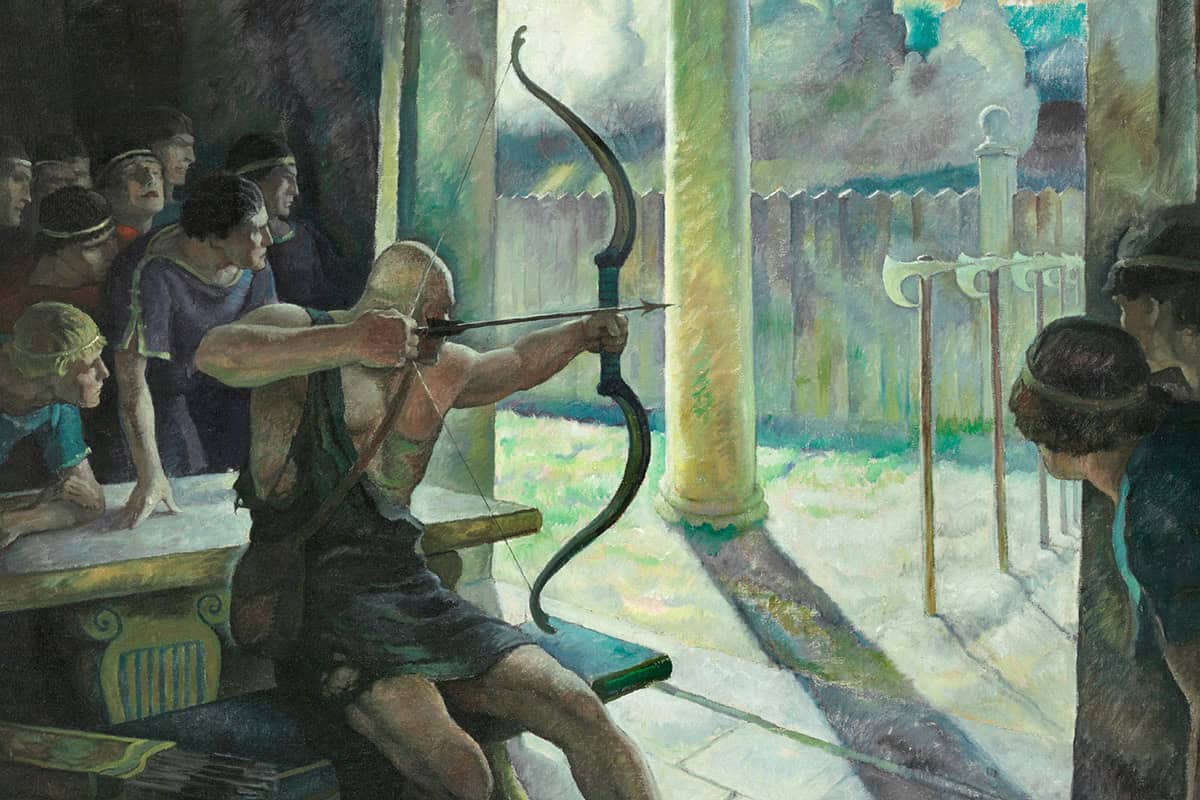
In the Philadelphia region, the film also points back to an earlier American interpretation of Homer in images. Nearly a century before Odysseus reached the IMAX screen, N.C. Wyeth painted him at the moment he reclaims his home.
That canvas, The Trial of the Bow, now belongs to the Philadelphia Museum of Art, although it is not currently listed as on view. The house and studio where Wyeth worked remain nearby in Chadds Ford, while the Brandywine Museum of Art preserves drawings and archival material documenting his work on Homer.
Odysseus Takes Up the Bow
Wyeth’s The Trial of the Bow depicts one of the decisive moments near the end of the poem.
Odysseus has returned to Ithaca after 20 years away, entering his own house disguised as a beggar. Penelope’s suitors have occupied the home and pressured her to choose a new husband. She declares that she will marry the man who can string Odysseus’ bow and shoot an arrow through a row of axe heads.
The suitors fail. Odysseus strings the bow and sends the arrow through the axe heads, signaling that the king of Ithaca has returned.
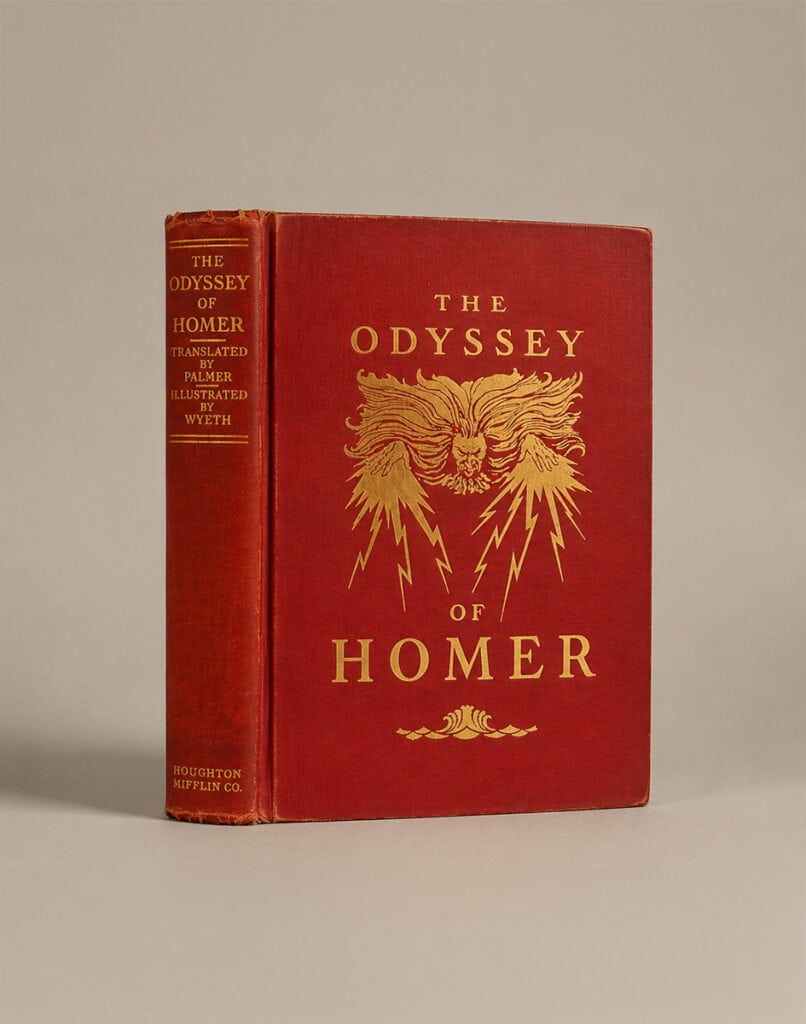
Wyeth painted the scene in 1929 for an illustrated edition of The Odyssey of Homer, translated by Harvard philosopher George Herbert Palmer and published by Houghton Mifflin. It was one of 16 oil compositions created for the volume.
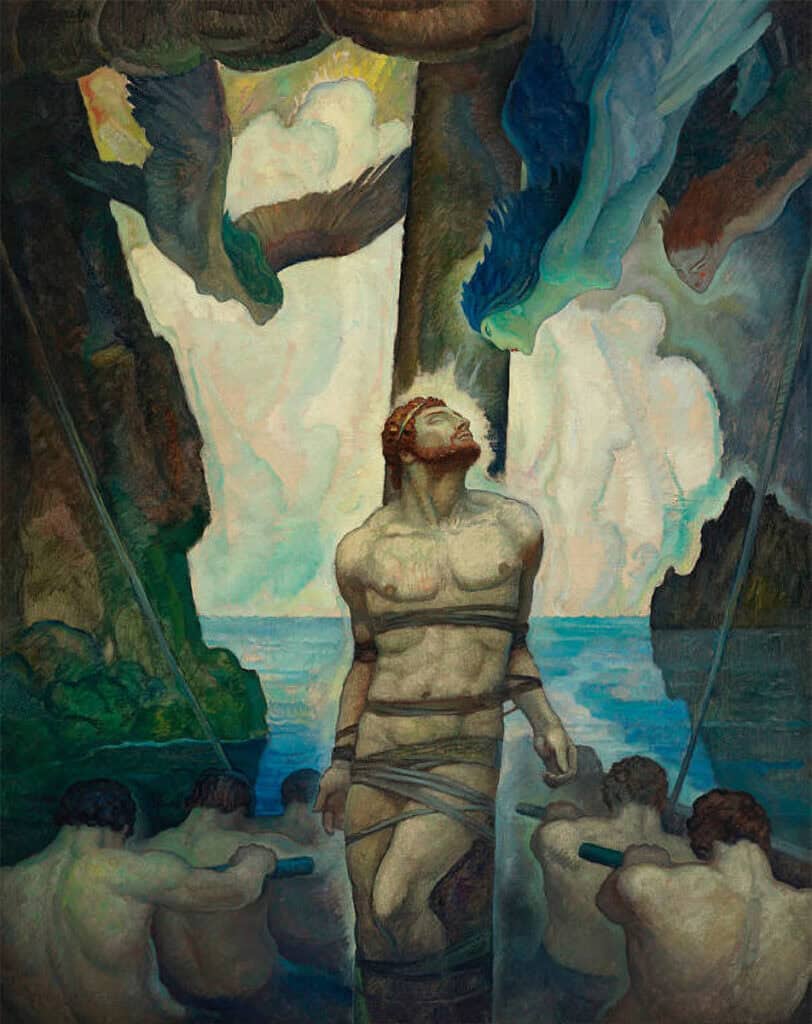
Across the series, Wyeth also depicted Polyphemus, Circe, Calypso, the Sirens and Odysseus’ descent to the land of the dead, moving between physical danger, enchantment and shadow.
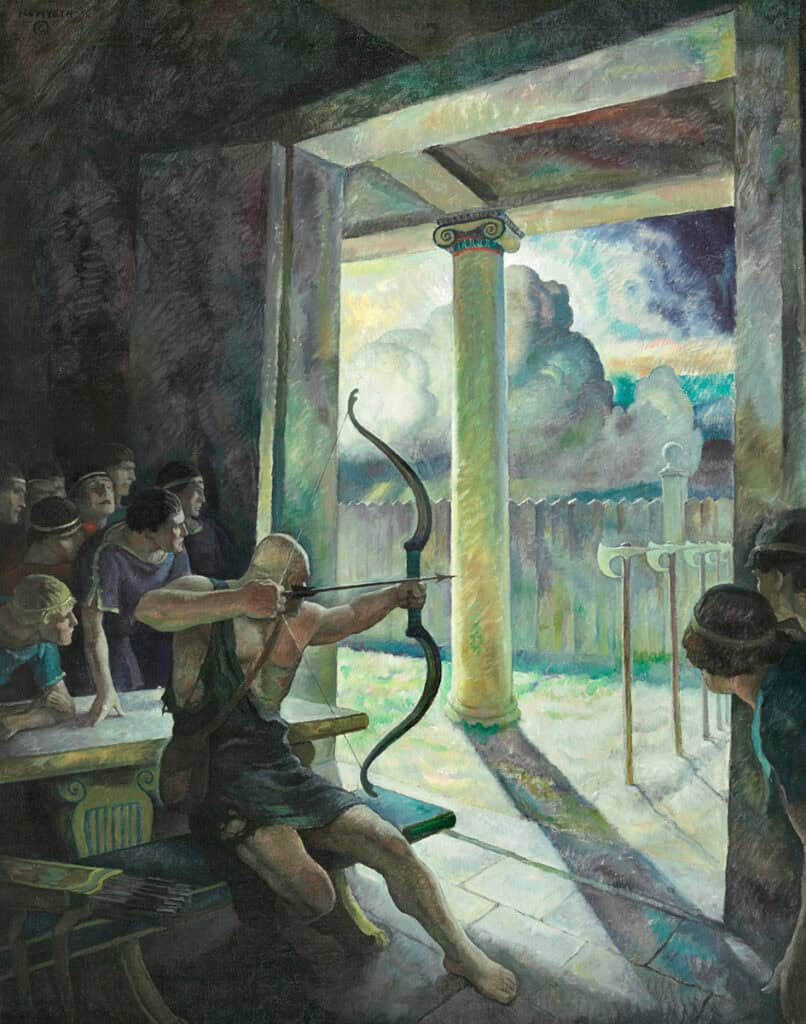
Rather than show the violence that follows, Wyeth stops at the instant of recognition. Odysseus remains seated with the bow in his hands as the men around him begin to understand who is before them.
The arrow has found its mark, but the room has not yet erupted.
Lost in a Corporate Hallway
The Trial of the Bow followed an unlikely route to the Philadelphia Museum of Art.
Wyeth sold the complete group of Odyssey paintings to a private collector in New York in 1930. The series was later dispersed, and the locations of many of the original canvases became uncertain, according to the N.C. Wyeth catalogue raisonné.
A 2013 account by Anna Vallye, then a postdoctoral curatorial fellow at the Philadelphia Museum of Art, says inscriptions left by previous owners on the back of The Trial of the Bow show that it had changed hands at least twice by 1948 and, at one point, was sold at a garage sale for $35.
By the late 1980s, the painting was hanging in a hallway outside an executive office at the Philadelphia headquarters of GlaxoSmithKline. Employees knew it was a Wyeth, but its place within the dispersed Odyssey series was not widely understood.
The painting’s significance became clear when the company reviewed its art collection while preparing to move to new offices at the Philadelphia Navy Yard. Philadelphia Museum of Art curator Kathleen Foster identified it as one of the missing Odyssey canvases.
Rather than move or sell the painting, GSK gave it to the museum in 2012. The museum installed and publicly announced it the following March as the first N.C. Wyeth painting to enter its collection.
A painting created in Chadds Ford had passed through a garage sale and several owners, then spent more than two decades in a corporate hallway before reaching a public collection in Philadelphia.
Homer in Chadds Ford
Wyeth’s path to Homer ran through the Brandywine Valley.
Born in Massachusetts in 1882, he came to the Wilmington area to study with Howard Pyle, the influential illustrator and teacher. Pyle taught his students to understand a story rather than merely decorate it, an approach Wyeth carried into magazine work and illustrated editions of adventure classics.
His breakthrough book was Robert Louis Stevenson’s Treasure Island. In 1911, using proceeds from those illustrations, Wyeth purchased 18 acres near Chadds Ford and built a family home and hilltop studio overlooking the valley. Both properties are now maintained by the Brandywine Museum of Art.
By the time he turned to The Odyssey, Wyeth was already one of the country’s best-known illustrators. Homer presented a different challenge. The poem moves from domestic interiors and open seas to enchanted islands, giants and the underworld, while remaining centered on one man’s determination to return home.
Wyeth prepared through close reading and preliminary work. The Wyeth Family Archives preserve his annotated copy of Palmer’s translation, notes about the commission, correspondence with the publisher, and material prepared for his illustrator’s preface. Those records are described in the Brandywine catalog entry for the original endpaper illustration.
The finished images retain the physical force of his adventure illustrations while showing the modernist direction his work had taken by the late 1920s. In The Sirens, compressed forms and a tightly organized composition create drama without attempting a literal reconstruction of the ancient Mediterranean.
Nolan built Homer’s world for the screen. Wyeth worked with oil, color, and composition in a studio above the Brandywine, thinking in pages rather than frames.
What the Brandywine Preserves
The Philadelphia Museum of Art owns The Trial of the Bow, while the Brandywine Museum of Art maintains the N.C. Wyeth catalogue raisonné and archival material connected to the project.
The catalog documents 19 works associated with the 1929 edition: 16 oil paintings and three works on paper. The museum’s own fine-art collection includes two of them, The Sirens and the original endpaper illustration. The remaining records document works held elsewhere, in private collections or known through reproductions.
The works on paper include two graphite cover designs from the Andrew and Betsy Wyeth Collection. Together with Wyeth’s marked copy of the poem and his correspondence, the surviving material shows how he selected episodes and developed the book’s visual sequence.
A short distance from the museum, the N.C. Wyeth House and Studio retain much of their original character. Guided tours allow visitors to see the hilltop studio where Wyeth worked during the period of the Odyssey commission, surrounded by the fields, trees and waterways of the Brandywine.
The museum, archives and studio preserve the record of his work on the 1929 edition.
Two Visions of Homer
Nolan and Wyeth worked in different media and for different audiences, but each had to decide which parts of Homer’s world to show and what kind of Odysseus viewers would encounter.
For Greek Americans in the Philadelphia region, the film offers a timely reason to revisit a work central to Greek literary and cultural history. Wyeth provides a local connection: an important American illustrated interpretation of The Odyssey was created in the Brandywine Valley and later found a home in a Philadelphia collection.
One interpretation was made for the printed page, the other for the largest movie screens. Together, they show how each era remakes Homer—and how one of those interpretations became part of Philadelphia’s own cultural history.
Plan Your Visit
Philadelphia Museum of Art
The museum owns The Trial of the Bow, but as of publication, its online record does not list a gallery location, and the Brandywine catalog identifies the work as not on view. Visitors should check with the Philadelphia Museum of Art before making a trip specifically to see the painting.
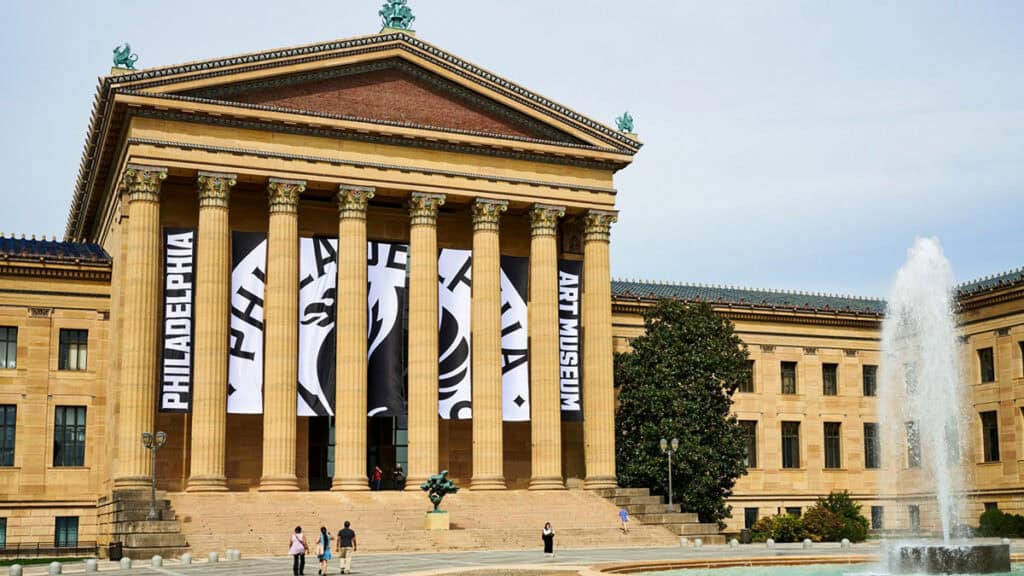
The museum is located at 2600 Benjamin Franklin Parkway. As of July 2026, it is open Monday, Thursday, Saturday and Sunday from 10 a.m. to 5 p.m. and Friday from 10 a.m. to 8:45 p.m. It is closed Tuesday and Wednesday. Current details are available on the museum’s visit page.
Brandywine Museum of Art and N.C. Wyeth House and Studio
The Brandywine Museum of Art is located at 1 Hoffman’s Mill Road in Chadds Ford. It is open Wednesday through Monday from 9:30 a.m. to 4:30 p.m. and closed Tuesday. Visitors should confirm current information on the museum’s hours and admission page.
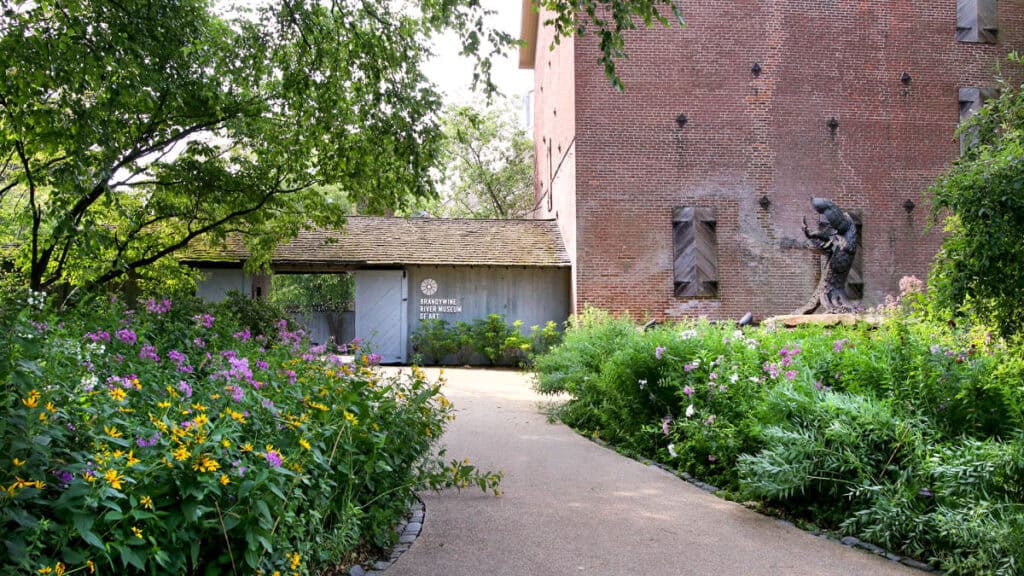
Guided tours of the N.C. Wyeth House and Studio are offered Wednesday through Sunday on selected dates through November 22, 2026. Tour packages include museum admission and shuttle transportation to the property. Advance reservations are strongly recommended.
The Brandywine currently lists both The Sirens and the original endpaper illustration as not on view. Visitors interested specifically in the Odyssey material should check for future rotations or exhibitions.