
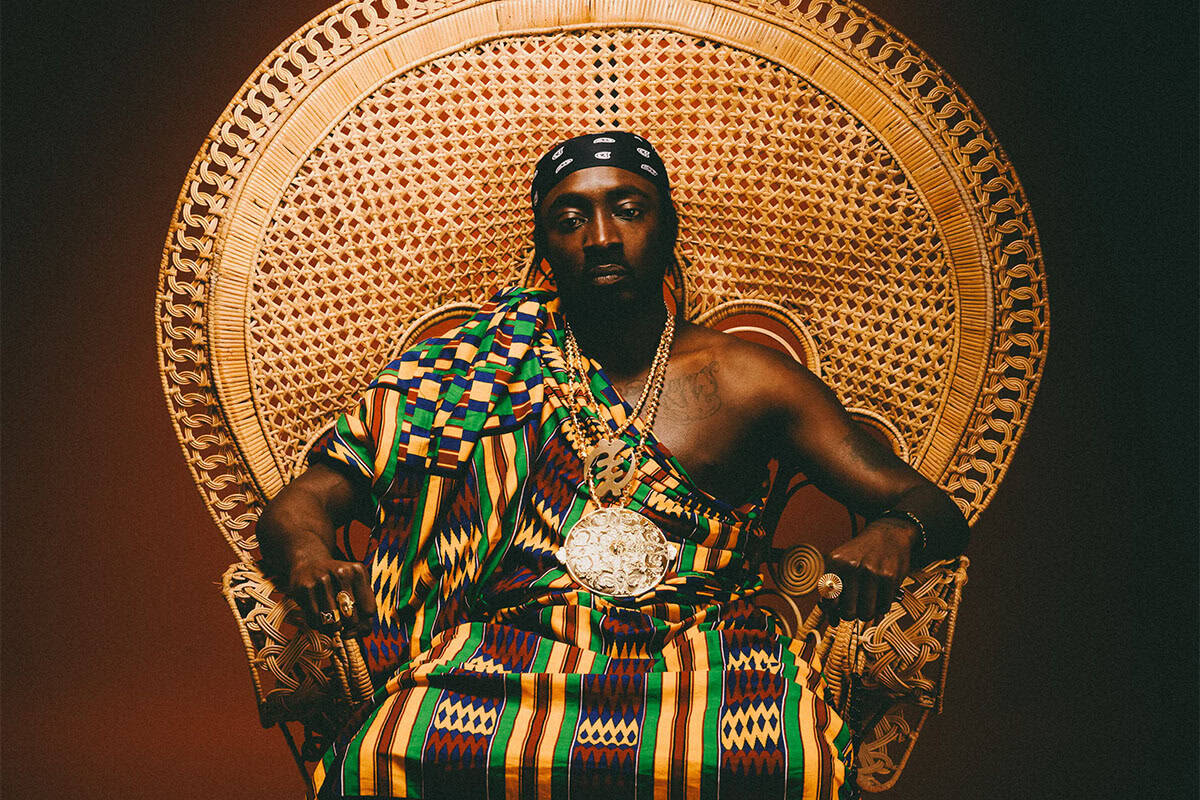
A Greek-language rap album rooted in Athens places near the top of an international list usually dominated by English-language releases.
Greek-language rap rarely sits near the top of international year-end lists. In 2025, one album did more than register. Mavri Ellada (“Black Greece”) by Negros Tou Moria ranked No. 2 on The Guardian’s list of the best global albums of the year, placing a distinctly Athens-rooted record into a conversation usually dominated by English-language releases.
The list, published in December, reflects the views of dozens of critics surveying music from across continents and genres. In that context, Mavri Ellada stood out not as a crossover experiment, but as a record that remained firmly local in language and perspective while still resonating internationally.
A Voice Shaped by Athens
Negros Tou Moria, born Kofi Ansong in 1991, is a Ghanaian-Greek artist raised in central Athens, closely associated with neighborhoods such as Kypseli. He has appeared under variant names in earlier appearances, a reflection of the uneven documentation that has often accompanied second-generation artists in Greece. His work grows directly out of that environment: dense streets shaped by migration, constant visibility, and the unresolved question of who is fully recognized as belonging.
He is part of the 307 Squad, a multicultural collective that reflects the Athens many people actually live in. Across his career, his lyrics have returned consistently to themes of racism, policing, and everyday exclusion, not as abstract commentary but as lived reality.
From Trabetiko to Mavri Ellada
Negros Tou Moria first drew wider attention for developing “trabetiko,” a blend of trap with rebetiko, Greece’s urban folk tradition shaped by displacement and marginalization. In earlier work, those folk references often sat prominently alongside modern production.
On Mavri Ellada, the balance shifts. As The Guardian noted in its April 2025 review, the album downplays folk references in favor of a more wide-ranging sound, while still returning to trabetiko at key moments. Negros Tou Moria’s voice has moved from a melodic lilt toward a gravelly baritone, pushing through G-funk, Afrobeats, and dancefloor-leaning synths with notable vocal control.
That contrast is especially clear when the album circles back to its roots. Tracks such as the title song and “Oneiro” pair rebetiko melodies with heavy low-end production, grounding the album’s broader sonic palette in a sound closely tied to Greek working-class history.
How the Album Was Read
In its review, The Guardian described Mavri Ellada as Negros Tou Moria’s most mature and forceful work to date, highlighting his vocal dexterity, bold production choices, and ability to address bleak social realities with sustained energy. The album engages directly with migration, social division, and the experience of being a second-generation Greek born to Ghanaian parents, particularly against the backdrop of rising far-right politics in Greece.
On the Guardian’s year-end list, Mavri Ellada was ranked just below Titanic, the experimental duet placed at No. 1. The framing was telling. Rather than treating the album as a regional outlier, the list positioned it alongside releases from Lebanon, Latin America, and Asia that remain deeply rooted in place while speaking beyond it.
Greek media coverage that followed emphasized the same point. This recognition did not come from translating Greek reality into something more palatable for international audiences. It came from staying specific. Mavri Ellada speaks from Athens, in Greek, about contemporary social conditions, and it was heard without dilution.