
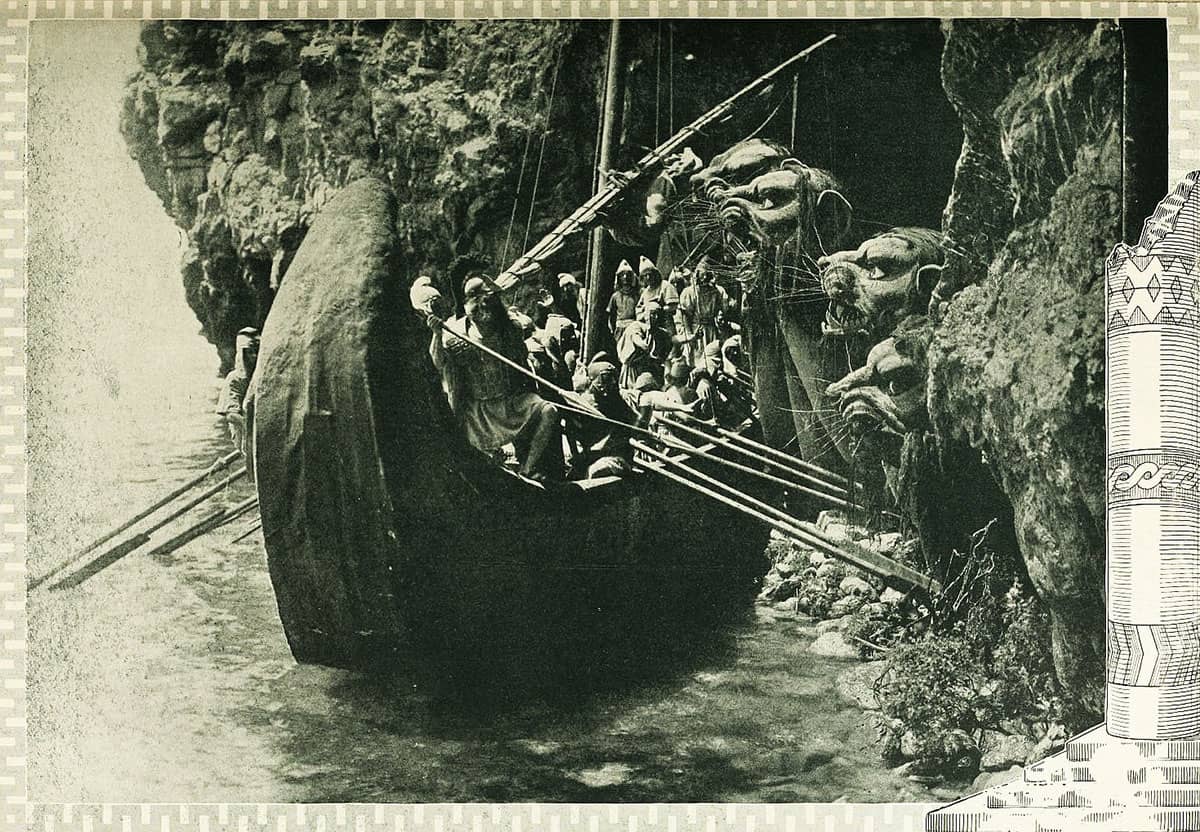
More than a century before streaming and CGI, filmmakers were already grappling with how to bring Homer’s Odyssey to the screen. One of the earliest attempts, the Italian silent film L’Odissea (1911), will be the focus of the National Hellenic Museum’s next Online Film Club discussion on December 30.
Produced in Italy during the silent era, L’Odissea is often cited as the first feature-length cinematic retelling of Homer’s epic. At a time when most films lasted only a few minutes, its roughly 44-minute runtime marked a turning point and helped establish cinema as a medium capable of carrying literature, history, and myth.
The film was created for the 1911 Turin International World’s Fair, held to mark the 50th anniversary of Italian unification. It was part of a broader effort to present cinema as a serious cultural art form. When the film reached American audiences the following year, trade journals described it as evidence that motion pictures could serve an educational role by introducing classical works to the public.
At its center is Odysseus’s long journey home from the Trojan War.
The film depicts key episodes from the epic, including encounters with the Cyclops Polyphemus, the Sirens, Scylla and Charybdis, Calypso, and Nausicaa, before Odysseus’s return to Ithaca and his reunion with Penelope. Surviving prints typically omit the Circe episode, though the overall structure of Homer’s poem remains intact.
The film’s reputation today rests largely on its early special effects. Using forced perspective and matte techniques, the filmmakers created the illusion of towering mythological creatures, most famously in the Cyclops sequence. While these effects appear rudimentary to modern viewers, they were technically ambitious for 1911 and influenced later approaches to myth on screen.
L’Odissea survives thanks to restoration work by the Cineteca di Bologna and is now in the public domain. Modern viewers can find the film online, often accompanied by newly composed musical scores.
The upcoming Online Film Club session will not screen the film but will focus on discussion: how early filmmakers interpreted ancient myth, what they chose to emphasize or omit, and how those choices shaped the visual language of mythology for decades to come. Participants are asked to watch the film in advance. The discussion is intended for adult audiences.
For Greek-American viewers in particular, the event offers a chance to consider how stories central to Greek cultural memory were among the first to be carried into modern visual media, long before Hollywood made mythology its own.
Registration is available via Eventbrite:
https://www.eventbrite.com/e/1963390083593
Please confirm event details with the organizers before attending, as dates, times, locations, and registration information may change.