

A restored stone house in Ossa, northeast of Thessaloniki, now holds the tools, photographs, records, and family histories of a trade that sustained the village for more than a century and sent its craftsmen across Macedonia and beyond.
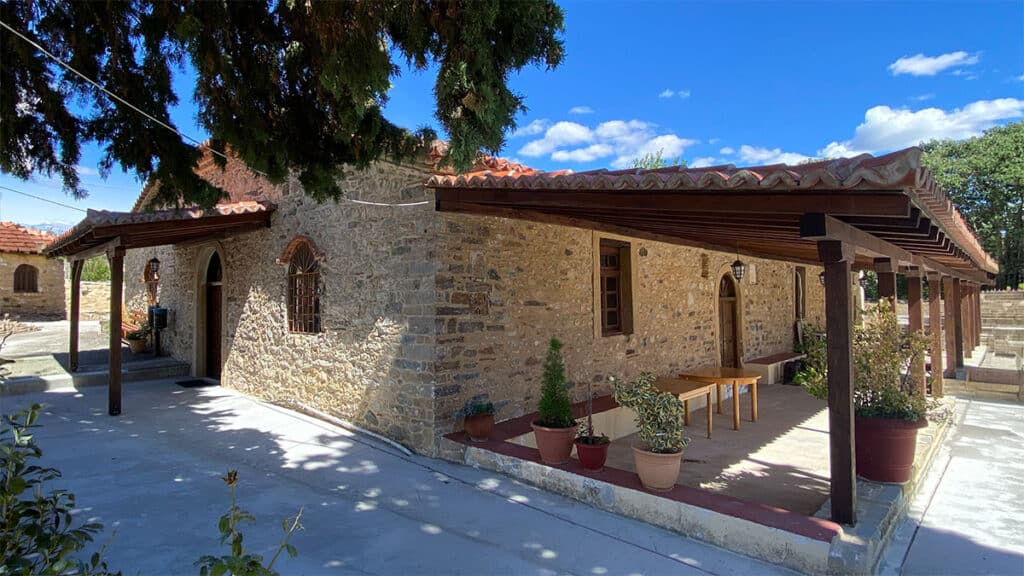
To Konaki tou Papoutsi, or the Shoemaker’s House, opened June 7 in the village, part of the Municipality of Lagadas. Organizers describe it as Greece’s first multimedia exhibition dedicated to the history of shoemaking in Ossa.
The exhibition occupies a traditional two-story building donated to the Ossa Association “I Agia Kyranna” by the family of Paraskevas K. Mitsas. The property was restored and expanded with funding through the European Union’s CLLD/LEADER rural development program.
Across its two floors, the museum traces the craft from the early 19th century through the postwar years, including the transition from guild workshops to industrial footwear production.
A guild documented in 1837
The earliest known record of Ossa’s organized shoemakers dates to 1837. A dedication in a liturgical book honoring Saint Spyridon at the Church of the Taxiarchs names the village’s shoemakers’ guild.
By then, the craftsmen had formed a recognized professional body. Ossa’s shoemakers later participated in professional associations, supported local projects and made donations to the village’s two churches.
Some traveled throughout Macedonia to work and sell their goods. Others settled in Thessaloniki and additional commercial centers. The research behind the exhibition also traces shoemakers from Ossa into Europe and America.
From village workshops to city factories
Several footwear companies grew from families with roots in the village.
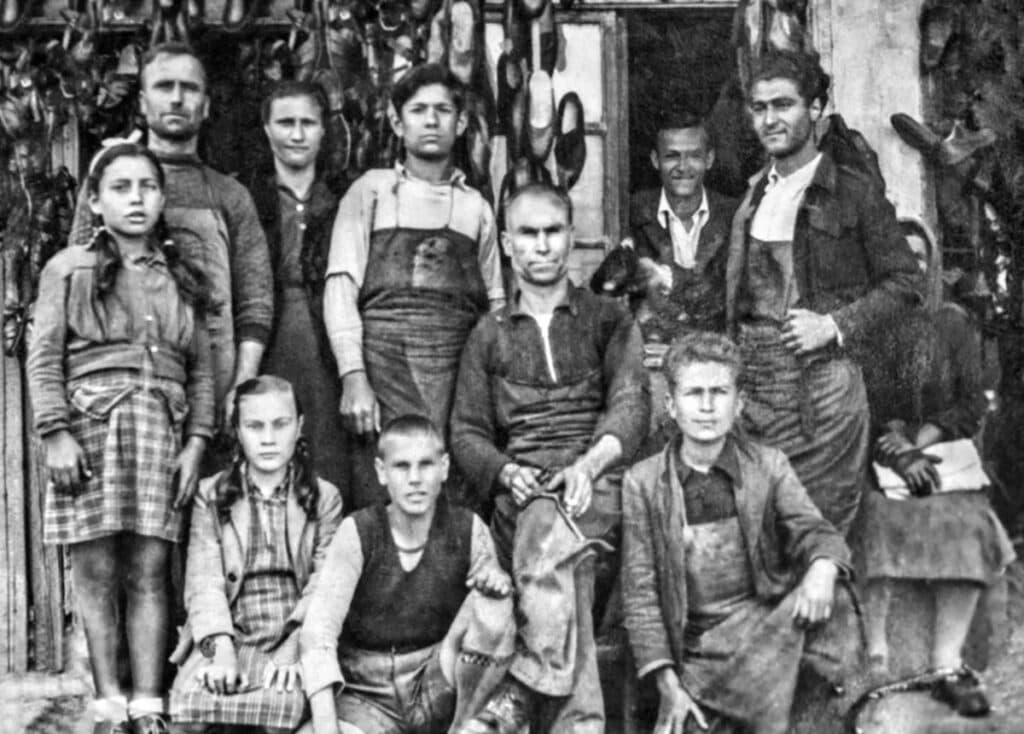
The Danielidis family entered the profession near the end of the 19th century and later founded the Daniel’s footwear business. Shoemaking continued for at least five generations in the family of Christodoulos Mathiou-Matthaiou, whose descendants established Olympic in Thessaloniki.
Thomas Laskos left Ossa for Doxato in the Drama region, where he opened a footwear operation with cousins from the Poptsas family. The business later became known as Cronos and moved to Thessaloniki and Oreokastro.
Other craftsmen from the village established themselves in Nigrita, Kilkis, Lagadas, Drama and Thessaloniki.
The Mittas family’s story reached Argentina. Elias Mittas worked as a tanner, preparing, dyeing and cutting leather for shoemakers. His son Georgios, who also learned leatherworking, emigrated to Buenos Aires in 1915. He remained there for five to seven years before returning to Ossa and entering the shoemaking trade.
Recording the people behind the craft
The Ossa Association “I Agia Kyranna” initiated the museum project. Angelos Mitsas and architect-museologist Anastasia Valavanidou carried out the research and documentation, working with architect Smaro Katsaggelou on the museographic study and its implementation.
Valavanidou and Mitsas also edited the accompanying bilingual volume, The Shoemakers of Ossa: Tradition, Craft and Memory (Οι Παπουτσήδες της Όσσας: Παράδοση, Τέχνη και Μνήμη). The Greek-English publication draws on archival records, photographs, and material collected from local families.
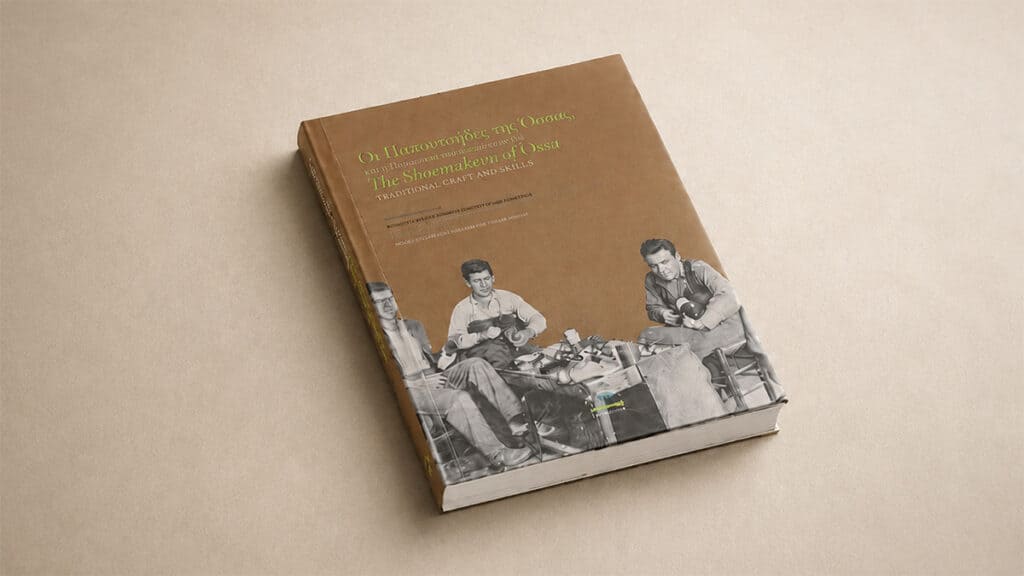
The book and exhibition cover the guild era, the rise of professional associations, industrial production and the later contraction of Greece’s footwear sector.
Published visiting hours are Saturday from 7 to 9 p.m. and Sunday from 11:30 a.m. to 1 p.m. Visitors should confirm the schedule with the Ossa Association before traveling.