
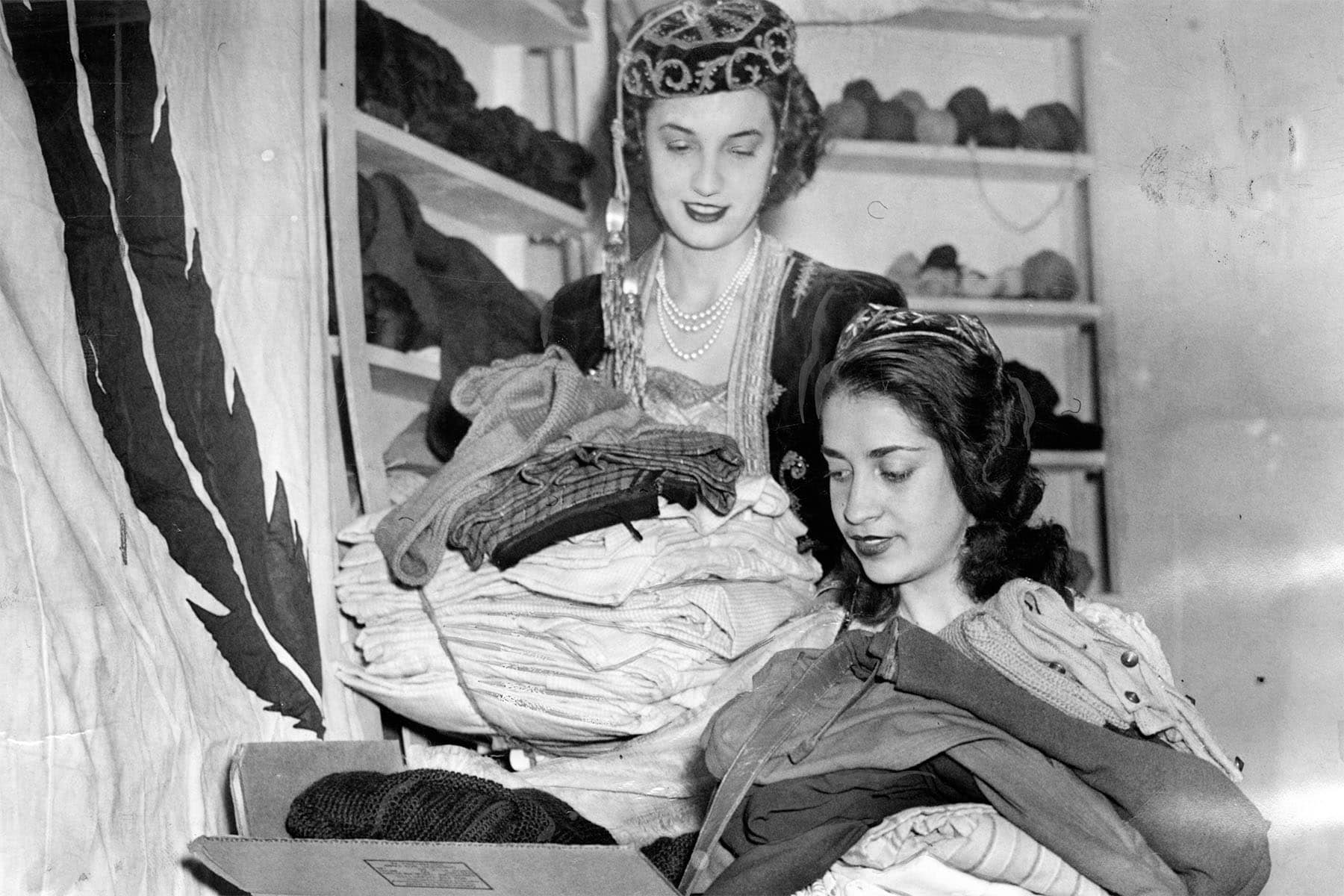
Boxes and stacks of donated clothing filled an office at 200-A South 17th Street in Philadelphia in October 1943. Christine Halkies and Niobe Stephano worked among them, packing garments for civilians in occupied Greece.
Stephano was a Temple University student who had spent much of her childhood in Greece. Her work at the clothing headquarters was part of a relief effort that had grown across Philadelphia since Italy invaded Greece on October 28, 1940.
Greek Americans, civic organizations, religious institutions, and other Philadelphians raised money, organized radio appeals, made garments, and established collection points. The need grew more urgent after Germany occupied Greece in April 1941. Shortages spread, and the famine of 1941–42 killed tens of thousands of civilians.
Philadelphia Responds to the Invasion
The Greek War Relief Association was established in New York in November 1940, part of a wider North American effort to help Greece. Archbishop Athenagoras and Greek-American businessmen helped organize committees across the United States to raise funds and arrange assistance.
On February 22, 1941, Greek Americans gathered at Washington Memorial Chapel in Valley Forge for a service sponsored by Greek War Relief. The crowd overflowed the chapel into its library and adjoining rooms.
Archbishop Athenagoras presided over the Orthodox ceremony, accompanied by a choir selected from Greek churches in New York. Greece’s consul general in New York, Nicholas G. Lely, presented a Greek flag to the chapel. Philadelphia businessman Stephan Stephano chaired the organizing committee.
The chapel’s rector, the Rev. Dr. John Robbins Hart, connected Greece’s resistance to invasion with America’s struggle for independence. Speaking on George Washington’s birthday, he also appealed for financial support.
“Let us give generously of our money to the Greek cause,” he urged, according to a 1944 history of Valley Forge.
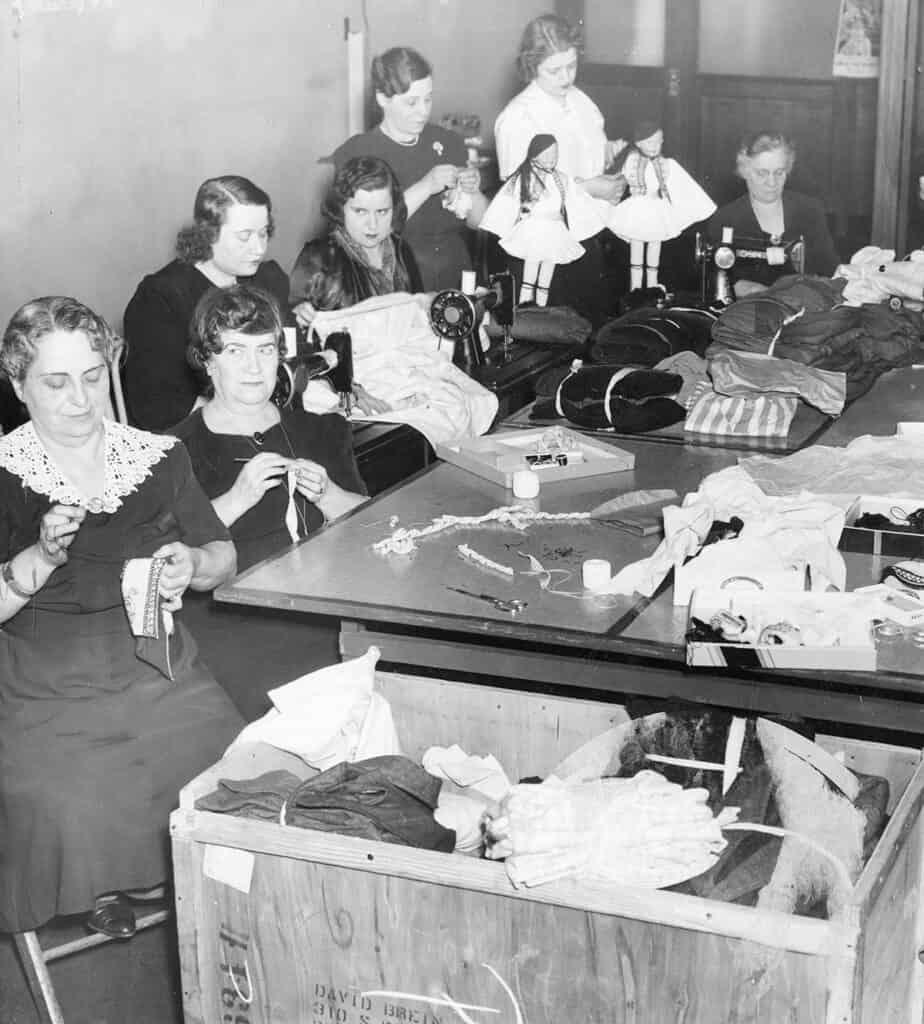
Philadelphia women were also sewing and knitting garments for Greek War Relief during the opening months of 1941.
Across the Delaware River, Camden radio station WCAM began a series of four Friday evening broadcasts to raise money for Greece.
The broadcasts, which began March 21, 1941, were arranged by Christopher Stephano, a Philadelphia manufacturer of Marvel Cigarettes and a director of the city’s Greek War Relief Committee.
Professional performers from the region volunteered their services. Mort Lawrence, who directed WIP Philadelphia’s overnight Dawn Patrol radio program, handled the first two broadcasts, according to the March 24 issue of Broadcasting magazine.
Saraz Sapounakis, a Philadelphia resident originally from Rhodes, also devoted broadcasting time and personal efforts to Greek War Relief activities in Pennsylvania, New Jersey, and Delaware, according to a 1941 account in The Ahepan, AHEPA’s magazine.
Fundraising Across Philadelphia
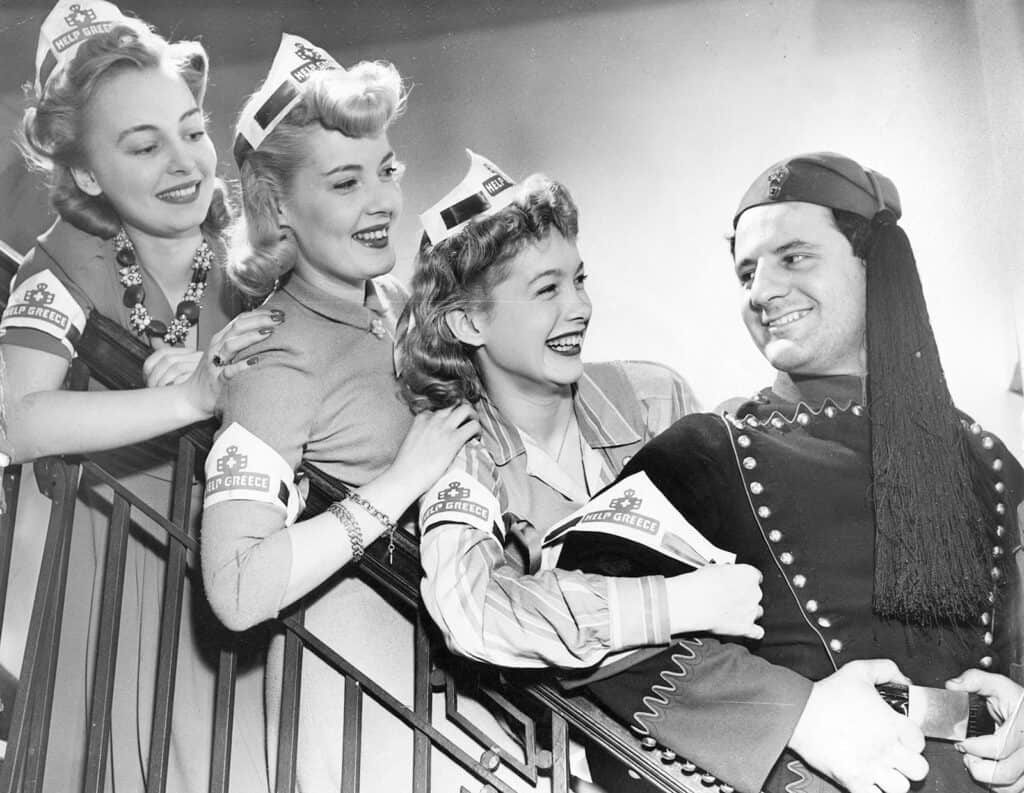
Support for Greece extended beyond the city’s Greek-American organizations.
Variety Clubs International’s Philadelphia chapter, Tent 13, raised $24,372 through a Greek War Relief campaign, according to the organization’s 1941 conference journal. That figure covered one fundraising campaign, not Philadelphia’s total wartime contribution.
The Hellenic University Club of Philadelphia donated profits from its third and fourth annual dinner dances to Greek War Relief. During the war, women members sustained the club’s activities and devoted much of their work to its Emergency Aid Bazaar and assistance for Greece.
In June 1942, Greece’s exiled King George II and Prime Minister Emmanouil Tsouderos visited Philadelphia for the Greek Orthodox Archdiocese’s Clergy-Laity Congress at St. George Cathedral. The king addressed delegates on June 22, while Greece remained under Axis occupation.
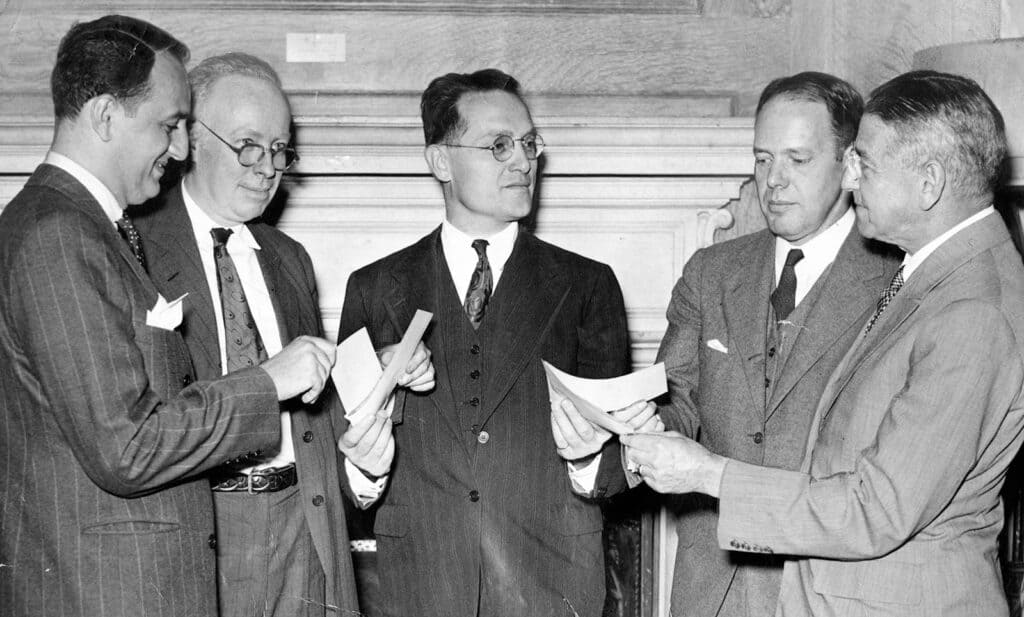
That same month, Har Zion Temple presented checks totaling $1,800 to representatives of Greek, British, Chinese, and Russian relief organizations at the Philadelphia Art Alliance.
Getting Supplies into Occupied Greece
Raising money was only one part of helping Greece. Getting food, medicine, and other supplies into the occupied country presented another challenge.
The British naval blockade restricted shipping, while humanitarian deliveries required negotiations involving Allied governments, neutral countries, and the occupying powers.
By 1942, Swedish Red Cross vessels were transporting Canadian wheat and other supplies to Greece under negotiated arrangements.
The Greek War Relief Association agreed to contribute toward shipping costs as its funds permitted, according to a September 1942 U.S. State Department memorandum.
These arrangements allowed humanitarian supplies to reach Greece despite wartime restrictions. The available Philadelphia records, however, do not establish which overseas shipments carried donations from the city’s local campaigns.
Niobe Stephano and the Clothing Collections
By January 1943, Greek War Relief was participating in Philadelphia’s United War Chest activities alongside organizations assisting other countries affected by the war.
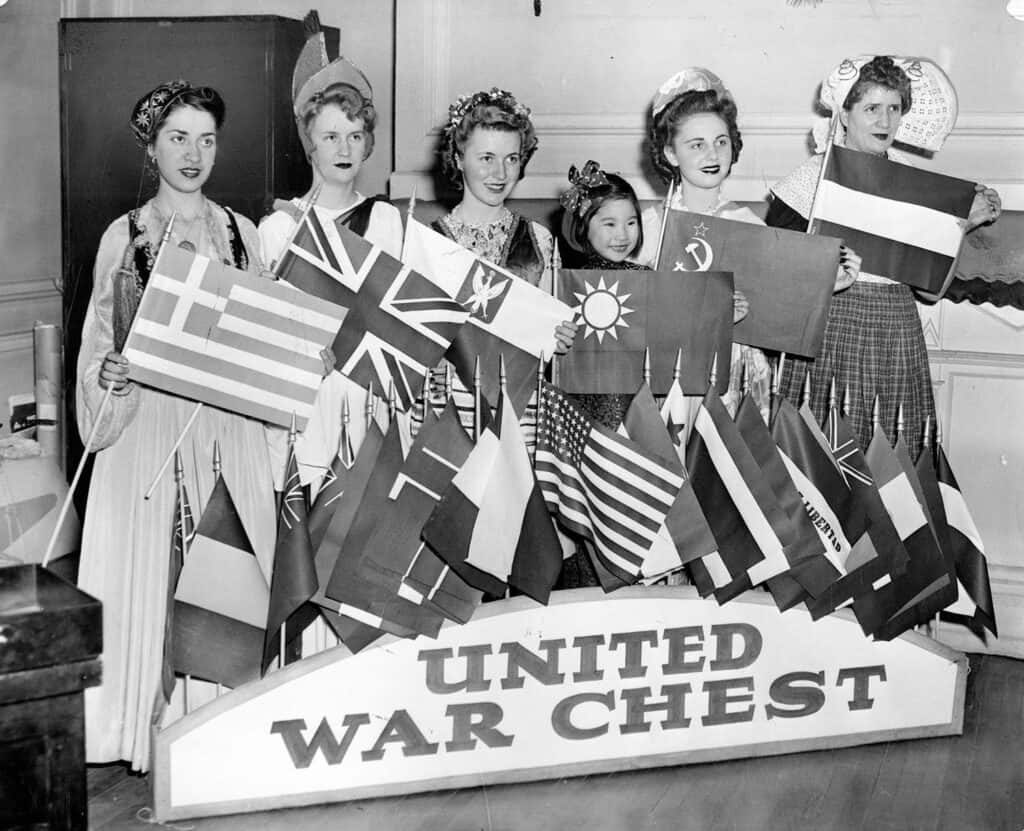
That fall, Niobe Stephano was helping publicize a clothing campaign for Greece.
Born in Philadelphia, Stephano had been taken to Greece as an infant and received much of her schooling there. After returning to the United States in 1938, she entered the eleventh grade at Cheltenham High School.
Her first year back was difficult as she adjusted to studying in English. By 1943, she was enrolled in Temple University’s College of Business and Public Administration as a member of the Class of 1944.
In a November 1, 1943, interview with The Temple News, Stephano recalled the country she had left behind.
“When I left Greece, I left a country full of life, joy, and laughter. Today Greece is quite different,” she said.
She spoke of civilians dying from hunger and exposure and believed clothing was even more urgently needed than food, although both were scarce. She urged fellow Temple students to contribute garments they could spare.
The United War Chest campaign was scheduled to begin November 9, 1943, but Philadelphia’s Greek War Relief clothing operation was already underway.
At 200-A South 17th Street, volunteers were receiving and packing garments. Greek restaurants throughout Philadelphia served as neighborhood collection depots, giving residents places to leave donated clothing. Stephano also suggested establishing a collection point on the Temple campus.
Volunteers Across the Delaware Valley
Similar efforts took place in Greek-American communities elsewhere in the Delaware Valley.
In Wilmington, Delaware, the St. Agape Philoptochos chapter of Holy Trinity Greek Orthodox Church was chartered on February 3, 1942, with Demetra Kramedas as its first president. Its members supported Greek and American war relief while also raising funds for a new church building.
Wilmington’s Greek-American community also raised funds and collected clothing through AHEPA.
Charles Tarabicos, a Greek immigrant who established himself in the city’s restaurant business, later recalled chairing an AHEPA committee responsible for Greek War Relief.
In a 1968 interview, he remembered raising thousands of dollars and sending large quantities of clothing.
His interviewer, Irene H. Long, had participated in the work herself.
“I remember packing those trunks, yes,” she told him.
Their conversation is preserved in the University of Delaware’s oral-history collection.
In Chester, Pennsylvania, another Greek relief appeal raised $642 for the American Red Cross’s Greek Day campaign in March 1943, according to AHEPA’s published history. That contribution belonged to a separate Red Cross campaign rather than the Greek War Relief Association’s fundraising.
Greece’s liberation in October 1944 did not end the need for help. Greek War Relief continued providing food, clothing, medical assistance, and other supplies as the country struggled with destruction and shortages.
Philadelphia’s total wartime contribution cannot be calculated from the available accounts. Donations passed through local committees, civic organizations, the United War Chest, and national relief programs.
In Philadelphia, the relief effort ranged from radio studios and dinner dances to sewing tables and neighborhood restaurants. At the South 17th Street headquarters, volunteers sorted and packed clothing donated for civilians in Greece.