
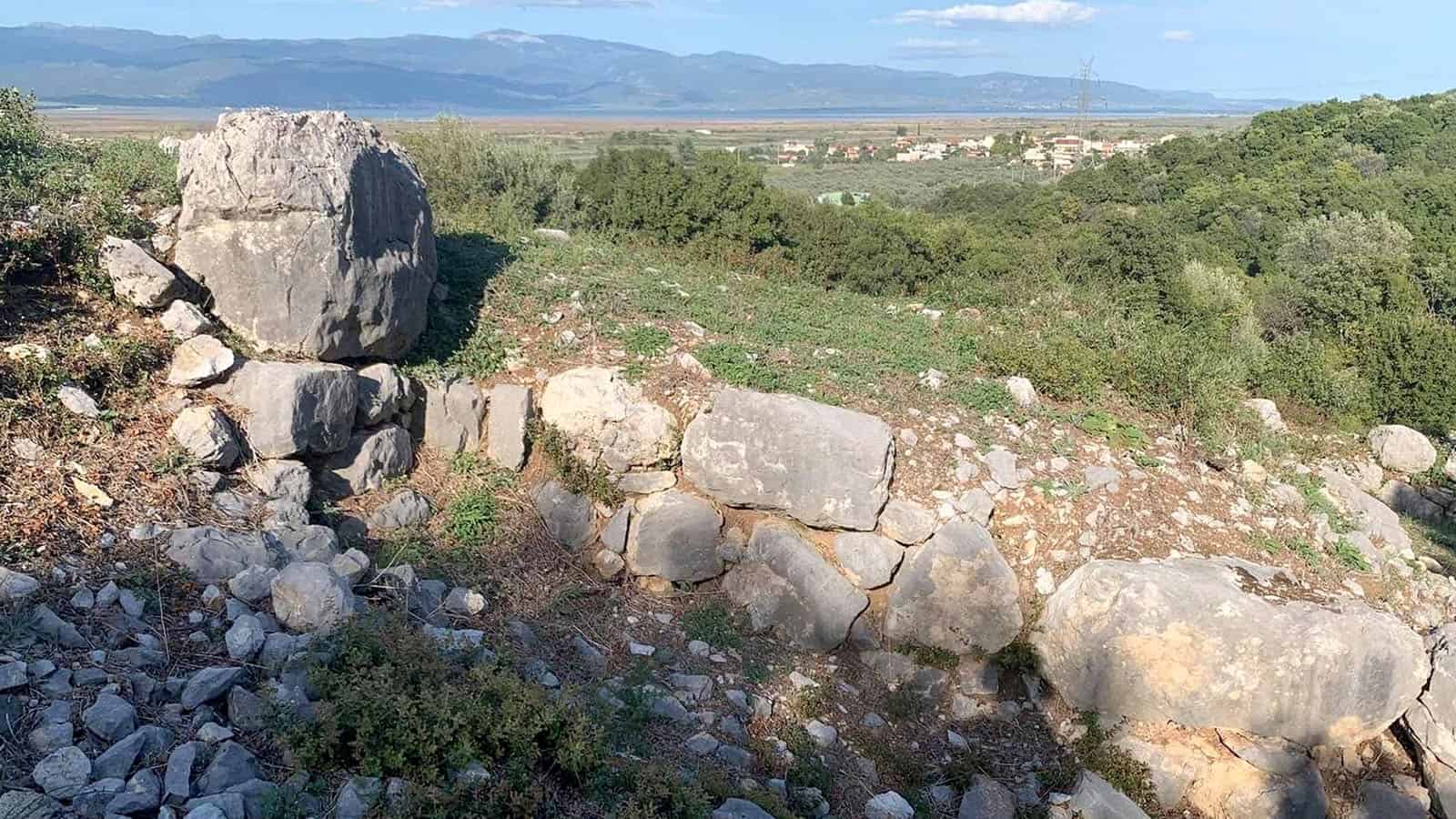
Greece is advancing restoration work on the ancient Phocian Wall at Thermopylae, a defensive wall used by Greek forces during the Persian invasion of 480 BC.
Excavations and extensive vegetation clearing have exposed more of the wall’s outline, allowing archaeologists to examine its construction and prepare for further restoration. The Ministry of Culture announced the latest findings on November 2, outlining plans to stabilize the remaining stonework and restore portions of the fortification.
Built by the Phocians in the sixth century BC to defend against incursions from Thessaly, the wall was already centuries old when Persian King Xerxes invaded Greece. The Spartans and their allies repaired it and used it as a principal defensive position, establishing their camp behind the fortification.
The wall stands southwest of Kolonos Hill, associated with the final phase of the Battle of Thermopylae. Extending approximately 100 meters (328 feet), it follows an irregular course adapted to the terrain. Only low sections of masonry remain, including parts of the western tower.
Recent excavations around the tower revealed interior walls, large storage jars and layers of burning, evidence of successive periods of use. Archaeologists also recovered a bronze coin dating to 323–319 BC, more than 150 years after the battle. The coin suggests activity at the site long after the Greek defense against the Persians.
Earlier investigations provided evidence of the ancient battlefield’s location. In 1939, archaeologist Spyridon Marinatos organized systematic excavations at Thermopylae. Iron and bronze spearheads and arrowheads dating to the fifth century BC were recovered on Kolonos Hill, including arrowheads of eastern types. The discoveries helped archaeologists identify where the fighting took place.
The landscape has changed considerably since antiquity. At the time of the battle, the sea extended close to the mountains, creating narrow passages through which a smaller Greek force could resist the Persian advance. Today, a broad plain separates the mountains from the coastline, making the original defensive positions difficult to recognize.
Centuries of weathering and earthquake damage have further weakened the wall. Under the approved restoration plans, ancient stones will be returned to their original positions where these can be established, or placed in other archaeologically documented positions. The work is intended to stabilize the remains and make the wall’s layout easier to recognize.
The restoration was included in Greece’s Recovery and Resilience Facility program in November 2022, and work began in 2025. Fthiotida lawmaker Christos Staikouras confirmed a budget of €650,000 in a March 2026 project update. In a November 2 statement, he said the originally contracted work was nearing completion, with further restoration work planned.
Plans also call for walking paths, viewing areas and informational signs connecting the Phocian Wall and Kolonos Hill with the Leonidas monument and the Thermopylae Historical Information Center.
The Ministry of Culture has not announced when the restored wall will open to visitors.