
May 19 is the official day of remembrance in Greece for the Genocide of the Greeks of Pontus. Established by the Hellenic Parliament in 1994, the date is marked each year by Pontic communities in Greece and the diaspora as a day of remembrance for the killing, uprooting, and dispersal of Pontic Greeks in the early twentieth century.
For Greek Americans, the memory of Pontus is often carried through family history, church commemorations, dance, music, village names, and stories passed down across generations. But Pontus was not only a story of loss. Before the catastrophe, it was part of a much older Black Sea world.
That older Black Sea world was the subject of a Council of Europe project from 1999. One of its reports, The Greeks in the History of the Black Sea, came out of a meeting of experts held in Thessaloniki from December 2 to 4, 1999, as part of the Council’s Black Sea Initiative on History. Its purpose was not to address the Pontic Genocide directly, but to examine the Greek presence in Black Sea history and how that history was being taught in schools.
The Thessaloniki report was a history-education document, not a genocide-recognition text. It should not be used to suggest that the Council of Europe was making a statement about May 19. Its value is different. Reading today helps place Pontic Hellenism within the wider Black Sea history to which it belonged.
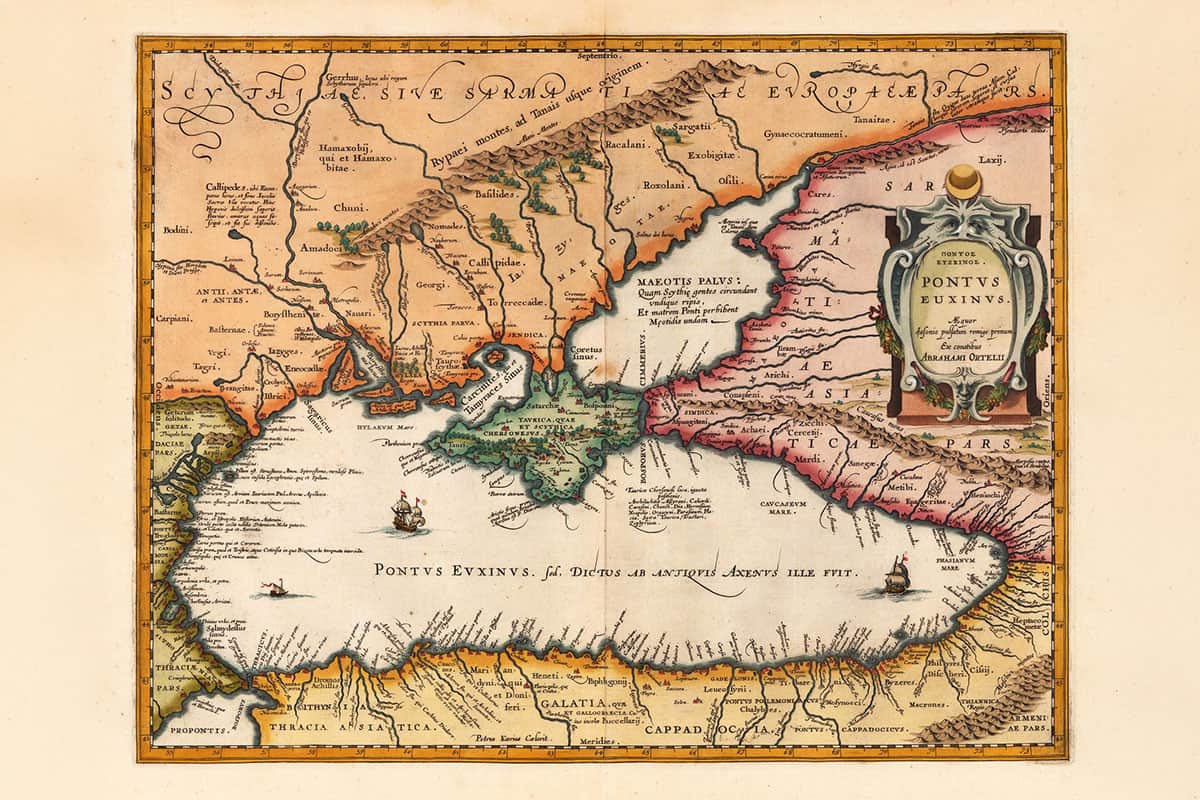
The report treats the Black Sea not as the edge of Greek history, but as one of the routes through which Greek life, trade, faith, language, and migration moved for centuries. Greeks appear there as settlers, sailors, traders, churchmen, craftsmen, migrants, refugees, and neighbors. Ancient Greek colonies on the Pontus Euxinus are discussed not only as distant facts from antiquity, but as part of a wider network of economic, cultural, and political contact.
A related Council of Europe report from Constanța, Romania, earlier that same year helps explain the wider purpose of the project. The May 1999 Constanța seminar opened the Black Sea Initiative on History and focused on history curricula for secondary schools in Black Sea countries. It warned against partial approaches to the past and stressed the need to view history through multiple perspectives, especially because interpretations of history can shape present-day conflict.
That is not an abstract concern in the Black Sea. The region has never been easy to describe through one people alone. It has been a crossroads of Europe and Asia, a place of trade, movement, conquest, settlement, exile, and exchange. At Constanța, the Romanian historian Șerban Papacostea described the Black Sea as a region where geography shaped history. Its narrow link to the Mediterranean produced repeated efforts to control access, regulate movement, and draw resources from the sea and its coasts. Yet the sea remained a center of commerce and the movement of peoples.
The Greek role in that history was central, but not isolated. Ionian and later Dorian Greeks founded settlements around the Black Sea and helped connect the Black Sea and Mediterranean worlds. They brought their own customs and cultural traditions while also living among, trading with, and adapting to other peoples. The sea became a place of interchange, not a closed cultural space.
That helps explain why Pontic memory can feel both central and displaced. Pontus belongs deeply to Greek history, but national histories tend to draw clear borders where life was actually layered. Pontic Hellenism appears in too many frames at once: Black Sea, Ottoman, Orthodox Christian, regional trade, migration, language. It does not fit cleanly into any single national curriculum.
One revealing finding from the Constanța discussions was that the Black Sea itself was rarely taught as a region in its own right. The countries around it taught pieces of Black Sea history: ancient peoples, Greek colonization, Byzantium, the Ottoman Empire, and Great Power rivalries of the nineteenth and twentieth centuries. But the sea as a shared historical space, with its cities, trade routes, ships, migrations, environment, and everyday life, was much harder to fit into national curricula.
The result is that Pontus can too easily appear as an appendix to Greek history, a chapter in Ottoman decline, or a refugee story after 1922.
The Thessaloniki report reflects that complexity. It describes the Black Sea as a place where many peoples moved, settled, traded, fought, adapted, and lived beside one another. Greeks, Armenians, Georgians, Crimean Tatars, Bulgarians, Romanians, Moldovans, Ukrainians, Russians, Laz, Turks, Circassians, Abkhazians, and others appear in its broader account of repeated settlement, expulsion, coexistence, and cultural contact around the sea.
The report does not romanticize that movement. It notes that population movements around the sea of Pontus were often tied to tragedy, violence, and forced displacement. For Pontic Greeks, that broader history carries a direct and painful echo. It does not replace the specific history of the Pontic Genocide or reduce it to a general story of regional suffering. It shows instead that the catastrophe of Pontus becomes more fully visible when readers understand the world that came before it.
That world was made not only of suffering, but also of work, language, faith, craft, food, music, trade, village life, and local memory. The Thessaloniki report even includes a brief reference to Greeks from Santa in Pontus in connection with stone-carving and bridge-building traditions in Georgia.
It also describes the unusual linguistic geography of the wider Greek presence around the Black Sea: the Greco-Tatar dialect of Greeks in Crimea and Mariupol, Turkish-speaking Greeks of Tsalka in Georgia, and the use of Ukrainian or Russian by many Greeks in Ukraine and the Russian Federation. These were not curiosities. They were the ordinary marks of communities that had lived for generations among many neighbors.
Those details matter because memory often survives through practical and familiar forms. In the diaspora, Pontic identity may be carried through family stories, music, church life, food traditions, surnames, and village names remembered long after the villages themselves were lost.
The Council of Europe experts were asking how young people should learn about a region whose history crossed borders and unsettled national certainties. Their answer was not to erase national history. It was to place national stories inside a wider regional frame.
The Constanța report recommended teaching materials that would help students explore cities and towns, population movements, trade and commerce, the environment, changing lifestyles, ships, first settlements, Greek colonization, Byzantium, the Ottoman Empire, and the nineteenth and twentieth centuries. It also encouraged local and oral history, maps, documents, images, and critical work with sources.
That is a useful approach for Pontic memory as well. May 19 asks for remembrance, but remembrance needs more than a date. It needs the life before the rupture: the geography of the Black Sea coast, the mountain villages, the monasteries, the ports, the dialects, the songs, the movement of people, and the difficult relationships with neighbors. It needs to show what was destroyed, not only that destruction occurred.
There is another lesson here too. In a 2007 essay on the possibility of a common European history textbook, EUROCLIO’s Joke van der Leeuw-Roord noted that history education in Europe had long remained strongly national in focus. She also warned that common European history materials could produce a watered-down official narrative if they tried too hard to smooth over conflict.
That warning applies here. A wider Black Sea frame should not turn Pontic memory into a vague story of coexistence. National and communal memory remain essential. Without them, the Pontic catastrophe might have been pushed further into silence.
But memory also needs depth. To remember Pontus only as a place of death is to lose sight of the communities, churches, trades, dialects, customs, and daily human life that made the loss so profound.
For Greek Americans, this matters in a particular way. Many in the diaspora inherit Pontic memory at a distance. They may never have seen the Black Sea. They may not speak Pontic Greek. They may know Pontus through a commemorative event, a dance group, a family story, or a name mentioned at a memorial service. That distance can make memory fragile, but it can also make it more intentional.
May 19 is not only a day to mourn what happened. It is also a day to ask what kind of historical memory is being passed on.
The 1999 reports do not tell the whole Pontic story. They were not written for that purpose. But they remind us that Pontus belonged to a Black Sea history that was shared, contested, multilingual, and deeply human. A fuller remembrance does not move away from the tragedy. It gives readers a clearer sense of the world that was destroyed.
May 19 asks for remembrance. The Black Sea asks for context. Together, they ask us to hold two truths at once: Pontic Hellenism suffered a historic catastrophe, and Pontic Hellenism was more than its catastrophe. It was part of a living Black Sea world, older and richer than the violence that nearly erased it from its homeland.