
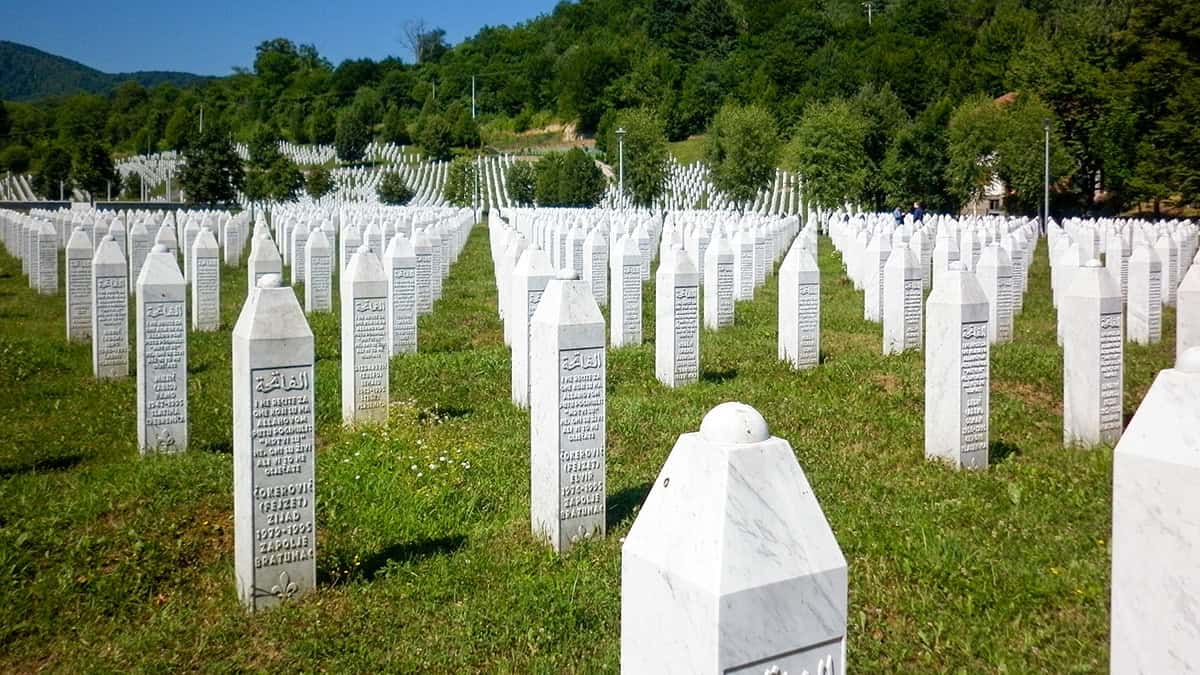
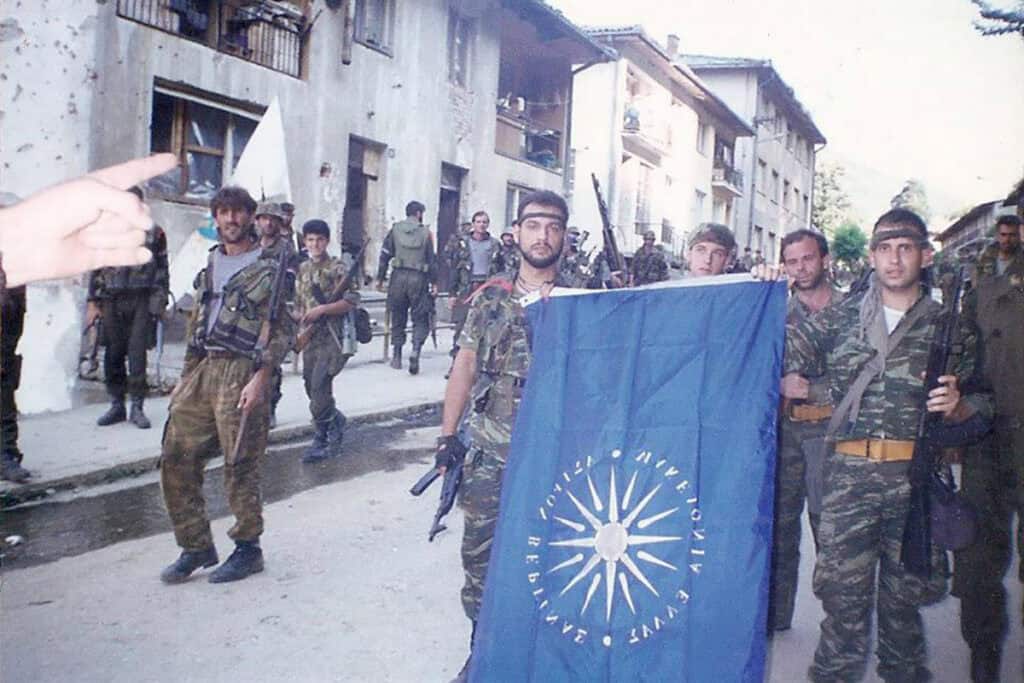
When Bosnian Serb forces captured Srebrenica on July 11, 1995, a Greek flag was raised over the fallen town.
Greek volunteers had fought alongside the Bosnian Serb Army during the offensive. Contemporary reporting said about a dozen were there when Srebrenica fell. A later Dutch investigation documented intercepted Bosnian Serb communications suggesting that the Greeks raise their flag and that the scene be recorded on video “for marketing purposes.”
More than three decades later, the episode has returned to view with the death of Ratko Mladić.
The former commander of the Bosnian Serb Army died August 27 in United Nations custody in The Hague at age 83. He was serving a life sentence for genocide, crimes against humanity and war crimes, including his role in the Srebrenica genocide, where more than 8,000 Bosniak men and boys were killed after Bosnian Serb forces overran the United Nations-designated safe area.
For Greece, his death recalls a less widely remembered part of the Bosnian War. Greek citizens volunteered to fight in the Bosnian Serb Army; members of their unit were in the Srebrenica area when the enclave fell, and their national flag was raised in the captured town.
What has never been established in court is whether any of those Greeks participated in the mass executions that followed.
Greeks in the Bosnian Serb Army
Greek volunteers had begun arriving in Bosnia before 1995. By the final year of the war, many were serving in the Greek Volunteer Guard, a unit incorporated into the Army of Republika Srpska.
Based in Vlasenica, west of Srebrenica, the unit served within the Drina Corps, the Bosnian Serb formation responsible for the eastern Bosnian region that included the enclave. Up to about 100 Greeks are estimated to have fought on the Bosnian Serb side during the war, many through the Greek Volunteer Guard.
Some were associated with Greece’s nationalist far right. A later investigation by the Balkan Investigative Reporting Network found that members of Golden Dawn, then a small extremist organization, were among the Greeks who fought with the Bosnian Serbs.
The volunteers also had direct contact with Ratko Mladić.
A photograph later made public shows Antonis Mitkos, one of the leading figures in the Greek Volunteer Guard, in military uniform beside Mladić and Zvonko Bajagić in Srebrenica. Mitkos said the photograph was taken on July 11, 1995, the day Bosnian Serb forces captured the enclave.
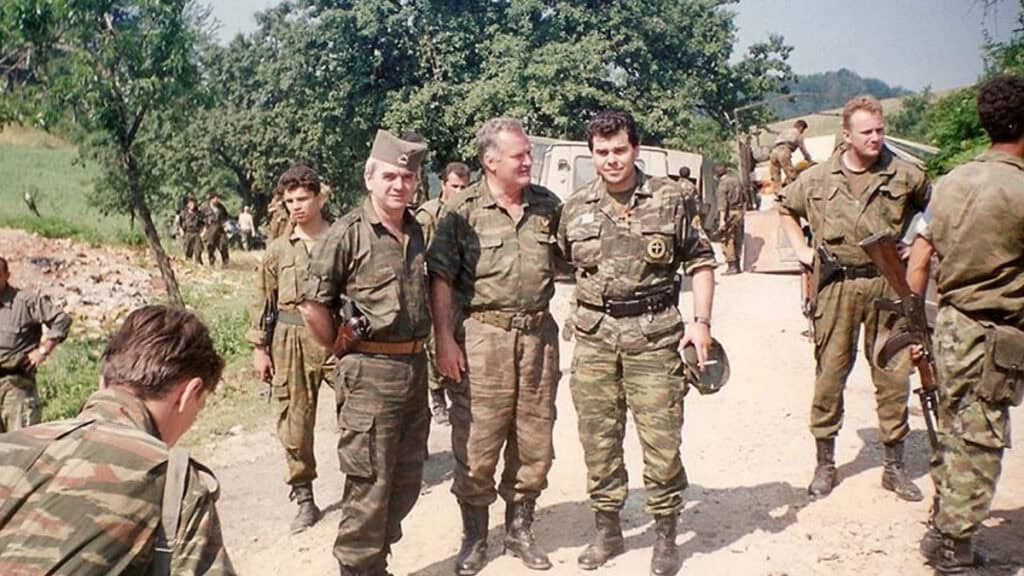
Mitkos was subsequently among ten Greek volunteers named in a document from the International Criminal Tribunal for the former Yugoslavia as having been in the Srebrenica area at the time.
Their presence was also reported while the operation was still unfolding. On July 13, 1995, AFP reported that about a dozen Greek volunteers had fought alongside the Bosnian Serb forces that captured Srebrenica. Citing the Greek newspaper Ethnos, the report said they had raised their national flag in the town.
Court testimony later placed Greek volunteers at one of the sites where captured Bosniaks were being held.
In July 2013, Bajagić testified at The Hague about his movements on July 13, 1995. He said he had stopped briefly at the football field in Nova Kasaba with two Greek volunteers who were traveling with him toward Srebrenica.
Large numbers of captured Bosniaks were being held on the field.
Asked by prosecutor Christopher Mitchell about the two men with him, Bajagić confirmed that they were soldiers and volunteers attached to the Vlasenica Brigade.
“They were Greeks,” he testified.
Bajagić also said that one of the volunteers had a still camera. The man got out of the vehicle and photographed the prisoners gathered on the football field.
According to the testimony, Lieutenant-Colonel Vujadin Popović, the Drina Corps assistant commander for security, saw the Greek volunteer taking the photographs and confronted him. Bajagić later testified that Popović wanted the camera surrendered or the film exposed so the images could not be reproduced.
The testimony provides one of the clearest accounts of Greek volunteers moving through the Srebrenica area during the days after the enclave fell. It places two of them at a site where Bosniak prisoners were being detained and confirms that one photographed the captives.
It does not establish that either Greek participated in the executions that followed.
That distinction remains important. The documented evidence places Greek volunteers inside the Bosnian Serb military structure, in Srebrenica during its capture, and at least two of them at the Nova Kasaba detention site on July 13. No member of the Greek Volunteer Guard has been convicted of taking part in the mass killings.
A Greek flag over Srebrenica
After the enclave fell, Bosnian Serb forces separated Bosniak men and boys from women and children. Thousands were detained and executed over the following days. Their bodies were buried in mass graves, many of which were later reopened and the remains moved in an attempt to conceal the killings.
International courts ruled that the crimes at Srebrenica constituted genocide. Mladić was eventually convicted of genocide, persecution, extermination, murder, and forcible transfer for his role in the operation.
The Dutch government commissioned the Netherlands Institute for War Documentation, or NIOD, to conduct an extensive investigation into the fall of Srebrenica. Its 2002 report recorded what happened as Bosnian Serb forces took control of the town.
At 4:55 p.m. on July 11, according to the report, Bosnian government forces intercepted a message saying that the Serbian flag had been raised over Srebrenica’s damaged Orthodox church. Another intercepted message referred to a suggestion that the Greek volunteers should raise their flag as well and that the event should be filmed “for marketing purposes.”
The NIOD report itself does not identify Mladić as the speaker making that suggestion. Later newspaper accounts attributed the request directly to him, but the primary report is more restrained.
Four members of the Greek Volunteer Guard were later awarded the White Eagle medal by Bosnian Serb political leader Radovan Karadžić.
It would take another decade before Greek authorities formally examined what the volunteers had done.
Greece opens an investigation
In 2005, independent Greek MP Andreas Andrianopoulos called for an investigation into the activities of the Greek volunteers.
Justice Minister Anastasios Papaligouras said possible involvement by Greek volunteers could not be ruled out. Greek authorities emphasized that the allegations concerned private citizens and paramilitary volunteers, not members of the Greek armed forces serving in international peacekeeping missions.
That summer, 163 Greek academics, journalists, politicians and activists signed a statement calling on Greece to apologize to the victims of Srebrenica for the presence of Greek volunteers and to investigate those responsible.
The criminal investigation continued for six years.
According to a 2023 BIRN investigation, the ICTY provided Greek authorities with a document identifying ten Greek volunteers believed to have been in the Srebrenica area. In 2011, an investigating judge closed the case after finding insufficient evidence to proceed with criminal charges.
BIRN later found that only three of the ten men were investigated.
Mitkos, the Greek Volunteer Guard commander photographed with Mladić on the day Srebrenica fell, was not among them. No member of the group has been charged in Greece in connection with the Srebrenica killings.
A former senior Greek Justice Ministry official told BIRN in 2023 that the case should be reopened.
Greece and Serbia in the 1990s
The volunteers were a small group, but they emerged during a period of strong Greek sympathy for Serbia and the Bosnian Serbs.
Shared Orthodox Christianity frequently figured in expressions of Greek-Serbian solidarity, and some political, media, and church figures openly supported the Serbian cause.
One of the most visible examples came in 1993, when Bosnian Serb leader Radovan Karadžić visited Athens at the invitation of Archbishop Seraphim.
Karadžić received an enthusiastic reception and declared during the visit that the Serbs had “only God and the Greeks” on their side.
Two years later, Greek volunteers were serving in the Bosnian Serb military structure under Mladić’s overall command.
They represented a small and more radical form of the wider solidarity with Serbia. Their activities were not secret. Greek newspapers reported on the volunteers during the war, and BIRN later found that some published telephone numbers for people interested in joining them.
When Srebrenica fell in July 1995, Greek fighters were there.
An unfinished Greek chapter
Mladić remained a fugitive until 2011, when Serbian authorities arrested him and transferred him to The Hague.
The ICTY sentenced him to life imprisonment in 2017. His conviction was upheld on appeal in 2021.
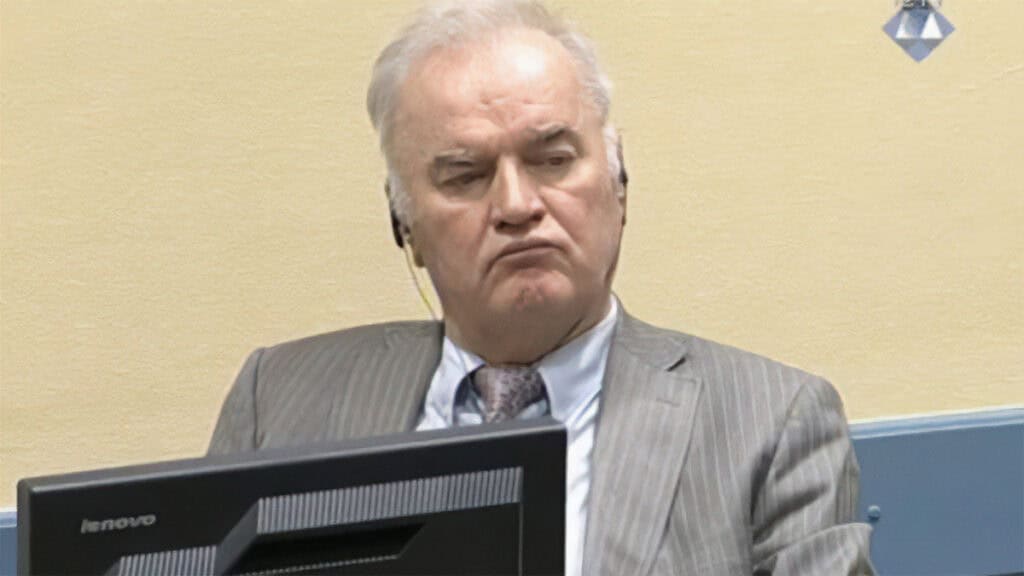
He died in U.N. custody on August 27, 2026, more than three decades after the fall of Srebrenica.
The Greek investigation produced a very different outcome.
Ten were identified in an ICTY document as having been in the Srebrenica area. Their commander was photographed with Mladić on the day the enclave fell. Their flag was raised after the capture, and four members of the unit were later decorated by Karadžić.
None has been convicted of participating in the executions.
When Greek authorities finally examined the case, only three of the ten men identified by the international tribunal were investigated before it was closed without charges.
Thirty-one years after Srebrenica, the Greek presence there is documented. The question of what each of those men did has never been fully answered.