

In corporate America, it is common to see executives build résumés by moving quickly from company to company, picking up new titles along the way. Ron Vachris took a very different road. He stayed in one place and built a career that began in 1982 with a forklift and eventually carried him into the CEO’s office more than four decades later. His rise inside Costco is rare in today’s business culture. It is not only a story of persistence but also one that reflects the values he carried with him as the son of a Greek American family.
Ronald Vachris was born in Staten Island in 1965. His father worked as a utility lineman, and when Ron was still a teenager, the family moved to Arizona. The relocation took him away from the Greek neighborhoods of New York and into a part of the country where the community was smaller and more scattered.
In Glendale, he enrolled in community college to study business. During a winter break in 1982, at just seventeen years old, he accepted a part-time warehouse job at Price Club, the warehouse chain that later merged into Costco. He was hired to drive a forklift and stack pallets, the kind of work that few imagined could lead to a future at the top of a global corporation.
Vachris quickly realized that the warehouse floor offered lessons as valuable as anything in the classroom. “I thought, I’ll do this while I’m going to school,” he later recalled. “But I found I was learning more here in real life than I was at school about business” (Business Insider). What started as a student job became the beginning of a career that would span every part of the company.
Over the next four decades, he moved through warehouse operations, merchandising, regional management, and real estate. He stayed on during the 1993 merger between Price Club and Costco, when many employees left or were pushed aside. That consistency defined him as someone who was willing to put in the years to understand the business from the inside out.
His loyalty was not just a matter of convenience. It became one of his strengths. Costco founder Jim Sinegal told him early in his career that culture is not one priority among many but the only priority. Vachris has said that advice was etched into his mind more than forty years ago and still shapes how he sees the company.
In an interview with the Wall Street Journal, he explained that Costco’s culture has always been the foundation of its success. “Our employees are our number one competitive advantage,” he said. It is a simple statement, but in an industry where retailers often treat labor as a cost to cut, it stands out.
That focus on people shows up in how he handles setbacks as well as successes. When employees in Norfolk, Virginia, voted to unionize, Vachris refused to frame it as a battle. “We’re not disappointed in our employees,” he said. “We’re disappointed in ourselves as managers and leaders.”
It was a rare acknowledgment in corporate America that when workers turn to a union, it may be a sign of leadership falling short rather than employees being disloyal. The words carried weight because they came from someone who had once been on the warehouse floor himself.
He brings the same attitude to Costco’s products. In a video interview with the Wall Street Journal, Vachris described his close involvement with Kirkland Signature, the company’s private label brand that generates tens of billions of dollars in sales each year. “I taste test just about everything,” he said. “If it has our name on it, I want to know it is something we would serve in my house.”
The remark was casual, but it captured the way he approaches responsibility. Even at the top of a company with annual revenue above $254 billion, he still treats quality control as a personal duty. That kind of humility, rare in someone leading one of the world’s largest corporations, explains why colleagues often describe him as approachable and grounded.
On January 1, 2024, Vachris officially became Costco’s CEO, only the third in the company’s history after Jim Sinegal and Craig Jelinek. The transition had been carefully planned for nearly two years, part of the company’s preference for stability and deliberate succession.
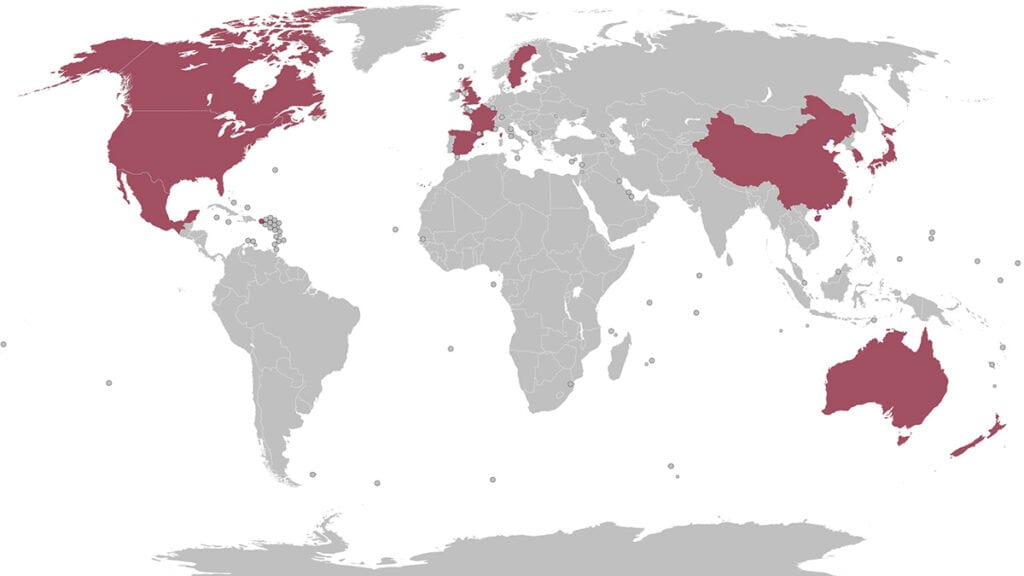
Under his leadership, Costco continues to expand. The company now operates more than nine hundred warehouses across fourteen countries, from its base in the United States to fast-growing markets in China and New Zealand. In September 2024, Costco raised its membership fees for the first time in seven years, a move that analysts expect will strengthen its financial position without driving members away.
Costco’s model is different from many other large retailers. The company has long been known for paying higher wages and offering better benefits than competitors such as Walmart and Amazon. Employee turnover is lower, and retention is higher. These choices cost money in the short term but build loyalty in the long run.
Vachris, who began as a part-time forklift driver, has become the custodian of that culture. His leadership continues the belief that treating employees fairly is not charity but sound business. He represents continuity with the philosophy that made Costco stand out in the retail industry in the first place.
At home, his life reflects the same clarity of priorities. He and his wife, Kim, live in Sammamish, Washington, not far from Costco’s headquarters in Issaquah. They have three adult children, and his desk is decorated with photos of his granddaughter.
“I’m pretty transparent about my priorities,” he said. “It’s my family and my career”. For someone running one of the largest retailers in the world, the message is simple. Family first, work second, everything else after.

In the broader Greek American story, Vachris belongs to a distinguished company. Other leaders, such as Jamie Dimon at JPMorgan Chase and Albert Bourla at Pfizer, have shown how the children and grandchildren of immigrants shaped by values of hard work and perseverance can rise to the top of global institutions.
Each story is different, yet they share familiar threads: resilience, loyalty, and the refusal to cut corners. Among Greek Americans, these qualities are often summed up in the word philotimo. It is a difficult word to translate, but it captures honor, pride in good work, and the sense of responsibility to others.
Vachris does not use the term himself in interviews, but his career offers a living example of what the word can mean. His leadership is defined by loyalty to a company, responsibility to its people, and humility even at the top.
For Costco, for its millions of members, and for the employees who stock the shelves and run the registers, Ron Vachris’s journey is a reminder that the values learned at home and on the job floor matter as much as strategy and profit.
Featured Interview:
In this Wall Street Journal video, Vachris explains how Costco’s $86 billion Kirkland Signature brand operates and why he remains personally involved in product selections, even after rising to the top.