
Every time I arrive in Istanbul, I take a deep breath. I draw the air into my lungs and feel how it caresses me. It is our city, our country – and yet we lost our homeland. If these events had not happened, Istanbul might be a very different city today.
— Elizavet Kovis, in Tagesschau
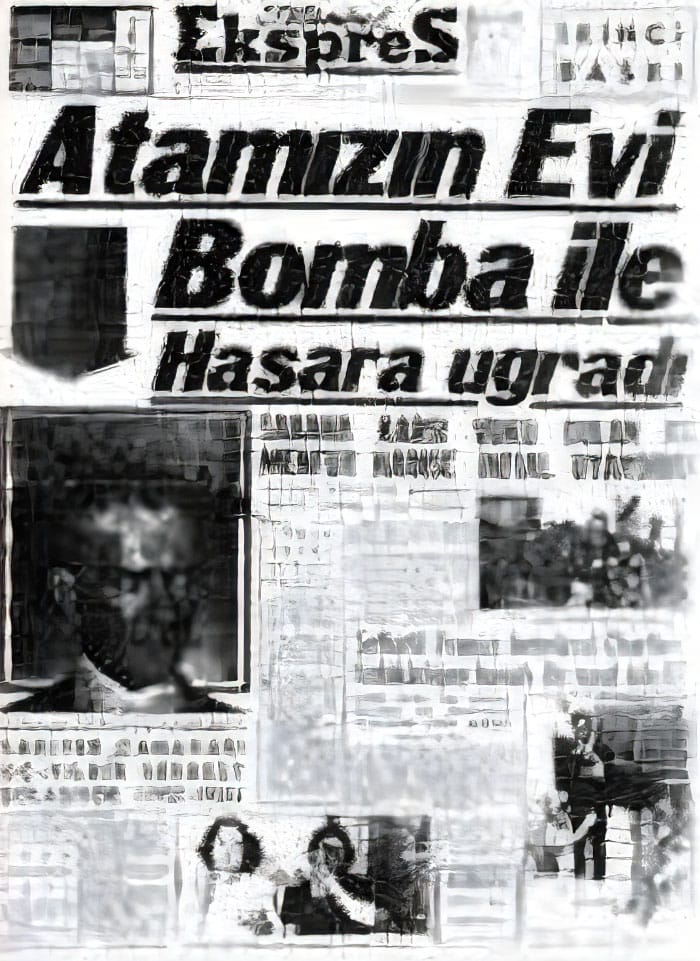
On the evening of September 6, 1955, the Greeks of Constantinople (Istanbul) lived through a night that tore apart centuries of coexistence. It began with a single piece of news: a bomb had exploded at the Turkish consulate in Thessaloniki, damaging the house believed to be the birthplace of Mustafa Kemal Atatürk, the founder of modern Turkey. The blast was small and caused no injuries, but when the story reached local newspapers, it was presented as an attack by Greeks on the very symbol of Turkish nationhood.
What the public did not know was that the bombing had been staged. The man who placed the device was a Turkish student named Oktay Engin, working inside the consulate, and he was arrested by Greek police along with a janitor. Under political pressure he was quickly released and returned to Turkey, where he later enjoyed a long career in government. The truth of the inside job only came to light years later. By then, the damage had been done.
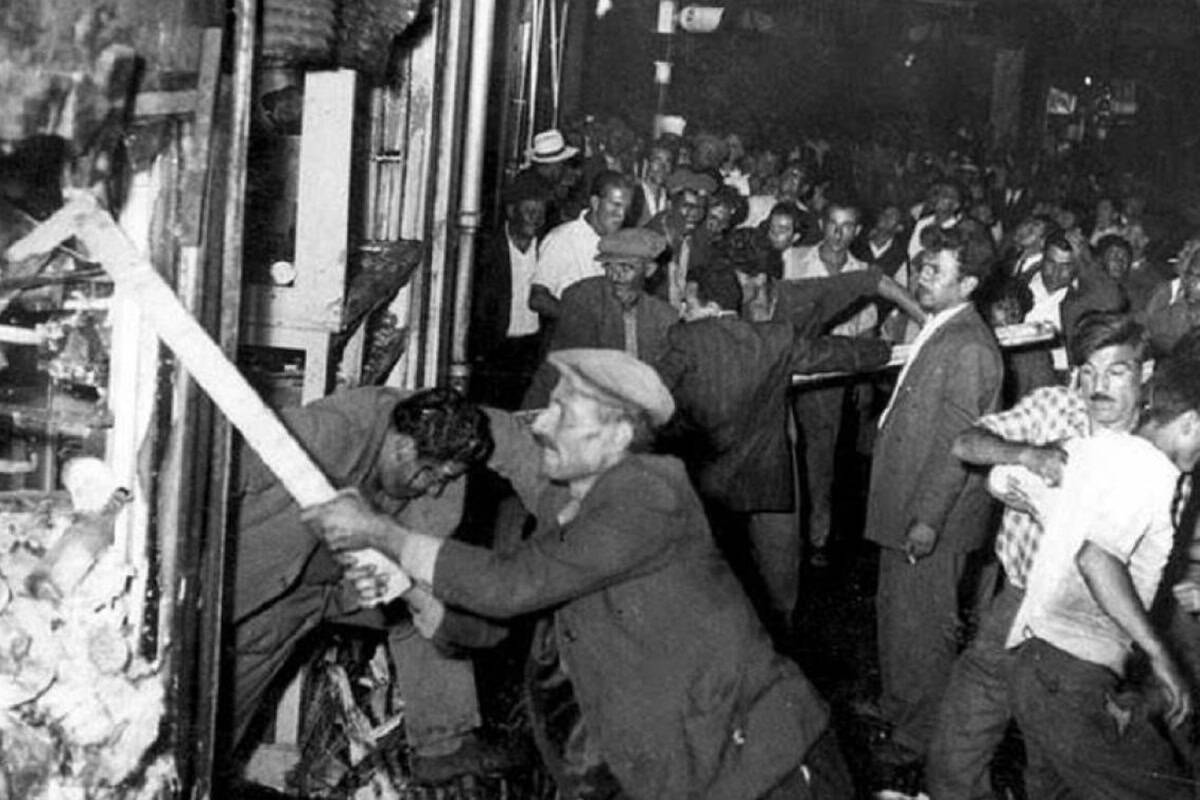
Within hours of the news breaking, tens of thousands were on the streets of Constantinople. Buses delivered men carrying pre-printed banners, iron bars, and sticks. The targets were already marked. The mobs swept through Beyoğlu, Şişli, and Kadıköy with ruthless efficiency.
It was no accident. The pogrom was organized from above. Prime Minister Adnan Menderes and his Democrat Party government turned the bombing into a call for action, while the Special Warfare Department, a branch of the military, helped coordinate the violence.
The newspaper Istanbul Ekspres fueled the fire by printing an afternoon edition that exaggerated the Thessaloniki blast and boosted circulation from 20,000 to nearly 300,000 copies in a single day. Police and local officials stood aside, and in some cases directed crowds toward Greek neighborhoods and churches.
Later confirmations made the orchestration undeniable. In 1991, General Sabri Yirmibeşoğlu, a former head of the department, described the pogrom as “a magnificent act of special warfare that had absolute success” and openly called it “an excellent Special Warfare operation.”
In 2008, the Turkish daily Radikal likewise reported that the pogrom had been organized by the Special Warfare Department (Özel Harp Dairesi), part of Turkey’s NATO-linked Gladio network. Survivors had long suspected as much, and the very men who orchestrated it confirmed their fears.
Women were assaulted, men beaten, and contemporary reports spoke of at least a dozen killed. Later figures collected by Greek and international organizations put the toll higher, with at least sixteen Greeks and one Armenian dead. Survivors also described sexual assaults, including women raped in their homes and men forced to undergo circumcision, humiliations intended to break the community’s spirit.
By dawn, the scale of destruction was staggering. Churches burned, shops and homes smashed, cemeteries violated, schools and monasteries attacked. Later counts put the toll at more than 4,000 shops, 73 churches, dozens of schools, and nearly a thousand homes destroyed. International organizations placed the economic losses at around 150 million U.S. dollars, while the Greek government estimated more than half a billion. Whatever the number, the destruction was overwhelming, and for many families it marked the end of their ability to remain in the city.
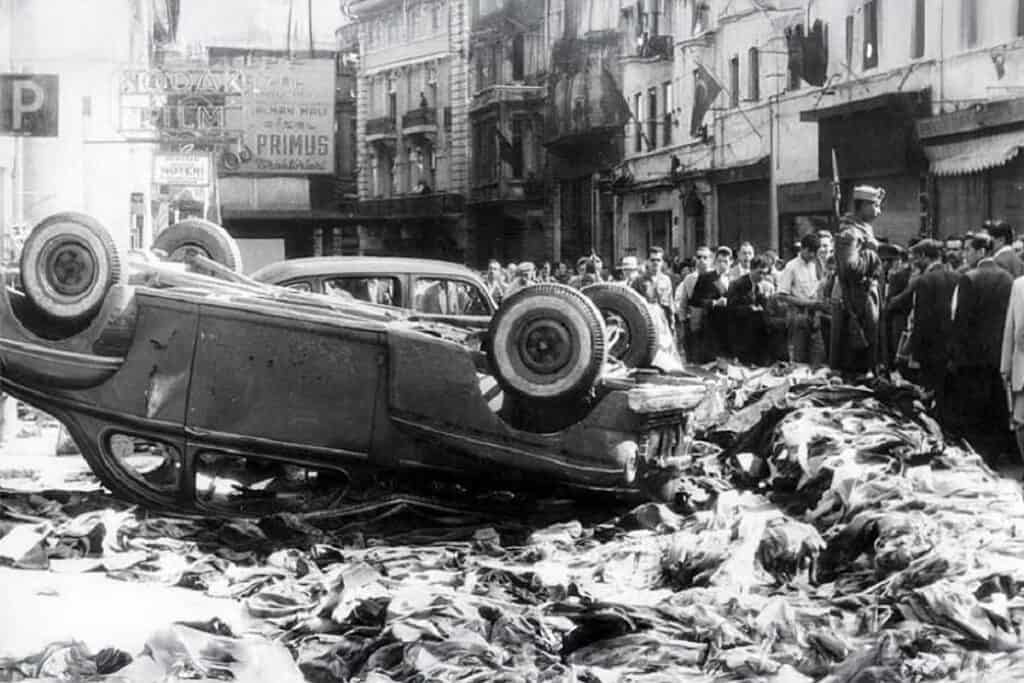
Archon Harry G. Dimopoulos remembered Beyoğlu the next morning as “like a war zone,” with shop windows shattered and goods strewn across the street. His account captures how fast a coordinated mob turned everyday neighborhoods into ruins.
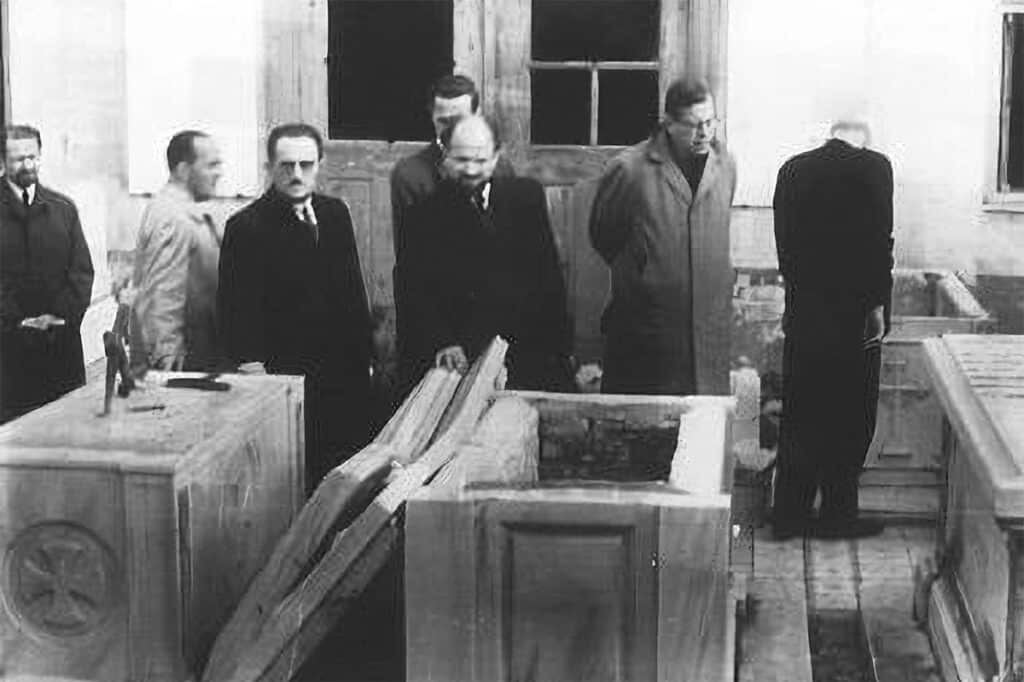
Cemeteries too were desecrated. At the Balıklı Greek cemetery, headstones were broken and tombs opened, bones scattered in the streets. Smaller cemeteries in Şişli and Kurtuluş met the same fate. For families who had buried generations there, the violation of graves was one of the most searing wounds.
Greek schools, symbols of a community’s future, were not spared. The Zappeion Girls’ School in Beyoğlu was looted, Zografeion Lyceum near Taksim heavily damaged, and the Phanar Greek Orthodox College attacked though partly defended by its teachers and students. Monasteries on the Princes’ Islands, including the Monastery of the Holy Trinity on Halki, were damaged.
Thirteen-year-old Keti Bagdat, whose family endured a mob pounding at their door shouting for her to be handed over, later described how the experience made her feel her childhood world had collapsed. Unlike many others, her family remained in Constantinople, growing up in a shrinking minority that bore witness to its own erasure.
Even the Greek press came under attack. The daily newspaper Apoyevmatini had its offices and printing presses destroyed, with losses valued at half a million Turkish lira. Yet remarkably, within two weeks it was back in circulation, carrying the proud line that nobody is born and nobody dies without Apoyevmatini. In the ruins of a devastated community, it became a symbol of survival.
The World Council of Churches demanded an explanation from Turkey, pointing to the near-total devastation of Orthodox churches in Constantinople. President Celâl Bayar promised compensation, but the amounts paid never came close to covering what had been lost. Properties were deliberately undervalued, and even in the best cases families received only a fraction of their claims.
Recognition came slowly. Four decades later, in August 1995, the U.S. Senate passed a resolution urging President Bill Clinton to declare September 6 a day of remembrance for the victims of the pogrom. It was an acknowledgment from abroad that still has not come officially within Turkey itself.
The pogrom is remembered above all for what happened in Constantinople, but it was not confined to the city. Violence and intimidation spread to other places where Greeks, Armenians, and Jews still lived.
In Izmir, homes and businesses were looted, the Greek consulate and a church in Alsancak were set on fire, and even the Greek pavilion at the fairground was destroyed.
A week later, another church was attacked, showing how the climate of fear continued. In Bursa, the city’s small Greek population was gathered in a hotel placed under police protection, while in Samsun Greek families were guarded by local authorities. Demonstrations also shook Ankara and Adana, where marches turned threatening but were contained by military control.
Farther south, a church in İskenderun was bombed days later, and Assyrian communities in Urfa, Mardin, and Midyat reported harassment. In Çanakkale, Jewish residents were targeted. These events were not as widespread or destructive as in Constantinople, but they revealed how fragile minority life had become across Turkey.
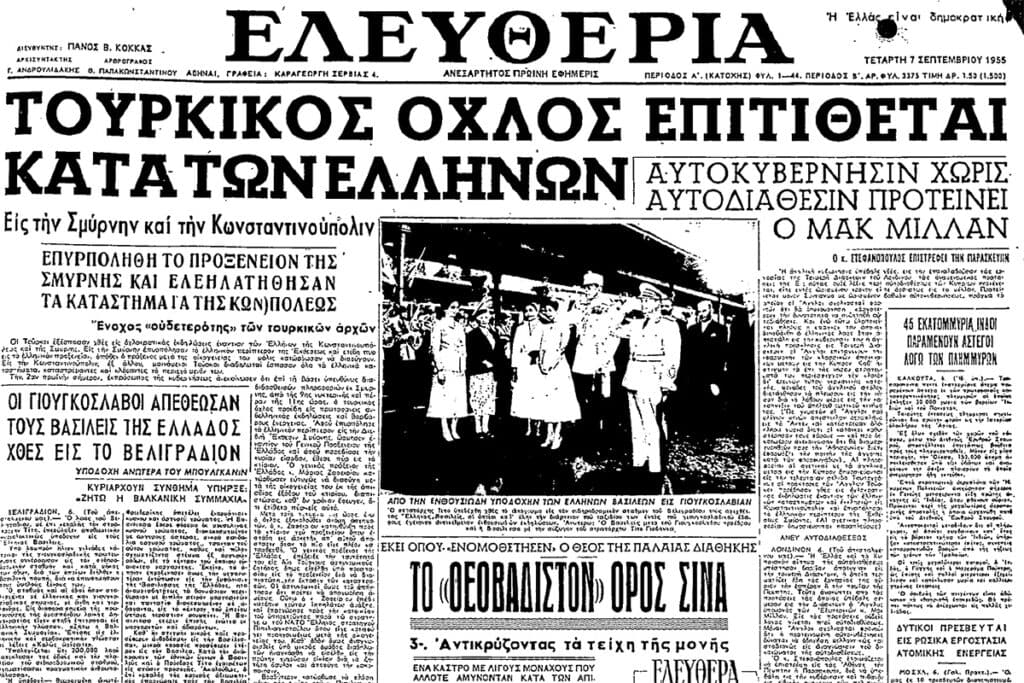
In Greece, the reaction was immediate and furious. Prime Minister Alexander Papagos’s government lodged formal protests with Turkey and raised the matter at the United Nations, insisting that what had happened was a coordinated assault rather than a riot.
Greek newspapers printed images of looted churches and desecrated cemeteries, and the public responded with rage. Demonstrations filled the streets of Athens and Thessaloniki, where crowds surrounded the Turkish embassy and consulates. In Athens, the embassy was attacked, and Turkish-owned shops were vandalized in retaliation.
The government called for calm, fearing escalation, but the sense of betrayal ran deep. For many Greeks, the pogrom was felt not just as a foreign tragedy but as a personal loss. Constantinople, the city that still lived in their imagination as a piece of Hellenic heritage, seemed to have been lost once more.
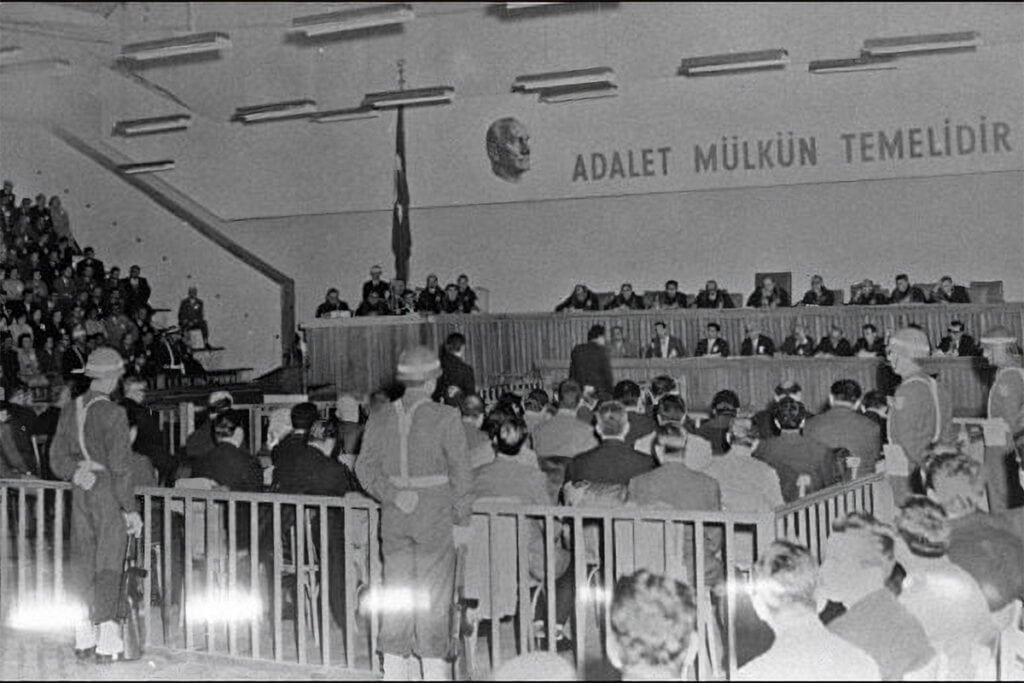
Legal accountability did follow. After a 1960 coup, Menderes was tried at Yassiada. Among the charges was his role in orchestrating the pogrom. In 1961, the court found him guilty, confirming what survivors already knew: the violence had been sanctioned at the highest levels of government. International legal scholar Alfred de Zayas has argued that the pogrom meets the criteria for genocide under international law.
For the survivors of Constantinople, official statements and diplomatic protests could not undo the damage. They had lost their homes, their shops, their schools, and their churches. Some families chose to stay, clinging to the city that had been theirs for centuries, but many others began leaving almost immediately.
Those who crossed the Aegean were absorbed into Athens and Piraeus, where they became known as Rum Polites, Greeks of the City. They founded associations and cultural clubs that preserved their Constantinopolitan accent, their food, their music, and their stories. In Athens, groups such as the Union of Constantinopolitans became key guardians of memory.
The Ecumenical Federation of Constantinopolitans, founded in 2006, continues to coordinate these efforts internationally. Others traveled farther, sailing to Melbourne and Sydney, to New York and Toronto, to wherever relatives or opportunity could receive them.
The Hellenic Society of Constantinopolitans in Washington, D.C., exemplifies how these communities preserved their heritage across continents. Each time, they carried not just the trauma of what they had lost but the pride of what they had been.
For many, September 6 became a date of mourning. In Athens, the Constantinopolitan Society named it the Third Fall of Constantinople, placing the pogrom in a line with the city’s capture by the Ottomans in 1453 and the destruction of Smyrna in 1922.
In the diaspora, the memory lived on in parish halls where Rum Polites gathered to sing the old songs, in newspapers that insisted the community’s voice would not be silenced, and in testimonies of survivors who felt it was their duty to tell what had happened.
The pogrom was more than a night of smashed glass and burning churches. It was a decisive step in a longer strategy that reshaped the city itself. In 1927, census figures recorded 119,822 Greeks in Constantinople. By 1955 there were 65,108. After the pogrom, the number fell to 49,081 by 1960. Following the forced expulsions of 1964 and decades of pressure, barely a few thousand remain today.

For those who lived through it, the memories never faded. Harry Dimopoulos carried them across the Atlantic and spoke of them as a duty to the dead. Keti Bagdat lived with them in Constantinople itself, where silence and absence became part of daily life. Birand admitted he still carried the shame of what he saw as a boy.
Their stories remind us that history is not only about governments and treaties but about children whose lives were shattered and communities that were forced to scatter.
Today, some in Turkey have begun to acknowledge what happened. Civil society groups, journalists, and historians now speak more openly about September 6–7, and annual memorials are held by the Ecumenical Patriarchate and Greek community groups in Athens and Constantinople. Some Turkish historians, such as Dilek Güven, have also examined the pogrom in depth, documenting how state institutions prepared and managed the violence.
Exhibitions and academic conferences in both countries seek to place the events within a larger dialogue of reconciliation.
But official acknowledgment remains limited, and the pogrom is still often described in Turkey as riots rather than state-orchestrated violence.
Sixty-nine years later, September 6 is remembered as a warning. It shows how quickly propaganda and politics can turn neighbors into enemies, and how fragile minority life becomes when nationalism is inflamed.
It is also remembered as a testament to endurance. The Greeks of the City lost their place, yet they did not lose their identity. As long as the Rum Polites remember, Constantinople still lives.