
As Turkey reopens its bid to recover 497 Qur’ans removed during World War I, a deeper question emerges about memory, restitution, and consistency across the Black Sea.
In Trabzon this month, an old story resurfaced.
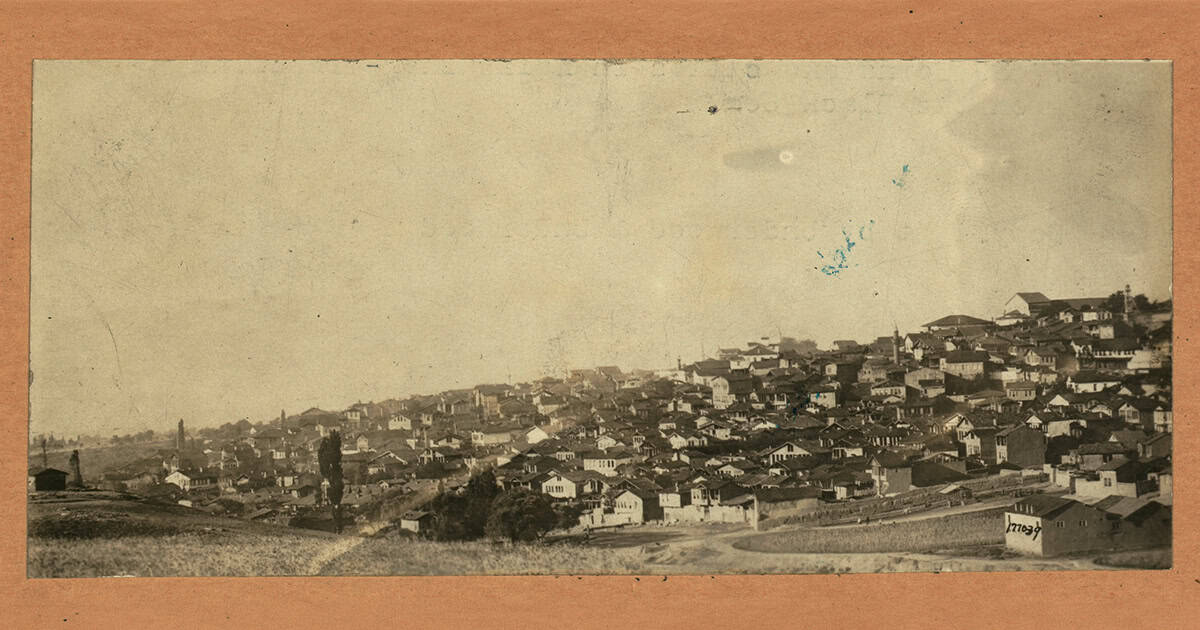
A lawmaker from Trabzon in Turkey’s Grand National Assembly stood before the municipal council and spoke about manuscripts, mosque furnishings and frescoes removed during the Russian occupation of 1916–1918. The number repeated in Turkish and Greek reporting is precise and evocative: 497 handwritten Qur’ans. Alongside them are chandeliers from the Gülbahar Hatun mosque, the original cloth covering her tomb, and numerous wall paintings.
Gülbahar Hatun is identified in Ottoman sources as the mother of Sultan Selim I, and many modern accounts and local traditions describe her as originating from the Pontic region, possibly of Greek background, before entering the Ottoman imperial household. Her tomb complex in Trabzon stands at the intersection of local, imperial and multi-ethnic histories. Even in that one figure, the layered character of the Black Sea world becomes visible.
The claim is that these objects were gathered during the First World War, transferred to Russia, and remain in state repositories. A formal request for their return was reportedly filed in 2015. Eleven years later, Turkish officials say there has been no result and no visible progress. They describe the Russian side as avoiding the issue rather than formally rejecting it. Now the file is being reopened.
For many readers, especially those with roots in Pontos, the emotional logic is easy to grasp. Sacred texts taken in wartime. A city that wants its heritage back. The idea that history never fully settles its debts.
Yet the Trabzon case is not only about Russia. It touches something broader — how we speak about loss, ownership and return in a region where almost every community carries some version of all three.
What Is Claimed and What We Actually Know
According to Turkish reporting, historian Veysel Usta spent roughly a decade working in Russian and other archives on Trabzon-related manuscripts, and his findings underpin the 2015 diplomatic request. The public list centers on 497 Qur’anic manuscripts and additional religious furnishings.
What has not been made public are detailed catalog references or shelfmarks that would allow independent verification. That does not mean the claim is invented. Wartime removals from the Black Sea region are well documented in Russian and Ottoman archival history. But for now, the Trabzon corpus remains described in general terms rather than demonstrated in catalog detail, and Usta’s detailed identifications have not yet been published in a way that would allow independent catalog-level verification.
The legal framework is also complicated. These removals date to the First World War, long before the Hague and UNESCO conventions most people associate with cultural restitution. Russian restitution policy is largely structured around Second World War “displaced valuables,” codified in the 1998 Federal Law on Cultural Valuables Displaced to the USSR as a Result of the Second World War and Located on the Territory of the Russian Federation. It does not directly address World War I removals.
In practice, cases like this are rarely resolved through court rulings. They depend on political will.
There is another practical distinction. Archives, whose informational content can be copied, have sometimes been returned. Unique objects — illuminated Qur’ans, liturgical items, sacred furnishings — are far more difficult. They carry symbolic weight. Institutions do not easily part with them.
The Conversation in the United States
The Trabzon debate also intersects with a separate but related discussion in the United States. Turkey has sought renewal of its cultural property Memorandum of Understanding under the U.S. Cultural Property Implementation Act, which restricts the import of certain categories of archaeological and ethnological material.
Under U.S. law, a requesting state must show that it is taking meaningful steps to protect heritage at home. Critics of Turkey’s MOU renewal, including museum professionals and Armenian diaspora organizations, argue that the designated list, as currently drafted, is unusually broad. They question whether domestic policies toward multi-ethnic heritage fully align with the spirit of those protections.
Supporters counter that Turkey has been active in recovering looted antiquities and maintains significant anti-smuggling efforts. Both statements can be true. Turkey has secured high-profile returns from Western museums. At the same time, debates over how Armenian, Greek and Assyrian heritage is preserved, labeled and interpreted within Turkey remain sensitive and unresolved.
For Greek-American and Armenian communities in the United States, this is not an abstract policy dispute. It raises practical questions about who would speak for the heritage of pre-1915 communities if objects were returned under state authority alone.
Whose Trabzon?
The Black Sea coast in 1916 was not culturally singular. It was home to Greek Orthodox communities, Armenian communities, Muslim communities, Laz speakers and others. Loss during the Russian occupation was not confined to one group. Nor were the decades that followed free of upheaval affecting multiple communities.
For Pontic families whose history is marked by displacement and destruction, the language of return carries particular weight. Churches were emptied. Archives disappeared. Monasteries were abandoned or repurposed. Memory traveled with people, not buildings.
Today’s narrative of “Trabzon’s lost treasures” centers Islamic manuscripts and Ottoman religious objects. That emphasis is understandable given the items listed. But the phrase “our treasures” invites a larger question. Who is included in that “our”?
If Qur’ans removed in wartime belong in Trabzon because they are integral to local identity, then the same moral logic applies to other strands of the region’s past. Armenian churches, Greek monasteries and community archives are equally part of the layered history of the Black Sea.
This is not an argument against Turkey seeking return of the Trabzon manuscripts. It is an argument for consistency.
From Return to Shared Stewardship
In cases like this, full physical repatriation may not be the most realistic outcome. Shared stewardship models exist: deep digitization, joint cataloging projects, long-term loans and co-curated exhibitions. These approaches recognize that heritage often has more than one lineage and more than one audience.
If Ankara presses Moscow for the return of the Trabzon corpus, it is invoking a principle that resonates widely: cultural property is not merely an asset of the state that holds it. It is part of a community’s historical fabric.
Applied consistently, that principle would also encourage transparency in Turkey’s own museum holdings, meaningful participation of minority communities in interpretation and openness to shared custodianship where histories overlap.
Restitution carries emotional power because it speaks to loss. In the Black Sea world, loss is rarely one-sided. The challenge is not whether heritage matters. It clearly does. The challenge is whether the language of return will be applied evenly, even when it becomes uncomfortable.
That is the question Trabzon now brings back into view.