
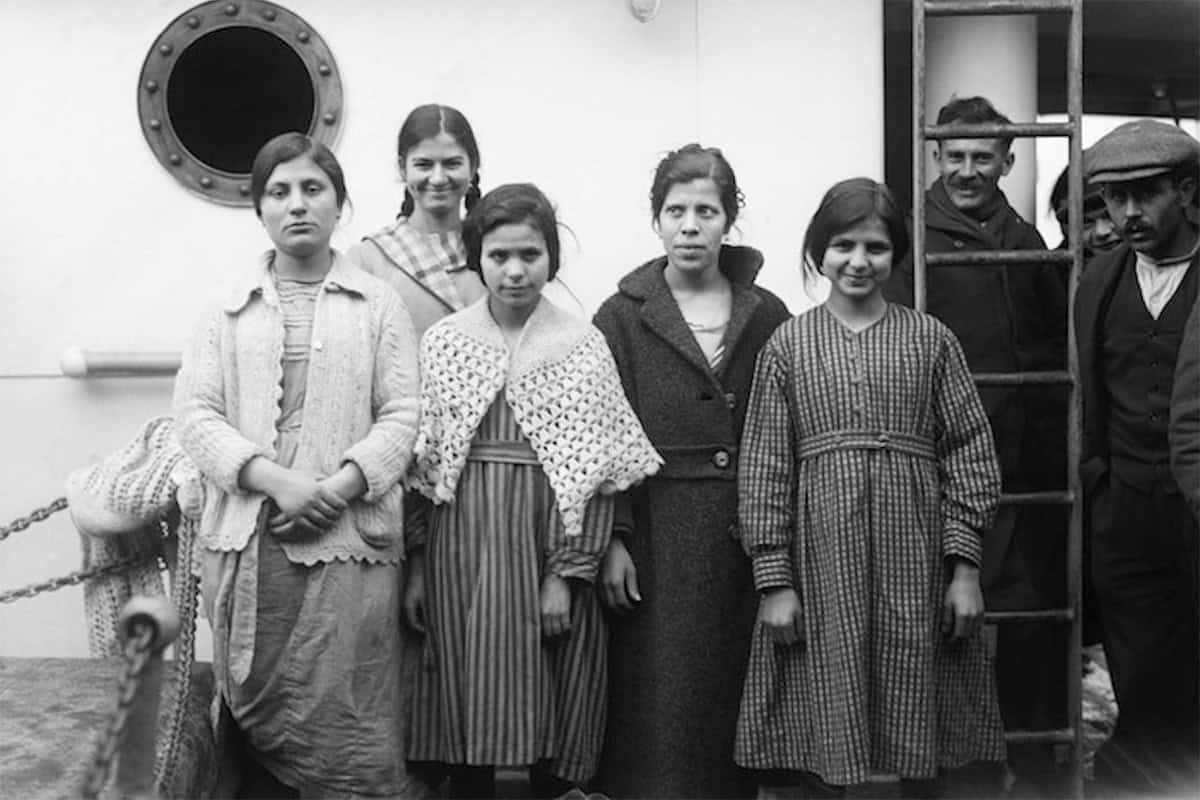
For many Greek-Americans, the search for family history begins with a story half-told. A name on a passenger list, a faded photo from the village, or the memory of a relative who left for America and was never spoken of again. The truth is often buried in archives scattered across Greece, but with the right approach those stories can be brought back to life. In Philadelphia, where one of the largest Greek-American communities has grown for over a century, that search often begins locally. Families turn first to Ellis Island records, baptismal logs from neighborhood churches, or even old AHEPA lodge files before reaching across the ocean to Greek institutions.
The heart of genealogical research in Greece lies in the General State Archives, founded in 1914 with offices in every region of the country. These archives hold millions of documents, from voter lists and military rolls to school registers and notarial records. Many have been digitized through the @ρχειομνήμων platform. Among the most valuable resources are the Mitroa Arrenon (Μητρώα Αρρένων), or male registers, which date back to 1817 and record names, fathers’ names, birth years, and birthplaces. Female registers, though rarer, are crucial for tracing maiden names.
Local town halls also preserve civil records such as births, marriages, and deaths. These became mandatory in 1925, but access can be difficult without legal standing. For earlier generations, parish registers are often the key. Baptism, marriage, and burial records, some dating back centuries, often include the names of godparents, witnesses, and extended family members, opening up entire networks of relationships.
For families touched by adoption or political upheaval, the trail may lead to other kinds of archives. Orphanages such as St. Stylianos in Thessaloniki, linked to Cold War adoption scandals, still have surviving files in the General State Archives. Court records can reveal information through land disputes and legal cases, while prison archives contain the stories of those persecuted during and after the Civil War. Organizations like the Roots Research Center and The Eftychia Project now support people navigating these difficult searches, offering expertise in family tracing and DNA testing.
The rise of digital platforms has made much of this work easier. Greek Ancestry, founded by historian Gregory Kontos, has built searchable databases of voter lists, refugee registers, and marriage records. FamilySearch, which microfilmed thousands of Greek records in the 1980s, provides free access in its Family History Centers. Commercial platforms like MyHeritage have also added Greek collections, including electoral rolls and local marriage records, making them searchable in English.
A recent change in the law has added urgency to these searches. In April 2025, the Greek government issued a decree allowing Greek-born adoptees abroad to reclaim citizenship. The law, based on the principle of descent, requires documentation proving family ties, and with the right records it is now possible to hold dual citizenship. For many in the diaspora, this legal recognition goes hand in hand with the emotional journey of finding their roots.
For those who want to understand the human side of Cold War adoptions, the podcast Born Greek – Made American tells the story of two sisters separated from their family in Greece and adopted in the United States. It sheds light on a hidden chapter of Greek-American history and asks what it means to reclaim the past decades later.
The power of these searches is best seen in the stories of those who have succeeded. Barbara Brown, adopted from Greece in 1959 and raised in the United States, spent decades searching for her birth family. With the help of DNA testing and The Eftychia Project, she finally identified half-siblings in Greece. In 2023, she traveled to meet them after 64 years apart. Sitting at the same table with brothers and sisters she had never known, she described the reunion as the missing piece of her life finally falling into place.
Another case uncovered by Gregory Kontos of Greek Ancestry revealed the final letter of Elias Kanaris, a resistance fighter executed by the Germans. He wrote to his two-year-old son before his death, leaving behind words of love and guidance. Decades later, his grandson in New Zealand discovered the letter. The family said the moment brought both pride and grief, connecting them with a man they had never met and with the courage of an entire generation. Read more in Kathimerini.
If you are ready to begin your own search, the first step is to gather what is already known: family papers, photographs, and oral histories. From there, the General State Archives can be explored online, while parish records in ancestral towns may provide earlier connections. Digital tools, such as Greek Ancestry, FamilySearch, and MyHeritage, can expand the search. For those facing missing records or adoption cases, organizations like the Roots Research Center and The Eftychia Project offer essential help.
How to Get Started Today
- Gather what you know: family papers, photos, oral histories.
- Search the General State Archives.
- Contact local parishes in ancestral towns for baptism, marriage, and burial records.
- Use digital platforms such as Greek Ancestry, FamilySearch, and MyHeritage.
- If adoption or missing records are involved, reach out to the Roots Research Center or The Eftychia Project.
Tracing Greek roots is never only about names in a ledger. Sometimes it is a reunion at a family table, sometimes a letter rediscovered that changes how a family understands its past. Every record carries a life, and every search has the power to restore a story that once seemed lost.