
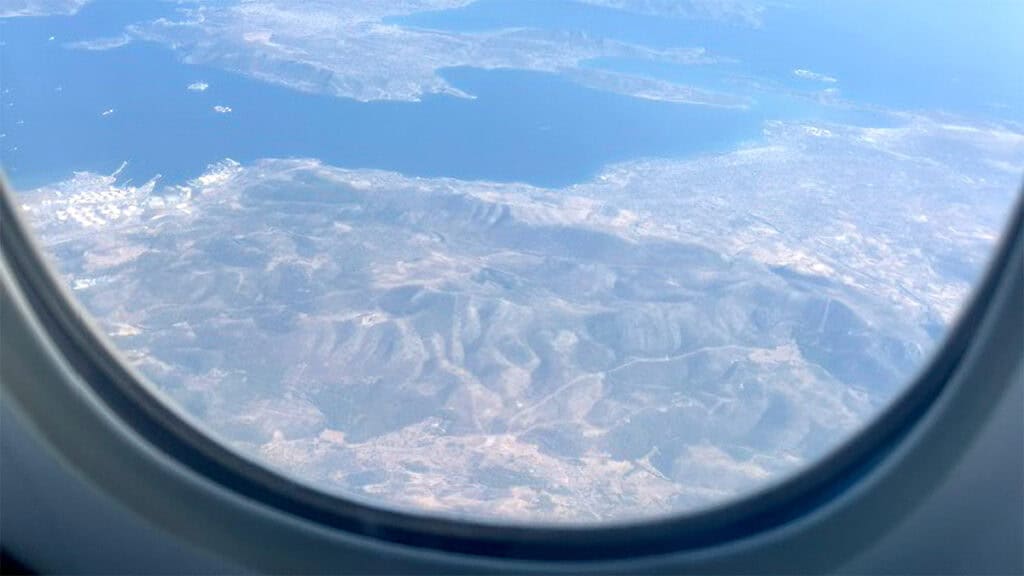
Every time I see Greece from the airplane window, I feel the same pull. As the mountains, islands, villages, and blue water come into view, there is a familiar sense of returning home.
For those of us with roots in Greece, home can be carried across generations. It lives in the stories our parents told us, the recipes passed down from our grandparents, the songs we heard growing up, and the traditions that stay with us wherever life takes us.
My family’s home is Tsotyli, in northern Greece. It is where our roots began and where I first learned what family and community could mean.
Growing up, I watched my mother care for the people around her in ways that seemed almost instinctive. She wanted to know whether everyone had eaten, whether they were comfortable, whether they had what they needed. She rarely thought of this as sacrifice. To her, it was simply agapi, love expressed through care.
As I grew older, I began to recognize the same habits in myself. I find happiness in preparing a meal, welcoming people into my home, and making sure those around me feel comfortable and included.
That is also how I came to understand filoxenia.
The word is often translated as hospitality, but what I learned was less formal. It was an open door, another chair at the table, food offered before anyone asked for it, and the instinct to make a guest feel at home.
My life later connected me to a second Greek home.
Through my husband, a fellow Greek American who shares my love for Greece, I became part of a family in Patras. There I met my beloved Thea Voula, who welcomed me with a warmth that reminded me of the women who had raised me.
She guided me, supported me, and made me feel that I belonged. Through her, Patras became much more than my husband’s family home. It became part of my own story.
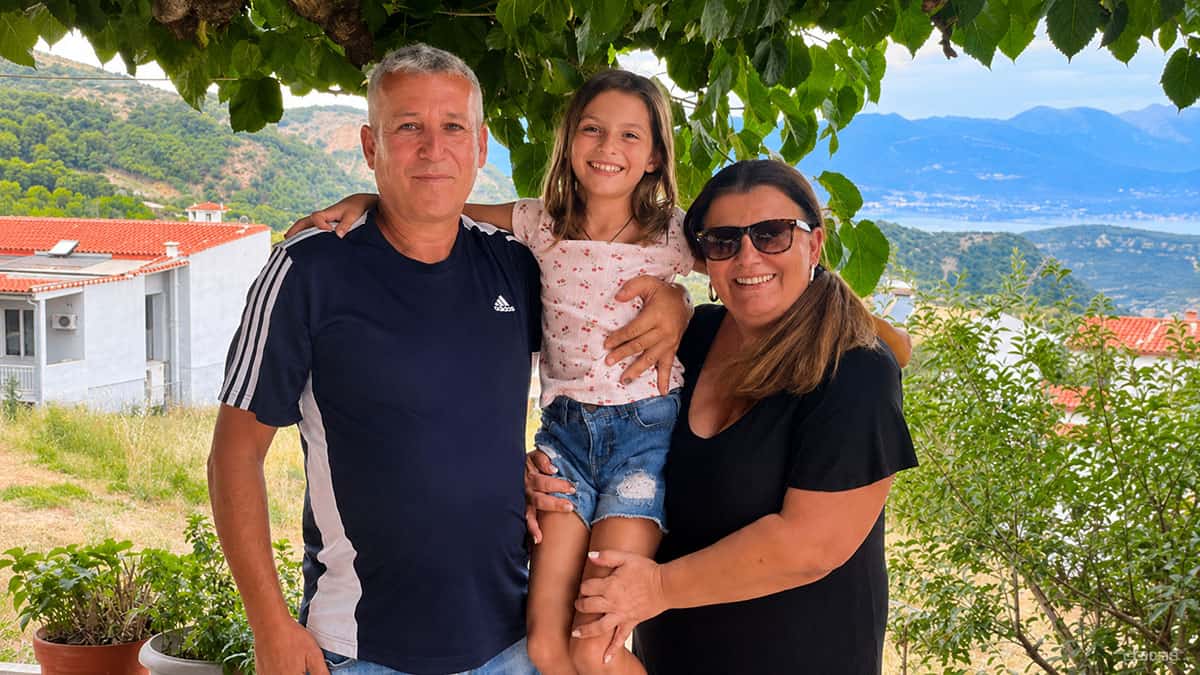
My husband and I have built our life in America while trying to keep these connections alive for our daughter, Georgia.
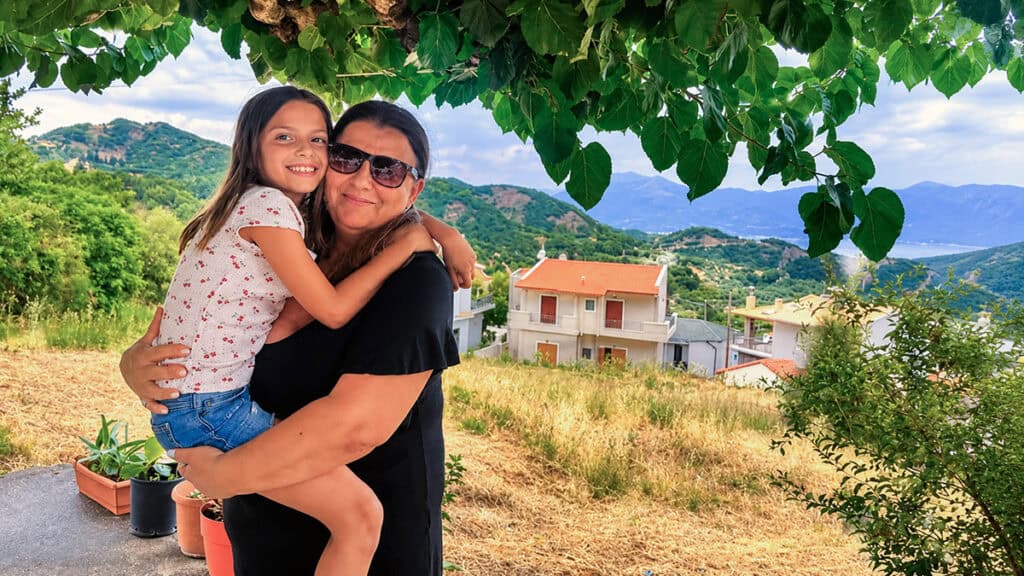
She was born in the United States, but Greece has always been part of her life. Watching her spend time with family, form her own memories in Tsotyli and Patras, and develop her own relationship with Greece has given me a different perspective on the traditions I inherited.
I once experienced them as a daughter. Now I also see them as a mother.
Some of the lessons are simple. Family comes first. Care is often shown through food, time, and presence. A shared meal can become a memory that stays with you for years. Traditions survive when someone takes the time to practice them and pass them on.
When I look at Georgia, I think about my mother and the generations before her. I also think about what it means to pass those traditions on.
For our family, that happens at home and around the table. It happens in the meals we prepare, the stories we repeat, the visits to Greece, and the way we welcome people into our lives.
Today, I carry two Greek homes in my heart: Tsotyli, where my family story began, and Patras, where another part of that story continues.
They are different places with different memories, but both have taught me something about belonging.
Perhaps that is what I value most about filoxenia. It is not an abstract idea or a word preserved only because it is Greek. I recognize it in the people who have cared for me, in the way I try to care for others, and in what I hope my daughter carries forward.
The inheritance we receive from our families is not always something we can hold. Sometimes it is a habit, a memory, a way of welcoming someone through the door.
And sometimes it is as simple as making sure there is always room at the table.