
A major logistics investment in western Attica is being positioned as a new gateway for trade between Asia and Europe. Yet important details around its scale, timeline, and permitting remain fluid.
The development, known as Hull Logistics Park, has been designated a Strategic Investment by the Greek state. Backed by OB Streem, the logistics platform linked to U.S. based HIG Capital, it is designed as a trimodal hub connecting sea, rail, and road in a single location.
On paper, the concept is straightforward. A 291,000-square-meter industrial site, along the Athens–Corinth national road and close to the Thriasio freight corridor, is being redeveloped into a logistics center capable of handling goods moving between Asia, the Mediterranean, and central Europe. What is less clear is how large the development ultimately is and how far along it really stands.
Competing numbers
Official government filings provide the clearest baseline. The investment, as registered under Greece’s Strategic Investments framework, is set at €244.2 million, excluding VAT, covering warehouse construction, office space, and infrastructure linked to the site’s coastal access. The financing structure combines equity from an HIG-affiliated investment vehicle with bank lending covering most of the cost.
Much of the public discussion, however, has centered on a different figure. In March 2026, OB Streem secured financing of up to €655.5 million through syndicated bond loans. That number has often been cited in connection with the Aspropyrgos site, although it applies to the company’s broader expansion strategy, including refinancing and acquisitions beyond this single development. The distinction is central, as the €244 million figure reflects the registered investment plan, while the €655 million figure reflects the scale of the platform behind it.
Beyond financing, the picture becomes less precise. Estimates of warehouse capacity generally range between 170,000 and 200,000 square meters across multiple phases, though the final figure depends on detailed design and leasing. Timelines have also shifted. Earlier expectations pointed to a relatively fast build, while more recent reporting suggests phased completion could extend toward the end of the decade, subject to permitting and tenant demand.
Such variation is not unusual for projects of this scale, where design, leasing, and phasing evolve over time. Even so, the absence of a single, consistent set of figures suggests that key aspects of the development are still being defined.
Permitting and delays
Despite its fast-track classification, the environmental review has not been seamless. In July 2025, the Attica Regional Council returned the Environmental Impact Study for revisions, citing flood-risk exposure and the need for clearer documentation of soil conditions linked to the site’s industrial past.
These are not minor issues. Western Attica is a heavily industrialized area, and parts of the site fall within zones that require careful planning for water management and environmental remediation. Recent reporting indicates that a revised study received a positive regional opinion in early 2026, though a fully documented final approval, including formal environmental terms, has not yet been clearly published in the official regional record as of March 2026.
Until that step is completed, the project remains in a transitional phase between planning and construction. Taken together, the shifting timelines, unresolved permitting details, and inconsistent project metrics suggest that the development is still earlier in its lifecycle than the headline investment figures might imply.
A corridor taking shape
The logic behind the investment extends beyond the site itself. Western Attica is steadily developing into a logistics corridor linking the Port of Piraeus with inland freight infrastructure and highway networks. Over the past decade, Piraeus has become one of Europe’s busiest container ports. The next step is moving those goods efficiently inland.
This is where projects like Hull are meant to operate, positioned between port entry and inland distribution. The site’s design reflects that role, combining proximity to freight rail lines with a planned coastal interface intended to connect directly into maritime flows. Whether that design delivers its intended advantage will depend on coordination across the broader system. Port operations, rail capacity, and road infrastructure must function together, and weaknesses in any one layer can limit the effectiveness of the whole.
The development is also entering a market where demand is already strong. In Attica, particularly around Aspropyrgos and Thriasio, modern logistics space remains limited. Vacancy rates for high-quality facilities are low, and companies are increasingly securing space in advance through pre-leasing agreements. That dynamic supports new supply, but it also raises expectations around delivery timelines and execution.
Competition is growing as other logistics developments in western Attica target the same tenants and offer similar access to key transport routes. The distinguishing feature of Hull is its trimodal design, though whether that translates into a lasting advantage will depend on how effectively it is implemented and integrated into the wider network.
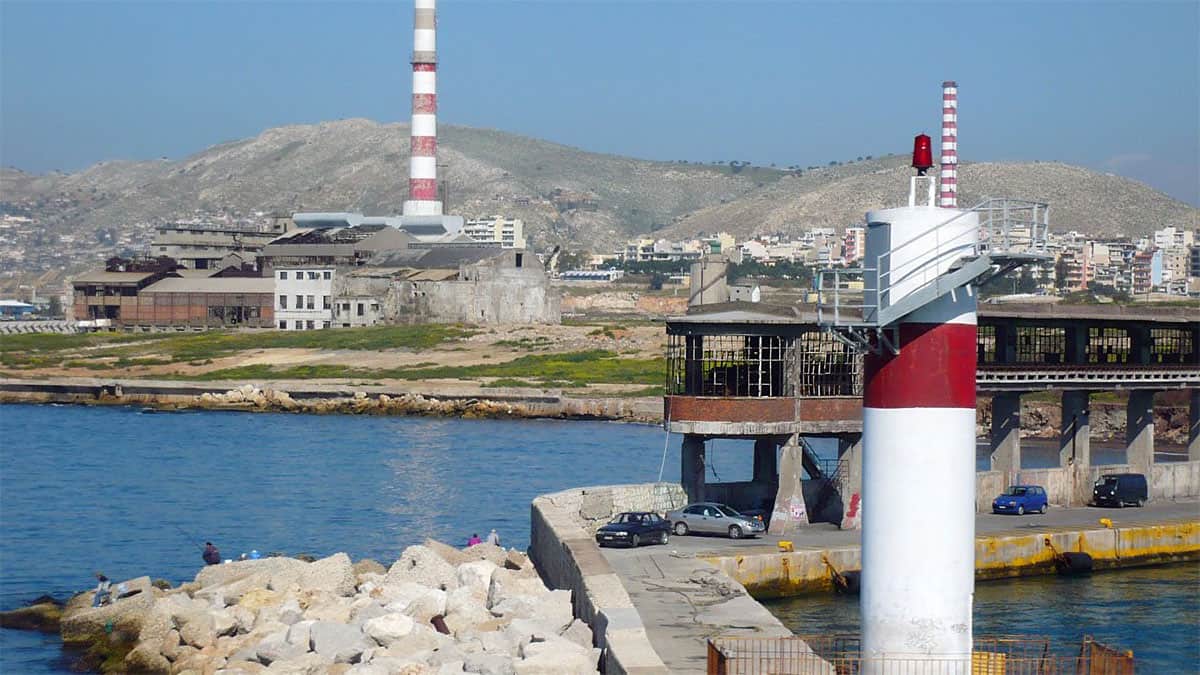
The redevelopment of the former Hellenic Steel Works site reflects a broader shift in Greece’s economy. Industrial land that once supported heavy manufacturing is being repurposed for logistics and distribution, sectors that have gained importance as global supply chains become more complex and more fragile. The project is expected to create more than 1,200 permanent jobs, a figure often cited to underline its economic weight, though it remains tied to full build-out.
The strategy is clear, the capital is committed, and the location is strong. The next phase will determine whether the project can move from plan to operation.
That transition is not only a local question of execution. The involvement of U.S.-linked capital in western Attica places the project within a broader effort to build alternative logistics routes across the eastern Mediterranean as supply chains adjust to geopolitical risk. Greece, because of its location, sits at the center of that shift. Whether it can fully take on that role will depend less on announcements and more on delivery.