
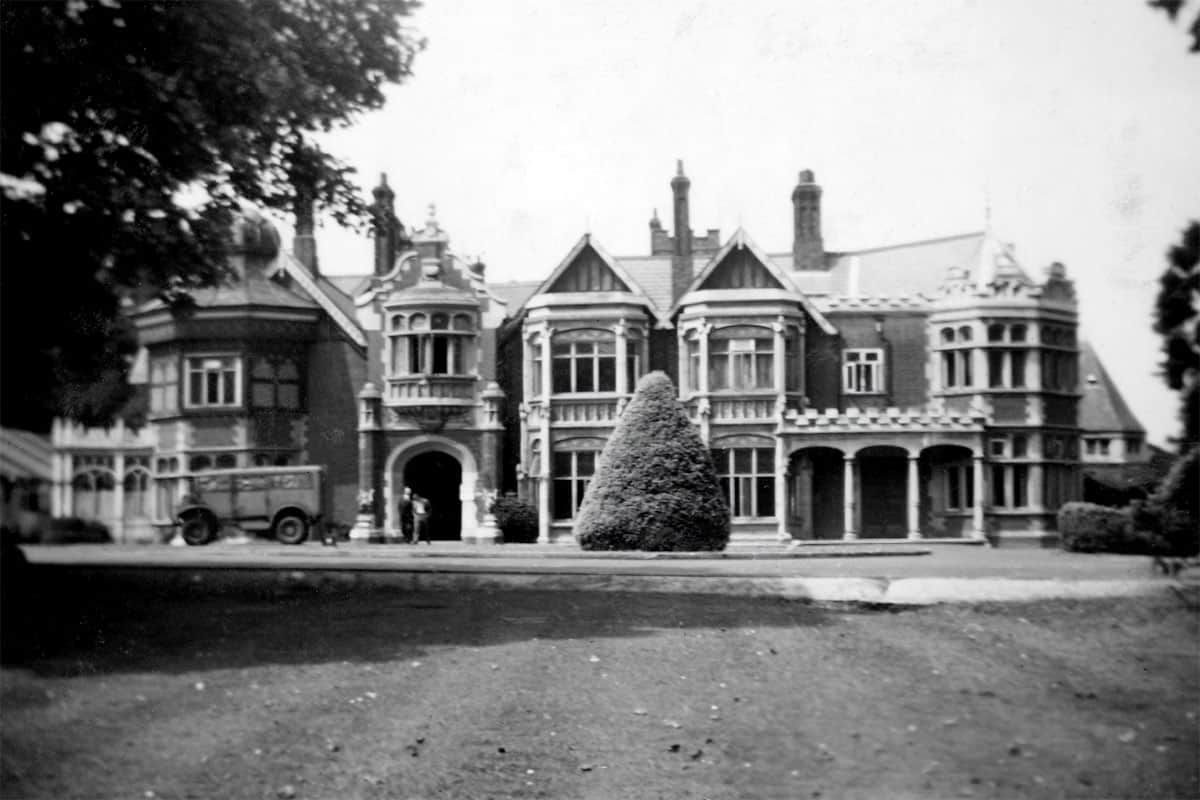
When most people hear the name Bletchley Park, they think of Alan Turing, Enigma, and the secretive British minds who cracked Hitler’s codes.
Hidden in the countryside north of London, the estate became the center of Britain’s intelligence effort during World War II. Behind its guarded gates, thousands of people worked around the clock, sifting intercepted signals, breaking codes, and feeding life-saving intelligence to generals and pilots on the front lines.
It is one of the most famous stories of the war. What is less known is that among this extraordinary gathering of minds was a man of Greek heritage, Peter John Ambrose Calvocoressi.
From Chios to the World
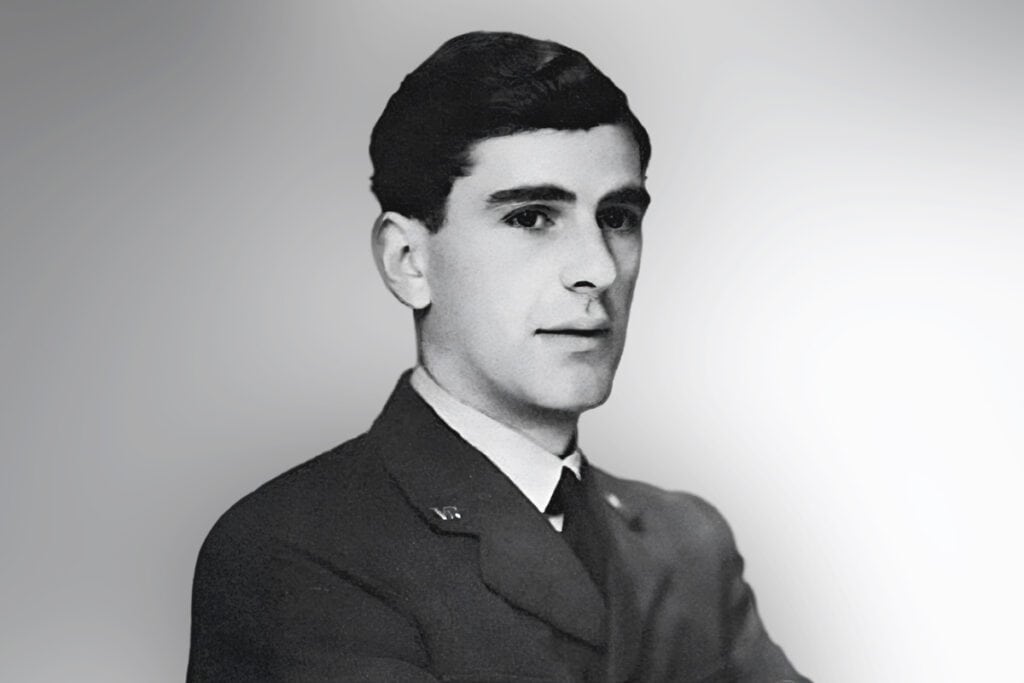
Calvocoressi’s story begins far from Britain. He was born in Karachi in 1912, part of the extended Greek merchant world that had spread across the globe. His family came from the island of Chios, long known for its powerful trading families. Through his mother, Irene Ralli, he was connected to the Ralli Brothers, the great merchant dynasty that built its fortune in London and across the British Empire.
These Greek families carried their heritage proudly, blending classical education with modern business success. By the time Peter grew up, the family was firmly rooted in Britain. Yet his Greek origins sometimes presented obstacles. In 1934, he was barred from entering the British Diplomatic Service because his father had been born in France. When he sought advice from British politician Anthony Eden, he was also warned that his Greek surname would hinder his prospects.
Only a few years later, the war took his career in an unexpected direction. Calvocoressi, trained as a lawyer, joined Royal Air Force intelligence and, in early 1941, was assigned to a secret establishment outside London that even he initially knew little about: Bletchley Park.
Hut 3 and the Air War
Bletchley Park operated like a small town of secrets. Huts and blocks dotted the grounds, each with its own focus. Calvocoressi was placed in Hut 3, which handled decrypted German army and air force communications.
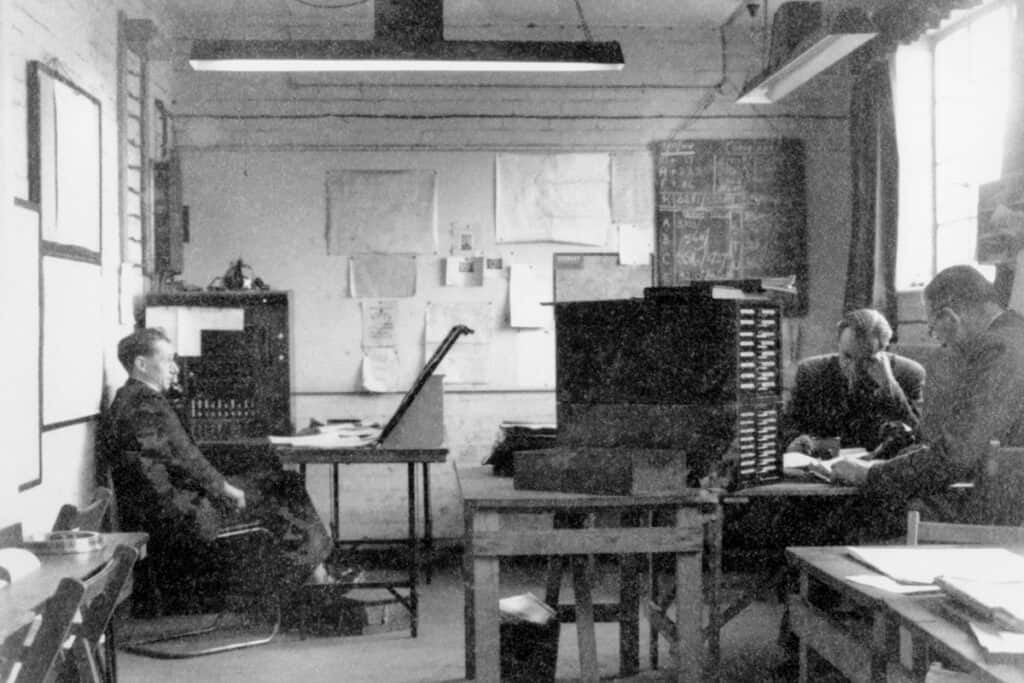
Calvocoressi joined the Air Section as deputy head and became its head in December 1944. His team turned decrypted Enigma messages into intelligence reports. The codebreakers in neighboring huts produced the decrypted German text, but Hut 3 had to make sense of it: translate, analyze, and deliver intelligence that could be acted on quickly.
The Luftwaffe remained a major focus of British intelligence throughout the war. Calvocoressi and his colleagues examined intercepted communications concerning German aircraft movements, military orders, and operational plans. Their work helped Allied commanders understand the organization and activities of the German air force.
The information was part of Ultra, the highly classified intelligence obtained from decrypted enemy communications. Ultra reached senior British officials, including Winston Churchill, and Allied commanders. It provided important insights into German military operations, although Calvocoressi himself cautioned against exaggerating its overall contribution to the war.
A Greek in a Secret World
Bletchley Park drew many of its recruits from Oxford and Cambridge, other British universities, the armed services, and the Commonwealth. Its wartime workforce also included people from elsewhere in Europe and North America.
Calvocoressi’s presence was nevertheless striking to him. Having been excluded from the diplomatic service because of his family background, he was surprised that the authorities had allowed a man of Greek heritage into one of Britain’s most sensitive intelligence operations.
As historian Mark Baldwin has noted, wartime demands brought some relaxation of the restrictions that had previously limited access to government service.
There were others at Bletchley who carried a different kind of Greek connection. Several classical scholars were recruited for their linguistic and analytical skills. Alfred “Dilly” Knox, a scholar of ancient Greek papyri, became one of the most important British cryptanalysts of the war. His earlier work with ancient manuscripts had helped develop skills useful in cryptanalysis, as GCHQ’s account of his career explains.
One account in The Spectator even recalls eccentric Bletchley staff amusing themselves by conversing in ancient Greek at local pubs.
But while these scholars engaged with Greece through language and classical studies, Calvocoressi’s connection was one of heritage and family history.
Beyond the War: Nuremberg and History
When the war ended, Calvocoressi’s service did not. He was called to help prepare the Nuremberg trials, where Nazi leaders faced prosecution for war crimes and crimes against humanity.
His legal training and wartime intelligence experience proved valuable. A United Nations biographical record confirms that he was accredited to the four principal delegations representing the United States, Britain, France, and the Soviet Union.
That position gave him access to evidence gathered for the proceedings and a role in the effort to build cases against the Nazi leadership.
Later, he built a respected career as a writer, publisher, and historian. His books ranged from military history to politics, and he became known as an analyst of international affairs.
After the secrecy surrounding Bletchley Park began to lift in the 1970s, he was finally able to write publicly about his wartime experience. His book Top Secret Ultra, published in 1980 and reissued in an expanded edition in 2025, described the work of interpreting German communications and the intelligence operation of which he had been part.
He lived until 2010, his long life spanning nearly a century of Greek and British history intertwined.
A Greek Footprint in a Global Story
For the Greek diaspora, the story of Peter Calvocoressi is a reminder of how heritage surfaces in unexpected places. From the merchant houses of Chios to the secret huts of Bletchley Park, his life bridged worlds.
He was not the most famous figure at Bletchley, nor the most eccentric. But his leadership in the Air Section mattered. The intelligence his team produced helped Allied commanders better understand German air operations during the war.
And his journey, from being excluded from the diplomatic service because of his family background to being trusted with some of Britain’s most closely guarded secrets, shows how people of Greek heritage contributed to the wider world in ways that were not always visible.
Today, Bletchley Park is a museum visited by thousands each year. Among the stories preserved there is that of a man whose Greek family roots reached back to Chios and whose work helped Allied commanders understand the German air war.
Peter Calvocoressi’s contribution may be less familiar than those of Bletchley’s celebrated codebreakers, but it remains part of the history of the intelligence operation that helped shape the outcome of World War II.