
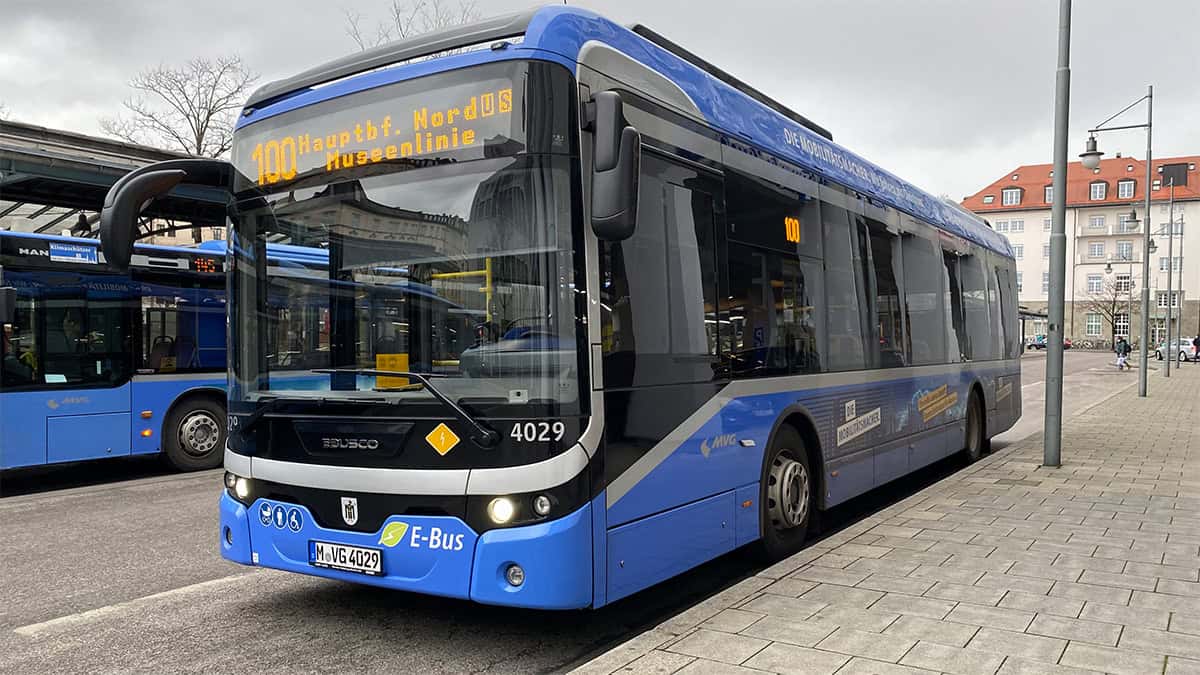
In Thessaloniki, Lizetta Tila worked as a primary-school teacher with a background in special education. In Munich, she drives scheduled bus routes.
Tila moved to the Bavarian capital in 2024. When she arrived, the scale of Munich’s transportation system surprised her, according to a September 23 profile by Johanna Feckl in Süddeutsche Zeitung.
By then, Munich was already dealing with a shortage of drivers. The city’s main public transport operator, MVG, had reduced bus service in autumn 2023 because of staffing shortages. By September 2025, it was able to restore its full daytime schedule, ending planned restrictions that still affected 17 lines. MVG said it had expanded training and sought drivers both locally and internationally.
Private operators have taken similar steps. A case study from the Munich and Upper Bavaria Chamber of Commerce describes how Autobus Oberbayern turned to international hiring as suitable drivers became difficult to find locally. At the time, about one-third of its newly hired bus drivers were moving to Munich from outside Germany, predominantly from other European Union countries.
Greece was one of the places the company searched. Autobus Oberbayern reached prospective drivers through online platforms and recruiters, conducted interviews in Greece, and used Greek-speaking employees during the process. It also provided temporary accommodation for incoming workers until they found housing of their own.
The practice has a long historical precedent. On March 30, 1960, West Germany and Greece signed a labor recruitment agreement that sent hundreds of thousands of Greeks north in the years that followed. Munich became one of the principal gateways for those workers before many continued to factories, mines, and construction jobs across West Germany.
That history remains visible in today’s population.
At the end of 2025, Germany’s Central Register of Foreigners counted 347,225 Greek citizens. More than half, 177,965, had lived in Germany for at least 25 years, and the average duration of residence was 27.2 years. Another federal table shows that 70,025 Greek citizens had been born in Germany. The figures are based on citizenship, so they do not include everyone of Greek ancestry who holds only German or another citizenship.
The latest migration figures add another layer. Germany counted 14,667 arrivals of Greek citizens in 2025 and 17,212 departures, leaving a net balance of minus 2,545. Because the statistics are organized by citizenship, they do not show whether each person arrived directly from Greece or left Germany for Greece.
That negative balance does not conflict with Munich employers continuing to look for drivers in Greece. Companies can face shortages in particular occupations even during a year when departures among one nationality exceed arrivals.
Greek-language education in Germany has faced a different staffing problem. In September 2024, Kathimerini reported that 13 of 28 programs in the Stuttgart and Frankfurt regions were at risk of remaining closed because there were not enough teachers.
Some of these schools and programs depend on educators seconded from Greece. In May 2026, Greece’s Education Ministry said that 745 seconded teachers were serving more than 41,000 students worldwide.
The two staffing problems are separate. Munich bus operators have looked to Greece for drivers while educational programs serving Greek communities in Germany have struggled to secure enough teachers from Greece.
Tila’s move belongs to a Greek-German labor relationship that is still changing. In 2025, departures of Greek citizens from Germany exceeded arrivals, even as Munich transport operators continued searching internationally for drivers.