
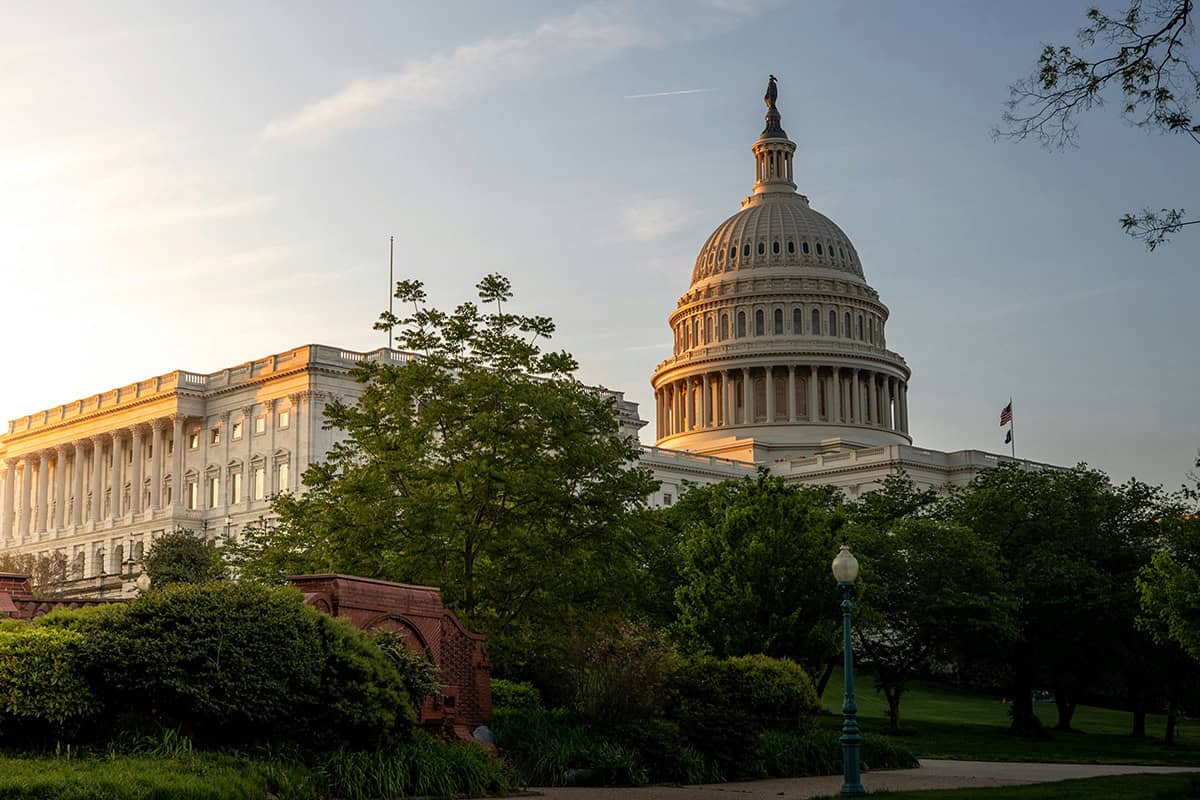
Some of the work of Greek-American advocacy happens far from cameras, in written testimony, committee records, and budget requests. On June 18, American Hellenic Institute President Nick Larigakis put AHI’s case for Greece, Cyprus, and the Eastern Mediterranean before Senate appropriators.
The testimony went to the Senate Appropriations Subcommittee on State, Foreign Operations, and Related Programs, as lawmakers consider foreign assistance priorities for Fiscal Year 2027.
AHI asked the subcommittee to support several programs tied to Greece and the Republic of Cyprus.
The request included at least $1.8 million in International Military Education and Training for Greece, at least $500,000 in IMET for Cyprus, at least $25 million for the European Recapitalization Incentive Program, including support for Greece, at least $6 million in Foreign Military Financing for Greece, and continued funding for UNFICYP, the United Nations peacekeeping force in Cyprus.
“AHI’s recommendations are made in the best interests of the United States,” Larigakis said in the organization’s announcement. He added that AHI wanted those positions entered into the congressional record as lawmakers weigh FY2027 appropriations.
The testimony presents Greece and Cyprus as partners Washington can rely on in a difficult region. AHI pointed to the war in Ukraine, instability in the Middle East, maritime security risks, energy disruptions, and Iran’s regional proxies as reasons the Eastern Mediterranean should remain high on the U.S. policy agenda.
Greece received particular attention. AHI cited Souda Bay in Crete, the Port of Alexandroupolis, NATO facilities in Greece, joint military exercises, defense spending, and Greece’s role in moving liquefied natural gas into the Balkans and Central Europe.
The testimony also referenced recent White House language on U.S.-Greek ties, including President Donald Trump’s Greek Independence Day proclamation and remarks about possible shipbuilding cooperation and Greece’s NATO defense spending.
AHI also pointed to Greece’s formal designation as a partner of the Florida National Guard through the U.S. National Guard’s State Partnership Program. According to the testimony, the partnership is expected to cover areas such as joint training, maritime security, cyber defense, and disaster response.
Cyprus was framed through both security cooperation and the unresolved Cyprus problem. AHI praised the U.S.-Cyprus Strategic Dialogue, the multi-year Defense Cooperation Roadmap, and the State Partnership Program between the New Jersey National Guard and the Cypriot National Guard. It also called for the full and permanent lifting of remaining U.S. arms restrictions on the Republic of Cyprus.
The Cyprus section also brought the issue back to 1974. AHI cited the continued presence of Turkish troops in the occupied north, attempts to alter the status of Varosha, and restricted access to sites connected to the search for missing persons. The testimony said the remains of 950 Cypriots and four Americans remain unidentified since the Turkish invasion.
On Turkey, AHI asked lawmakers to oppose foreign aid, apart from humanitarian assistance during crises, unless Ankara shows what the group described as a clear and sustained commitment to U.S. law, NATO obligations, and the rules-based international order.
The testimony cited Turkey’s Russian S-400 missile system, the concerns it raises under CAATSA, and Turkey’s removal from the F-35 program, along with its actions in the Eastern Mediterranean and continued military presence in occupied Cyprus.
AHI also tied its requests to the U.S.-Greece-Cyprus-Israel “3+1” framework. The organization endorsed the Eastern Mediterranean Gateway Act and the American-Hellenic-Israeli Eastern Mediterranean Counterterrorism and Maritime Security Partnership Act, two bills aimed at deepening cooperation on security, maritime awareness, counterterrorism, infrastructure, and economic links.
The testimony does not decide funding by itself. It places AHI’s position before lawmakers while the FY2027 appropriations process moves forward. For the Greek-American policy community, the message was familiar but direct: Greece and Cyprus should be treated as dependable U.S. partners in a region where Washington has fewer of them.