
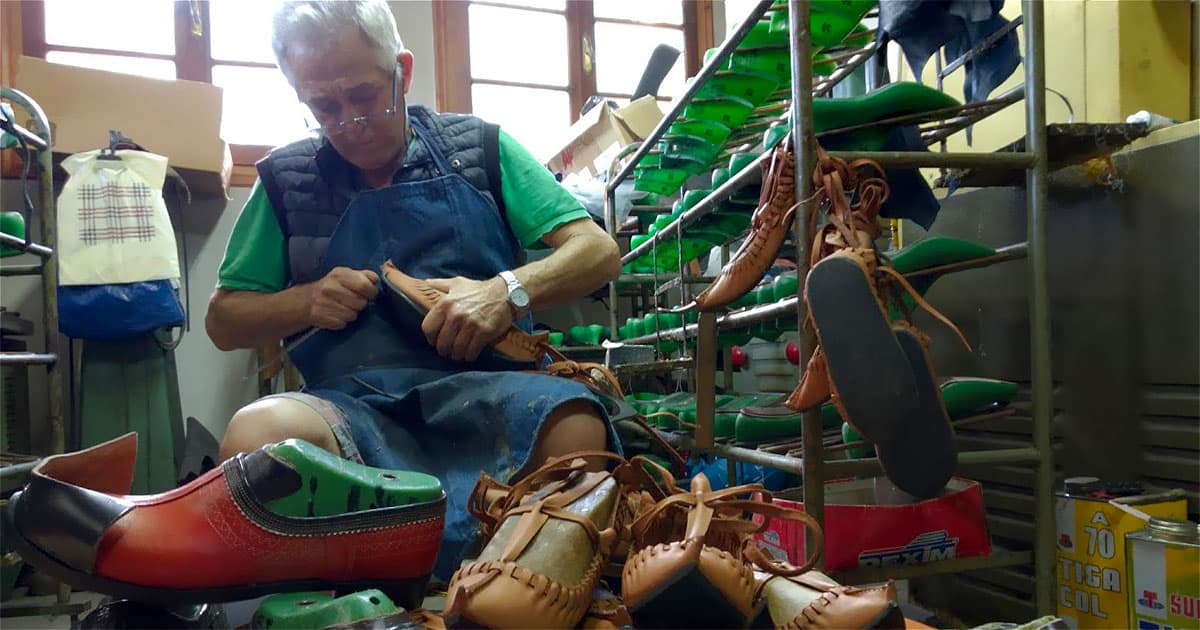
In Kastania, a small mountain village in Karditsa, there’s a workshop where the sound of hammer on leather hasn’t really changed in more than a hundred years. The Kogias family started making traditional Greek shoes here in 1910, when Antonios Kogias opened his shop. He made tsarouchia, gourounotsaroucha, and other local footwear, all by hand, and his work became known well beyond Thessaly.
Back then, Kastania was a lively place. It had workshops for shoemaking, tailoring, and metalwork, busy traders, a school with more than 200 students, and the seasonal passing of Sarakatsani shepherds moving between the plains and the Agrafa mountains.
When people started leaving for the cities, Antonios’ son Vangelis moved the business to Karditsa in 1971. By then, almost no one wore tsarouchia every day. Most of his work was shoe repairs, with the occasional pair of traditional shoes for those who still wanted them. Later, he sold modern shoes to make a living.
In the late seventies and eighties, folk dance groups began to grow, and orders for tsarouchia picked up again. Today, some of those shoes end up on stage with Greek-American dance troupes in the Philadelphia area, like the St. George GOYA dancers from Media, PA, who took first place at the Metropolis Folk Dance Festival, and the Pan-Macedonian Youth of Philadelphia at their annual Pan-Macedonian Dance.
If you’ve been to Athens and seen the Evzones outside the Tomb of the Unknown Soldier, you’ve seen tsarouchia in action. The slow steps, the swing of the leg, and that sharp sound when the sole hits the ground all come from shoes made with stiff red leather and about sixty nails in the bottom. Each one weighs over three pounds.

The pompon is soft and round, but the rest of the shoe is built to last. They’re replaced often, worn hard through hours of standing guard and drill work, but every pair is made to the same exacting standard.
The design itself has been around for centuries. You can trace the word tsarouchi back to the Turkish çarık, and shoes like it were worn all over the Balkans and Asia Minor.
In Greece they became part of rural life, and later part of the image of the fighters in the War of Independence. The heavy soles and strong stitching meant you could walk mountain paths without worrying about the shoe giving way. The pompon, now mostly decorative, has been said to protect the toes and, according to some stories, hide a small blade.
The gourounotsaroucho, heavier and built for work, was once made from pigskin but today is usually calfskin.
These days, Vangelis’ son Ilias Kogias runs the workshop back in Kastania, where his grandfather started it. He still makes tsarouchia and gourounotsaroucha entirely by hand from waterproof calf leather. Orders come in from all over, central Europe, the United States, Asia, Australia. Most are from Greek cultural associations and families, but there are foreign buyers too.
“It’s something we didn’t expect,” Ilias says. “That’s why we try to make them better every time. This demand is a challenge for us.”
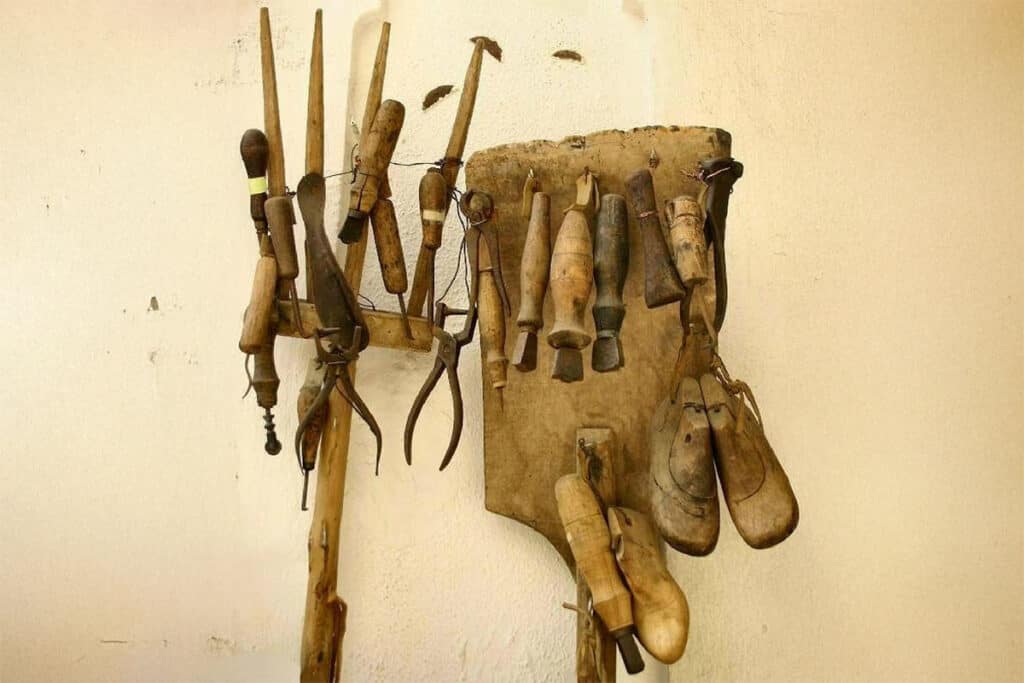
The shop also makes other traditional and specialty footwear. There are women’s dance shoes with ankle straps and cushioned cotton insoles, anti-slip soles for long hours of wear, and waterproof leather for outdoor use. There are men’s lace-up dance shoes and island-style slippers for different regional costumes.
He even makes authentic Cretan stivania, with waterproof uppers, goatskin lining, and stitched leather soles, as well as custom riding boots in Italian or German styles.
When one of those pairs ends up in the hands of a dancer in Philadelphia, New York, Chicago, Toronto, Melbourne, or a small city in Germany, it’s not just another package in the mail. It’s something that began in a small workshop in the mountains and found its way across the world.
Over time, the leather shapes itself to the person wearing it, the soles carry the marks of their steps, and the shoes become theirs alone. That’s how this craft keeps going, one pair at a time.