
Greece secured an exemption allowing European companies to continue carrying Russian liquefied natural gas to countries outside the European Union, clearing the final obstacle to the bloc’s 21st sanctions package against Moscow.
The provision is narrower than a general exemption for Greek shipping. Under Council Regulation (EU) 2026/1848, it applies only to qualifying long-term contracts concluded before Russia’s full-scale invasion of Ukraine on February 24, 2022. Later amendments are permitted only in the limited circumstances specified by the regulation.
Each operator is restricted to the volume of Russian LNG it transferred in 2025. Companies using the carveout must report their historical volumes and provide national authorities with information about subsequent shipments, including the vessels, destinations, cargo volumes and contract values.
The wider prohibition on Russian LNG transfers under long-term contracts takes effect on January 1, 2027. Qualifying shipments to non-EU destinations will be exempt until at least July 25, 2027, and thereafter in successive one-year periods unless the Council decides otherwise.
The European Commission must submit its first assessment by June 25, 2027. The Council may then shorten, extend or terminate the exemption based on its effectiveness, economic consequences and the circumstances of affected companies and member states.
The carveout does not reverse the EU’s decision to stop importing Russian LNG. Imports under existing long-term contracts remain scheduled to end on January 1, 2027. The new provision concerns cargoes carried by EU operators to buyers outside the bloc.
Athens had withheld its approval from the sanctions package, which required the agreement of all 27 member states. Greek officials argued that forcing European carriers out of the trade would not substantially reduce Russian revenue because operators from China, Japan, the United States or other countries could take their place.
“Sanctions should erode Russia’s economic capacity, not create strategic windfalls for others at Europe’s expense,” a Greek government official told Reuters during the negotiations. Athens said Europe risked surrendering part of the LNG shipping market without placing comparable pressure on Moscow.
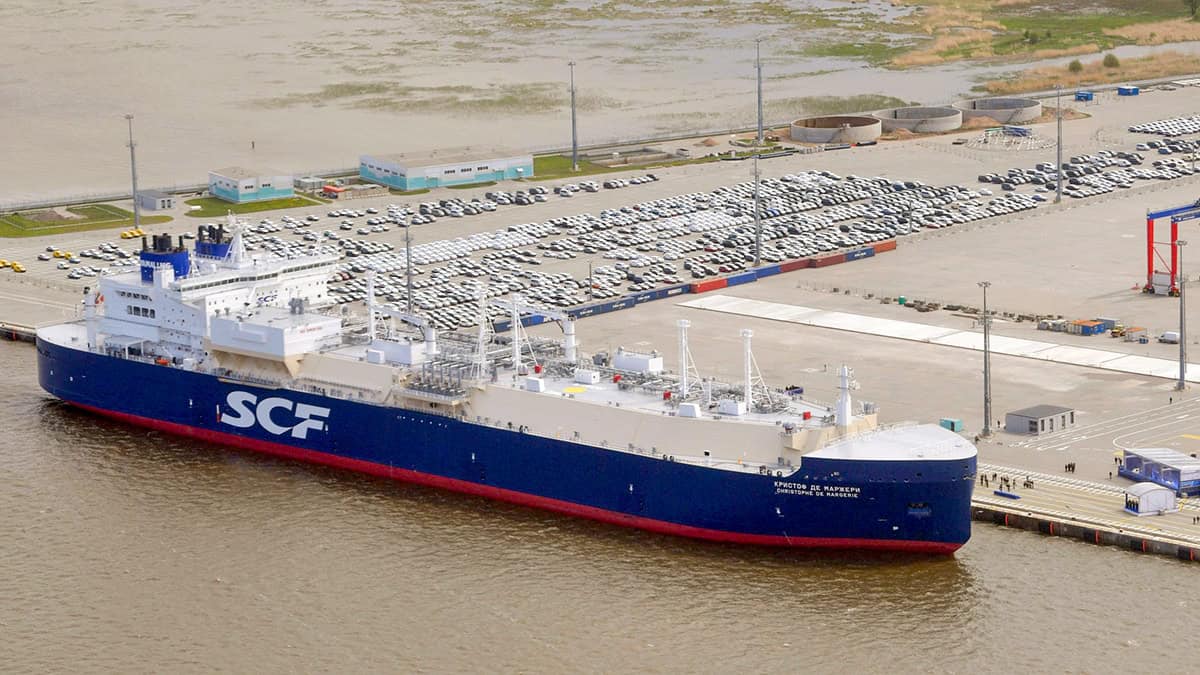
The talks centered on Athens-based Dynagas, whose specialized ice-class vessels serve the Yamal LNG project in the Russian Arctic. The company argued that removing Western operators would shift vessels and Arctic shipping expertise to companies outside Europe rather than stop the trade.
Dynagas LNG Partners, the publicly traded partnership chaired by Greek shipowner George Prokopiou, has two ice-class carriers employed by Yamal. The Yenisei River and Lena River are under long-term charters extending to 2033 and 2034, respectively.
Yamal generated 35 percent of the partnership’s revenue in 2025. In its annual filing with the U.S. Securities and Exchange Commission, the company warned that losing either or both charters would have a material effect on its finances and could trigger a default under its debt agreements.
That exposure helps explain why Athens pressed for relief, but it does not settle whether the original restriction would have reduced Russian earnings.
The Yamal project requires vessels capable of operating in Arctic conditions. That specialized fleet makes immediate replacement more difficult than shifting an ordinary commercial cargo between carriers. Longer routes to Asian destinations can also require more vessels because each voyage takes additional time.
A ban therefore could have raised Russia’s shipping costs and restricted the flexibility of its exports, even if non-European companies eventually entered the market. Greece maintained that those potential effects did not justify forcing European operators out of contracts signed before the invasion.
The compromise preserves qualifying contracts but does not allow unlimited new business. Operators cannot exceed their individual 2025 volumes. Contracts signed after February 24, 2022, or amended beyond the limited changes permitted by the regulation, do not qualify.
The LNG dispute was one part of the wider package adopted by the Council on July 23. According to the Council of the EU, the measures added 48 people and 170 organizations to EU sanctions lists.
They also imposed asset freezes and funding restrictions involving 94 banks and major financial institutions, listed 41 additional vessels connected to Russia’s shadow fleet and tightened export controls on 51 entities accused of supporting Russia’s military-industrial sector.
The package suspended the automatic adjustment of the Russian oil price cap until July 15, 2027, keeping the current ceiling at $44.10 per barrel unless the Council changes it following an interim review.
Greece secured protection for a narrow but valuable part of its shipping industry while accepting the remaining sanctions. The practical effect begins on January 1, 2027, when the broader Russian LNG prohibition applies.
The Commission must submit its first assessment within six months. The Council can then alter or end the carveout; otherwise, it will continue in successive one-year periods.