
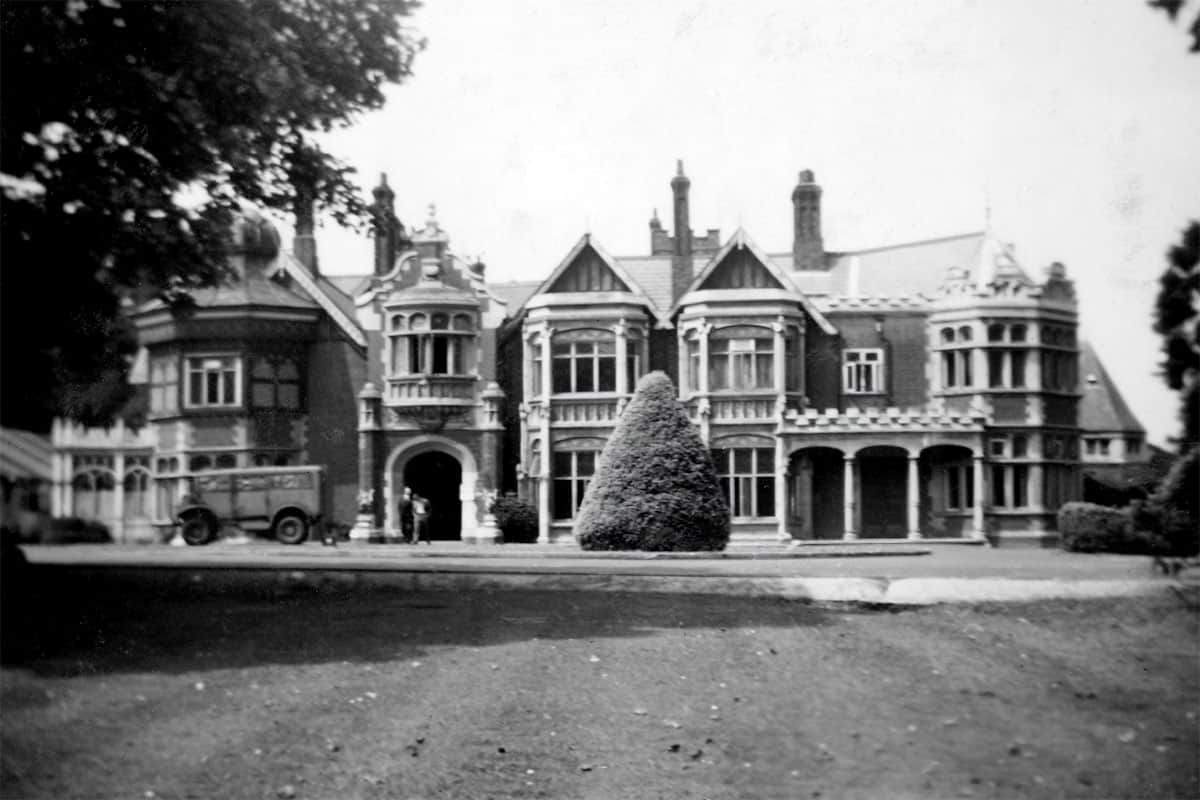
When most people hear the name Bletchley Park, they think of Alan Turing, Enigma, and the secretive British minds who cracked Hitler’s codes. Hidden in the countryside north of London, the estate became the center of Britain’s intelligence effort during World War II. Behind its guarded gates, thousands of people worked around the clock, sifting intercepted signals, breaking codes, and feeding life-saving intelligence to generals and pilots on the front lines.
It is one of the most famous stories of the war. What is less known is that among this extraordinary gathering of minds was a man of Greek heritage, Peter John Ambrose Calvocoressi.
From Chios to the World
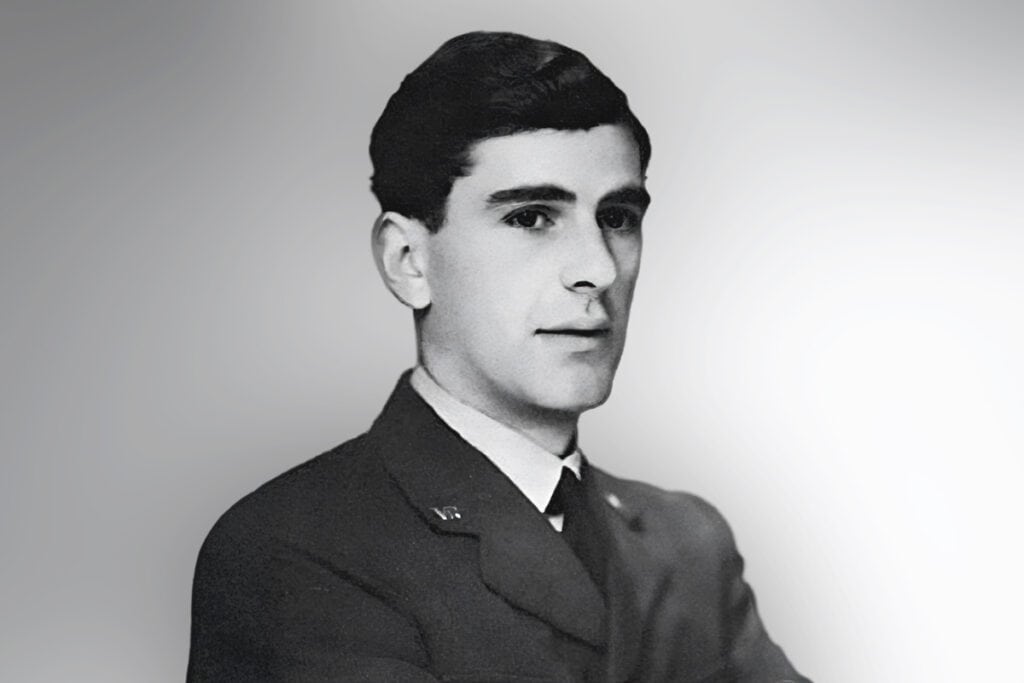
Calvocoressi’s story begins far from Britain. He was born in Karachi in 1912, part of the extended Greek merchant world that had spread across the globe. His family came from the island of Chios, long known for its powerful trading families. The Calvocoressis were linked to the Ralli Brothers, the great merchant dynasty that built its fortune in London and across the empire.
These Greek families carried their heritage proudly, blending classical education with modern business success. By the time Peter grew up, the family was firmly rooted in Britain. Yet, as he later admitted, his Greek origins sometimes felt like a barrier. In 1934, he had been turned away from the British Diplomatic Service because his parents were not British-born.
Only a few years later, when the war brought Britain to the edge of defeat, the rules changed. Talent mattered more than ancestry. Calvocoressi, trained as a lawyer, was recruited to a secret place outside London that even he knew little about: Bletchley Park.
Hut 3 and the Air War
Bletchley Park operated like a small town of secrets. Huts and blocks dotted the grounds, each with its own focus. Calvocoressi was placed in Hut 3, which handled German army and air force traffic.
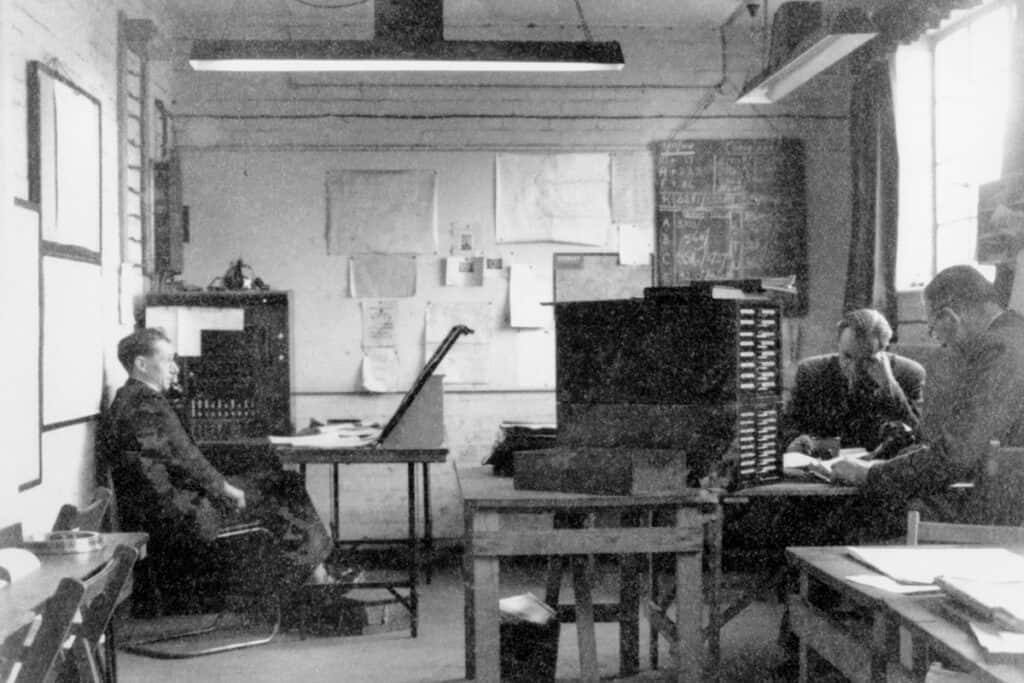
As head of the Air Section, he managed a team that turned decrypted Enigma messages into intelligence reports. The codebreakers in neighboring huts produced strings of raw German text, but Hut 3 had to make sense of it: translate, analyze, and deliver intelligence that could be acted on quickly.
The Luftwaffe was a constant threat. During the Battle of Britain, Calvocoressi’s team provided crucial details about enemy orders and planned attacks. Later, they revealed Hitler’s intention to invade Britain under the name Operation Sea Lion. Those plans never came to life, in part because British intelligence stayed one step ahead.
Ultra, as this top-secret intelligence was called, fed directly to Winston Churchill and Allied commanders. It shortened the war, saved lives, and gave Britain breathing room when it needed it most. Calvocoressi was at the center of it.
A Rare Outsider in a Secret World
Bletchley Park was, for all its brilliance, not especially diverse. Recruits came from Oxford and Cambridge, from London’s universities, and from the British Commonwealth. Few had foreign roots. That is why Calvocoressi’s presence is striking. He was one of the rare outsiders, a man of Greek descent admitted into Britain’s most sensitive wartime secret.
That fact was not lost on him. He once remarked that he was surprised the authorities allowed a Greek into the innermost circle of British intelligence. It was proof that necessity sometimes bent even the strictest rules.
There were others at Bletchley who carried a different kind of Greek connection. Several classical scholars were recruited for their linguistic skills, and their knowledge of ancient Greek was sometimes useful in codebreaking. Alfred “Dilly” Knox, a papyrologist who had studied ancient Greek texts, became one of the most brilliant cryptanalysts of the war. One account even recalls eccentric staff who amused themselves by speaking only ancient Greek in nearby pubs.
But while these men engaged with Greece through scholarship, Calvocoressi’s bond was one of heritage and family history.
Beyond the War: Nuremberg and History
When the war ended, Calvocoressi’s service did not. He was called to help prepare the Nuremberg trials, where Nazi leaders faced justice for crimes against humanity.
His legal training and wartime intelligence experience earned him accreditation to all four chief prosecutors representing the United States, Britain, France, and the Soviet Union. That unique position gave him access to a vast body of evidence and placed him at the heart of the effort to build the cases against the Nazi leadership.
Later, he built a respected career as a writer, publisher, and historian. His books ranged from military history to politics, and he became known as a sharp analyst of international affairs. He lived until 2010, his long life spanning nearly a century of Greek and British history intertwined.
A Greek Footprint in a Global Story
For the Greek diaspora, the story of Peter Calvocoressi is a reminder of how heritage surfaces in unexpected places. From the merchant houses of Chios to the secret huts of Bletchley Park, his life bridged worlds.
He was not the most famous figure at Bletchley, nor the most eccentric. But his leadership in Hut 3 mattered. Intelligence from his team helped Britain survive its darkest days.
And his journey, from being excluded for his origins to being trusted with the deepest secrets of the realm, shows how Greeks have shaped the wider world in quiet but powerful ways.
Today, Bletchley Park is a museum visited by thousands each year. Visitors walk past the huts where history was made. Few will know that in Hut 3, the son of a Greek family from Chios sat at the center of the war of codes.
It is a hidden story worth remembering, and a legacy that belongs to the wider Greek story in the twentieth century.