
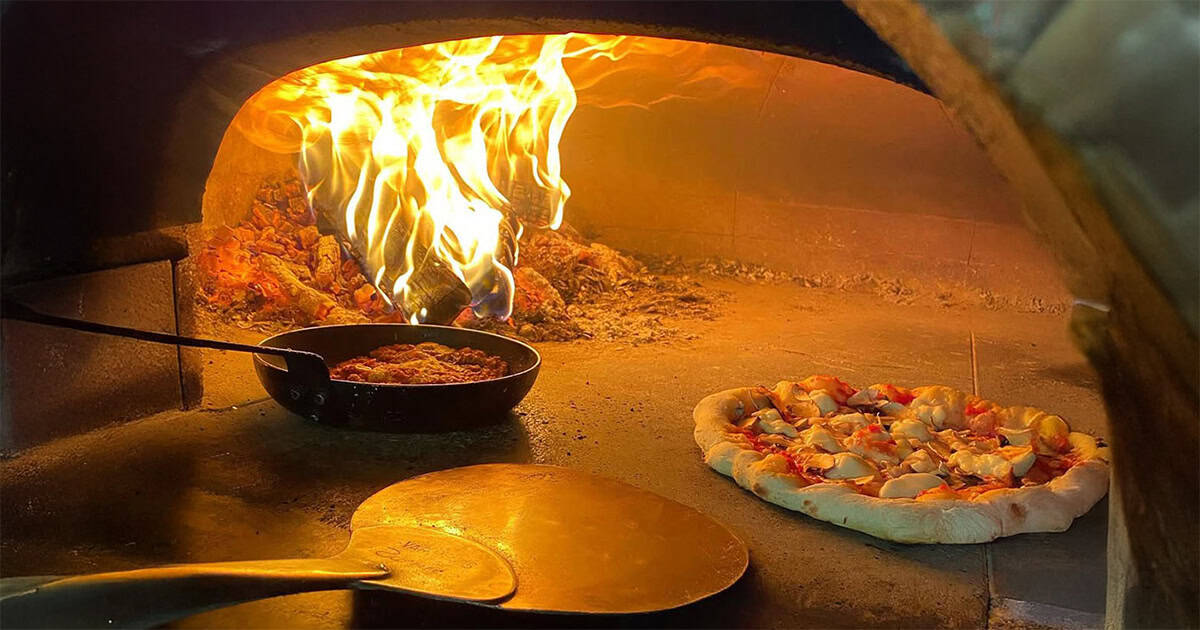
Everyone sees pizza as something purely Italian. And sure, Naples gave it the shape and name we know today. But when you grow up Greek or Greek-American, you start to notice how often the roots of something reach a little further back. In this case, all the way to plakous, the ancient Greek flatbread topped with olive oil, herbs, cheese, and sometimes onions. It wasn’t pizza yet, but the idea was already there. Warm dough from the oven, whatever ingredients you had on hand, something meant to be shared.
That tradition didn’t disappear. During the Byzantine years it became pitta. That word crossed into southern Italy and eventually turned into pizza. The first time it appears in writing is in 997 AD, in a town near Rome. But the concept of topping dough and baking it had already moved around the Mediterranean for centuries.
And then there’s Naples. Everyone knows the city as the birthplace of modern pizza, but fewer people remember that it was originally founded by Greeks. They called it Neapolis. Greek settlers brought their language, their gods, their bread-making traditions. The pizza we know today took shape in Naples much later, in the 18th and 19th centuries, under Italian hands and identity. But the city itself began with Greek roots, and that legacy still lingers beneath the crust.
If you’re curious about what remains of that connection today, take a look at Torchlight in Naples: A Greek Past That Still Burns Bright.
Modern pizza didn’t really take hold in Greece until the postwar years. And when it did, it wasn’t Italians who brought it in. It was Greeks who had gone abroad. In the 1950s and 60s, many Greek families moved to the US, Canada, or Australia. Some worked in diners or pizzerias. Some opened their own. When they returned to Greece in the 70s, they brought those recipes with them.
That exchange wasn’t one-way. While pizza took hold in Greece, Greek-owned diners transformed American cities from New York to Philadelphia to Jersey. For many families, diners weren’t just restaurants. They were a gateway to stability and identity. (Read more: Greek Diners & Restaurants – The Start of the American Dream)
If you grew up in that world, you know the style. Thick crust, heavy cheese, square slices, baked in deep pans. The kind your uncle wrapped in foil and handed you on your way out the door. That version found its place in Greece fast.
In Athens, Portofino Pizza helped define it. In Thessaloniki, Pizza Romea led the way. It opened in 1974 on Agiou Dimitriou and served thick, square slices baked in deep pans. The sauce had kick, the crust had crunch, and its late-night delivery felt ahead of its time. Romea grew across the city and became something people passed down.
Then came Pizza Sakis in Agia Triada, a favorite since the 80s for those who wanted old-school comfort. Soft, fluffy dough, simple toppings, no fuss. It didn’t chase trends — and that made it feel more permanent.
Pizza First landed near Navarinou a few years later and quickly became part of student life. A slice between lectures or on the walk home. No seats, no ceremony. Just fast, warm food that matched the city’s pace.
Up in Panorama, Villa Luna brought a different mood. It opened in the early 70s, starting with peinirli and evolving into a full café-bar-restaurant over time. People went for the view and stayed for the familiarity. It was one of those places where the food felt like it came from someone’s home kitchen.
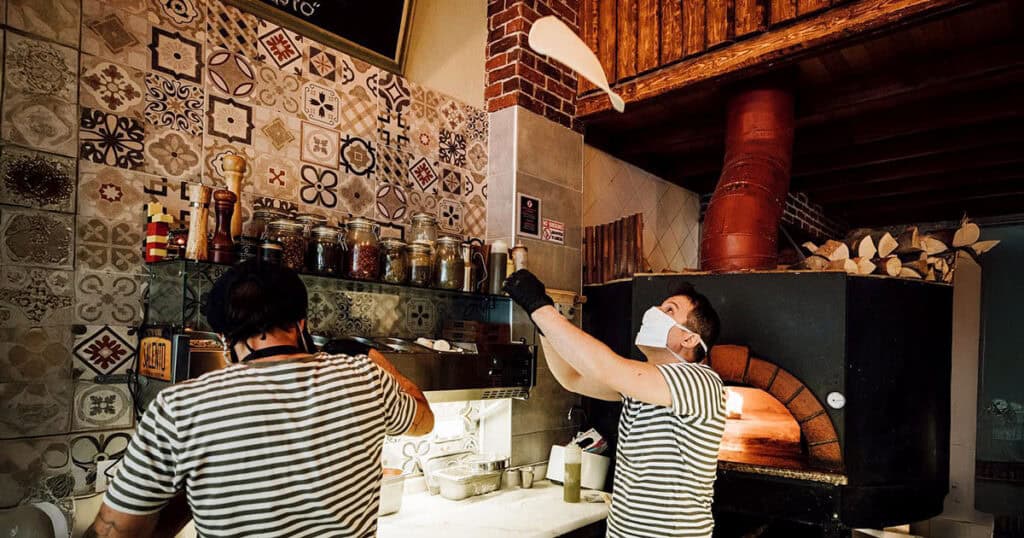
By the 2000s, a new kind of pizza started showing up. This time it came from chefs who had trained in Italy or studied the Neapolitan tradition. They brought in wood-fired ovens, long-fermented dough, San Marzano tomatoes, fior di latte. Places like Tonino and Margherita Artigianale started making lighter pies with puffy crusts and just a few toppings. Pizza Hood added turmeric and spinach to the dough. New ingredients came in. So did more focus on origin and craft.
Pizza Poselli arrived in the 2010s, just off Ladadika. It combined classic hand-tossed methods with creative Greek and Italian toppings. Named after Vitaliano Poselli, the Italian architect who helped shape modern Thessaloniki, it struck a balance between past and present. You could eat there late, watch the dough get stretched, and taste a version of pizza that felt rooted and fresh at the same time.
Thessaloniki made room for all of it. The port brought in ingredients and ideas. The students kept the ovens busy. And in 2021, the city became Greece’s first UNESCO City of Gastronomy, recognized for its deep food culture, innovation, and vibrant community. Pizza, more than most foods, adapted to that spirit.
Ask someone from the city where the best pizza is and you’ll hear different answers. Some will point to the square slice that reminds them of teenage years. Others will name a Neapolitan-style oven spot with only two ingredients on the menu. Either way, both are real. Both are part of the city.
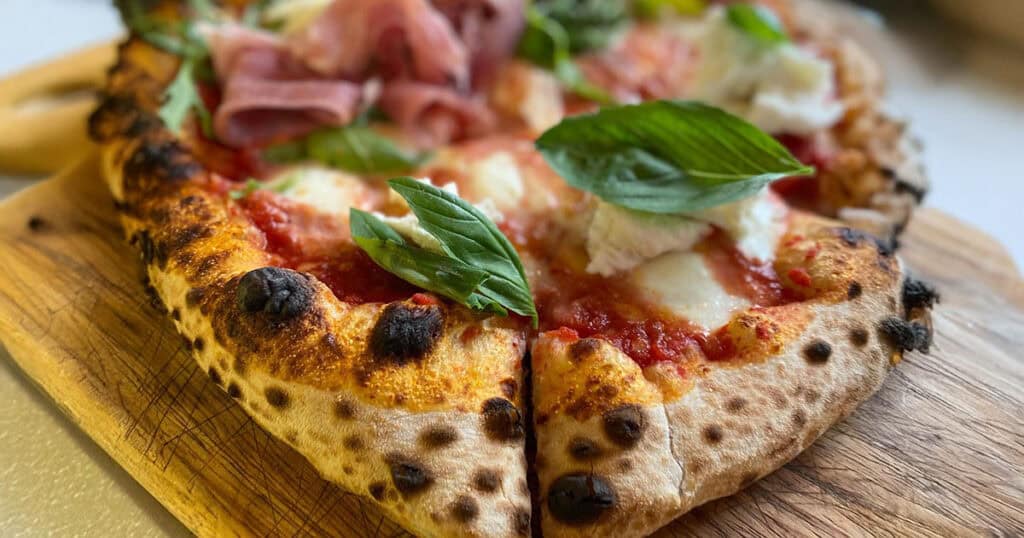
If you’re ever in town and want a quiet, honest Italian-style pie, try Salento on Venizelou Street. It’s a small spot on the corner of Venizelou and Filippou, near Dioikitirio. Mostly on the street, just a few tables and chairs, but always busy. No delivery, worth the walk. The crust is spot on, the ingredients are fresh, and there’s something quietly satisfying about eating a slice right there in the city center while life moves past you.
Pizza in Thessaloniki isn’t just food. It’s a smell that lingers in your clothes. A bite taken before you sit down. A warm box riding in the passenger seat. It holds layers. Like the best pizza, it makes room for more than one flavor at once.