
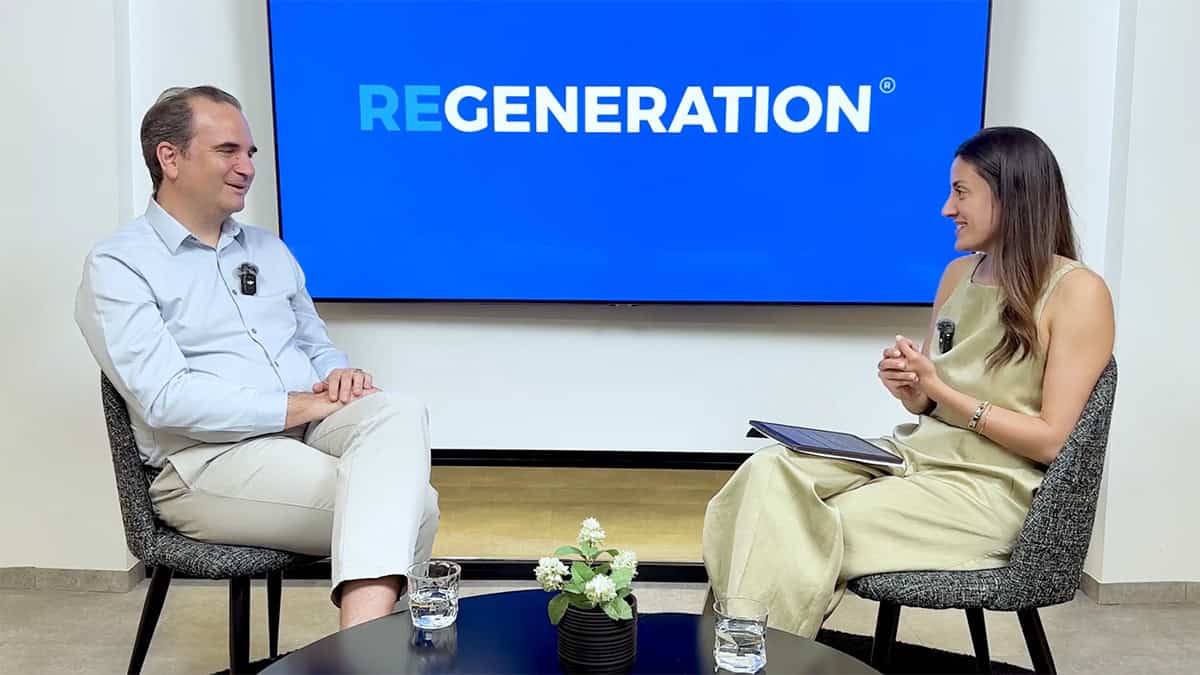
ReGeneration has helped more than 5,000 young people find employment in Greece. Michael Printzos, Country Head of The Hellenic Initiative, says the country’s next challenge is ensuring that younger workers can use their education, earn a viable living, and build careers at home.
Printzos, discussed the issue in the third episode of ReGen Talks, published July 13, 2026.
The conversation examined ReGeneration’s work connecting graduates with employers, the Greek Diaspora’s support for the program and the conditions young people need to establish careers in Greece.
Speaking in Greek, Printzos described the program’s employment results as “5,000 canceled tickets”—a way of expressing how finding work can give a young person an alternative to leaving the country without knowing whether or when they might return.
From training to paid work
Launched in 2014 during Greece’s financial crisis, ReGeneration screens candidates, trains them and introduces them to employers offering paid positions.
According to ReGeneration’s program information, participants receive professional-skills training, technical instruction and mentoring before gaining access to a network of more than 2,000 companies. Positions offered through the program must include a contract lasting at least six months and a minimum gross salary of €1,000 per month. ReGeneration reports that 90.5% of those contracts are extended beyond the initial six months.
Printzos said the program has also trained tens of thousands of people beyond those who secured work directly through it.
For him, the employment figure represents more than an organizational milestone. Each placement gives a graduate income, experience and an opportunity to begin a career without immediately looking abroad.
ReGeneration emerged when youth unemployment was near its crisis-era peak and brain drain dominated public discussion. Rather than limiting its response to research or public debate, Printzos said, the program offered a direct route from assessment and training to employment.
Why THI has stayed involved
The Hellenic Initiative has supported ReGeneration since its beginning. In a March 2026 announcement, THI said its cumulative investment in the program had surpassed $2 million and credited the partnership with helping create more than 5,000 employment opportunities.
Printzos said THI’s role has extended beyond funding. Its representatives have participated in ReGeneration’s advisory and governance work, reviewed its performance and worked with the organization as it expanded.
He described the approach as “venture philanthropy”—supporting an organization with funding and expertise while expecting it to establish a workable model and measure its results.
The relationship also reflects a broader change in how the Greek Diaspora can support Greece.
Older generations of emigrants often helped through remittances, family assistance and donations. The migration wave during and after the financial crisis included many university graduates and skilled professionals.
As they built careers abroad, they gained experience, networks and methods that could later be shared with organizations in Greece.
“The Diaspora has more than money to offer,” Printzos said. It can contribute experience, professional networks and “ways of solving problems” developed in other working environments.
The problem behind lower unemployment
Employment conditions have improved sharply since ReGeneration began, but Printzos argued that unemployment figures alone cannot show whether younger workers are progressing.
“We need to add brain waste to the discussion,” he said.
Brain drain counts the people who leave. Brain waste describes those who stay but work below their qualifications, remain professionally stalled or abandon the careers for which they trained.
Printzos offered the example of a hotel or restaurant employee who may hold two degrees, including a postgraduate qualification. That person is counted as employed even when the job has little connection to years of education.
The problem is not the work itself, but the mismatch between the worker’s training and the opportunities available.
Printzos also pointed to low salaries and housing costs, saying many younger Greeks continue to live in their family homes and struggle to plan independent lives or start families.
Greece’s improving economic indicators therefore tell only part of the story. The next question is whether that progress reaches young workers through wages, career development and positions that use their skills.
ReGeneration cannot resolve Greece’s wider problems with wages and underemployment, but its assessment, training and placement model gives graduates a clearer route into paid work.
Skills young workers will need
Asked what will help younger workers as artificial intelligence and other technologies reshape employment, Printzos identified adaptability first.
The older expectation—earn a degree, enter one profession and remain in a secure position until retirement—is becoming less reliable. Workers must be ready to keep learning as technologies, occupations and employers’ needs change.
He also emphasized clear communication: the ability to explain an idea directly, share information and work as part of a team.
His third priority was initiative. Greek society, he argued, often treats an unsuccessful idea, business attempt or career change as a permanent failure rather than experience that can improve the next effort.
Young workers need room to take risks, make mistakes and try again.
More than a decade after its launch, ReGeneration has helped thousands of young people enter the labor market. The challenge now is not only to persuade young Greeks to stay. It is to make staying a viable choice by offering work that uses their abilities, pays enough for an independent life, and gives them room to advance.