
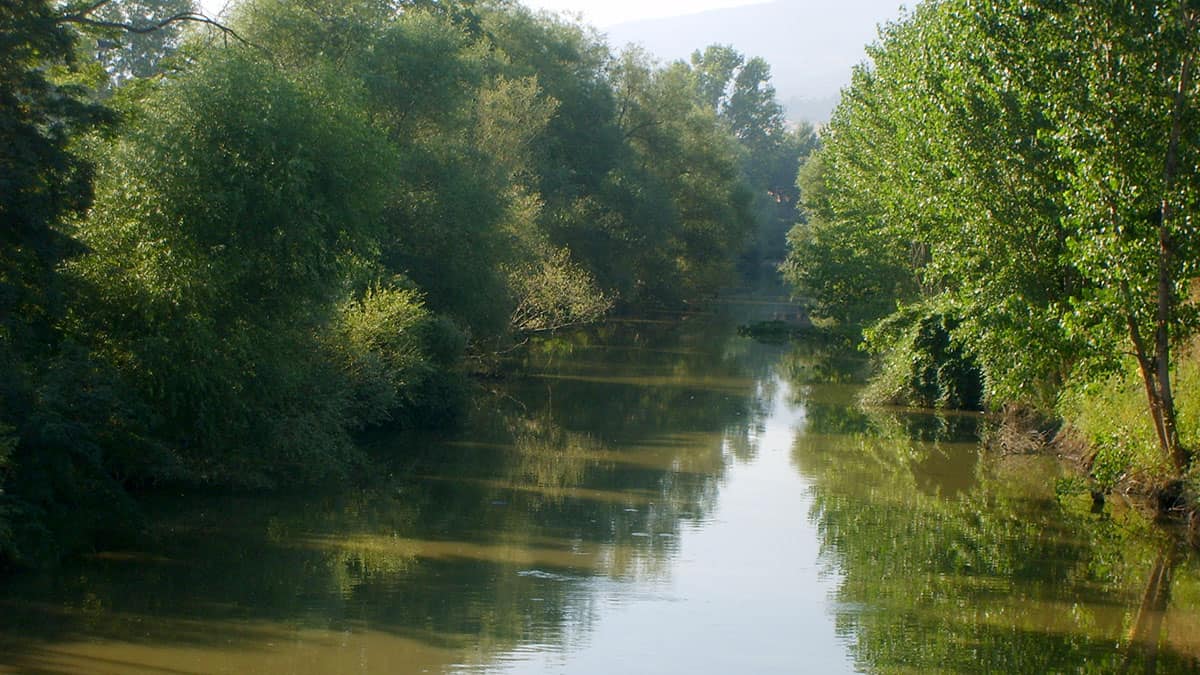
Turkey has designated the battlefield of Granicus, where Alexander the Great won his first major victory over the Persian Empire, as a protected historical and archaeological site.
The announcement came from Turkey’s Ministry of Culture and Tourism, which said the area in Biga, in the province of Çanakkale, has been registered as a “Tarihi Sit Alanı,” or protected historical site. According to the ministry, the decision followed archaeological findings, scientific research, field surveys, and ancient sources connected to the battle.
The Battle of the Granicus was fought in May 334 BCE, early in Alexander’s campaign against the Persian Empire. It was Alexander’s first major victory after crossing into Asia Minor and helped open the way for his advance across Persian-held territory.
Granicus was not just another stop in Alexander’s campaign. It was the moment when the young Macedonian king crossed from ambition into empire. After that victory, his army moved through Asia Minor and eventually toward Egypt, Persia, Central Asia, and India. The battle belongs to military history, but it also belongs to the broader memory of the ancient Greek world and its presence across the eastern Mediterranean.
Turkey’s Culture and Tourism Minister Mehmet Nuri Ersoy described the site as one of the places that changed the course of world history. In the ministry announcement, he said the area had been placed under protection in light of archaeological evidence and scientific research. He also connected the decision to historical scholarship, cultural tourism, and the development of cultural routes in the region.
The Granicus battlefield has been discussed for years by historians, archaeologists, and local researchers. The new designation gives that long-running work a formal status and places the site more clearly within Turkey’s cultural tourism map.
That effort had already been building. In 2024, Anadolu Ajansı reported that Çanakkale officials were working on an “Alexander the Great Cultural Route” and on plans to make the Granicus battlefield more visible to visitors. The project was presented as part of a wider attempt to connect the ancient landscape of Çanakkale with cultural tourism.
Recent Turkish academic work has also shaped the discussion. Prof. Dr. Reyhan Körpe of Çanakkale Onsekiz Mart University has led research connected to the battlefield and Alexander’s route through the region. Körpe’s 2025 paper, “2022-2024 Granikos Savaş Alanı Yüzey Araştırmaları: Yeni Bulgular, Yeni Sonuçlar”, notes that the exact location of the battle had remained uncertain and that earlier assumptions may have placed the fighting too far north. The more recent surveys suggest that the battle may have taken place farther south on the plain than previously believed.
That kind of work gives the story a quieter but more meaningful dimension. Archaeology here is not only about attaching Alexander’s name to a place. It is about matching ancient texts with terrain, river courses, settlement patterns, military movement, and traces left in the landscape.
In a separate 2024 report by DHA, Körpe said researchers had traced the route Alexander took toward the battlefield. The ministry, in announcing the protection, cited archaeological findings, field surveys, scientific research, and ancient sources broadly, while years of academic work in the region helped establish the case for formal protection.
That tension between historical memory and modern borders runs through more than just this site. So many places connected to the ancient Greek world now sit outside the borders of modern Greece. Some are in Turkey. Some are in Egypt, Italy, Albania, North Macedonia, or farther east. Their meaning is historical, cultural, and sometimes emotional, but their preservation depends on the modern states that govern them.
If the site is protected carefully, it may become more accessible to scholars, travelers, and anyone interested in the history of Asia Minor. If it is reduced to a tourism slogan, much of its complexity could be lost.
More than 2,300 years after Alexander crossed into Asia, the ground where his campaign first turned decisive is moving from scholarly debate and local memory toward official preservation. The battlefield remains in modern Turkey, but the history it carries reaches far beyond any modern border.