
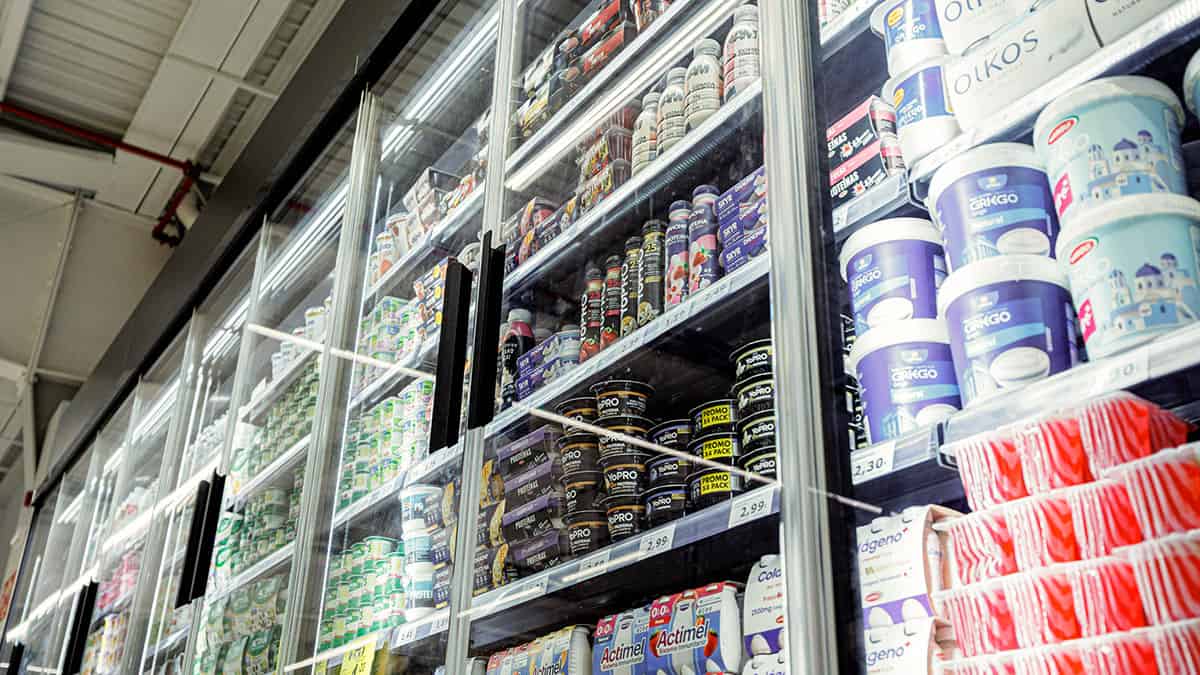
MoneyReview reported that a beer produced in Greece was listed at €2.77 per liter before VAT in the Greek market and €1.27 in Romania. Lightly concentrated tomato juice cost €2.05 per kilogram before VAT in Greece and €1.67 in Cyprus.
The report also cited a 370-gram package of branded Kalamon olives priced at €2.70 in Greece and €2.69 in Austria, along with a 150-gram plant-based dessert from a Greek producer priced at €1.45 in Greece and €1.29 in Austria.
MoneyReview did not identify the brands, retailers or dates behind those examples, preventing an independent check of each listing. Still, they capture a question familiar to Greeks who live or shop abroad: How can a product made in Greece reach a foreign supermarket shelf at the same price or less?
A new platform makes the gaps easier to find
The issue has become easier to document since the Greek government launched PosoKanei, a supermarket price-comparison platform, on June 17.
The platform initially covered more than 10,000 products. It is updated daily and provides at least two months of price history, allowing shoppers to compare listings among Greek supermarket chains and identify discounts that may not be as substantial as advertised.
The government says PosoKanei also displays foreign prices when it identifies the same product at a European retail chain. Package size, tax treatment and promotion status should still be checked before conclusions are drawn from the comparison.
The platform cannot show how the final price was divided among the manufacturer, exporter, distributor and retailer.
Why the same product can carry a different price
MoneyReview attributed the lower foreign prices partly to the commercial terms accepted by Greek producers competing for space in overseas supermarkets.
A manufacturer entering a foreign market may accept a lower wholesale price to compete with established brands or secure access to a large chain. In markets such as Germany, MoneyReview reported, large discount chains often use a reverse-auction model when selecting suppliers, placing strong pressure on the price offered.
Distribution costs, local competition and supermarket pricing strategies can push the final shelf price up or down.
These factors help explain why a Greek-made product will not automatically be cheapest in Greece. The available examples, however, do not disclose the contracts or margins needed to determine which part of the supply chain created the difference.
Food producer prices moved in opposite directions
Data from the Hellenic Statistical Authority show that producer prices for food moved differently in the domestic and export markets between December 2024 and December 2025.
According to the authority’s December 2025 report, producer prices for food products sold in Greece were 2.8% higher than a year earlier. The corresponding index for the non-domestic market was 2% lower.
The figures measure prices at the producer level, not what shoppers pay at the register. The domestic and non-domestic indices also cover different collections of goods. They do not follow the same beer, olives or tomato product from the factory to stores in two countries.
They do not establish that higher prices paid by Greek households directly financed cheaper exports.
A cheaper basket can still include costlier Greek brands
IELKA’s June comparison produced a different result at the level of the overall supermarket basket.
The Institute of Retail Consumer Goods Research used prices collected in May to compare 40 product categories in Greece and eight other European markets. The research drew on more than 6,000 prices from 48 supermarket chains.
IELKA found that its typical supermarket basket was cheaper in Greece than in Germany, France, the United Kingdom, Italy, Spain, Portugal, Romania and Bulgaria. With VAT included, the differences ranged from 4% in Portugal to 39% in Germany.
The comparison included category averages, branded products and private-label alternatives. It did not require the same brand and package to represent every category in every country.
A Greek shopper may therefore have access to cheaper local or private-label options even when a particular Greek-made brand costs less in Austria or Romania. The average basket can be cheaper in Greece while selected products carry a higher Greek price.
The difference is visible, but its source is not
PosoKanei gives shoppers and regulators more information than an isolated photograph of a foreign supermarket shelf. It can display foreign listings for the same product where available, while its price history helps shoppers identify short-lived promotions in Greece. A single comparison, however, cannot show whether a cross-border gap will last.
At the platform’s launch, Prime Minister Kyriakos Mitsotakis said prices that are higher in Greece than in other EU markets should be clearly explained when the difference cannot be justified.
That explanation cannot come from the shelf price alone. It requires an exact product match, comparable taxes and access to the commercial terms applied along the supply chain.
The comparisons show that a product’s country of manufacture does not determine where it will cost the least. When a Greek-made product remains substantially cheaper abroad after package size, taxes and temporary discounts are taken into account, the companies involved should explain where the difference began.