
Poland has recognized Greeks as a national minority, giving formal legal status to a small community whose story in the country reaches from old trade routes to the wounds of the Greek Civil War.
The decision places Greeks inside Poland’s official framework for national and ethnic minorities, a category governed by the country’s 2005 law on national and ethnic minorities and regional language. For a community that numbers only a few thousand people today, the change is more than a bureaucratic adjustment. It is a public acknowledgment that Greek life in Poland was never just a temporary refugee story or a passing chapter of Cold War history.
Greek merchants, clergy, and families had appeared in Polish lands centuries before the modern state took shape. Some were tied to the old commercial world of the Polish-Lithuanian Commonwealth. Others left traces in churches, cemeteries, and local histories. Most of that early presence eventually blended into the societies around it, as small migrant communities often do.
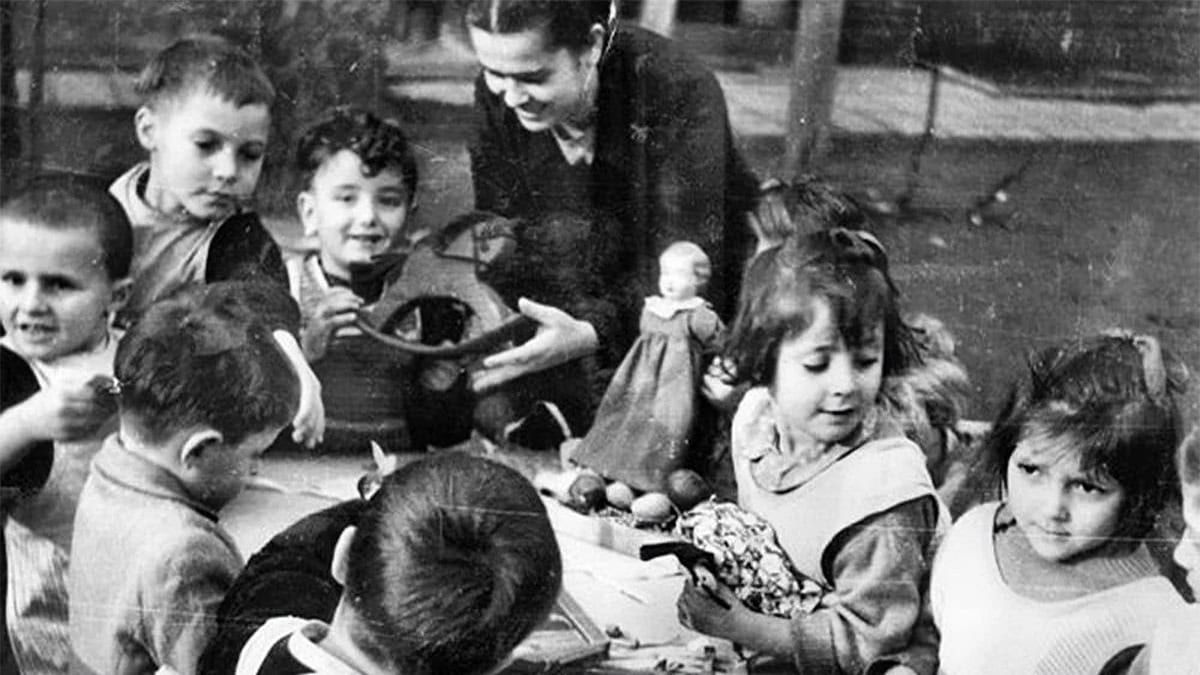
The modern Greek community in Poland carries a much more recent and painful memory. After the Greek Civil War, thousands of people from Greece were taken into the countries of the Eastern Bloc. Poland became one of the places where they tried to rebuild their lives.
Many arrived between 1948 and 1951, including children, wounded fighters, and families who had left villages and towns behind. A large number were settled in Lower Silesia, in places such as Zgorzelec, Wrocław, Bielawa, Świdnica, and nearby towns.
That geography says a lot. The Greeks did not arrive in a settled, comfortable Poland. They entered a country still recovering from the Second World War, with borders shifted west and whole populations uprooted. In the western territories, many Polish families were also newcomers, rebuilding lives in unfamiliar streets and houses. The Greek refugees were foreigners, but they were not the only people trying to belong.
Over the decades, many Greeks in Poland returned to Greece. Others stayed. Their children and grandchildren grew up speaking Polish, often with Greek words, songs, foods, names, and family stories preserved at home or in community associations. Some held on to the language. Others inherited the identity more quietly, through memory rather than daily speech.
That is one reason the recognition has a particular force. It comes after decades in which the community became smaller, more mixed, and more Polish-speaking, but did not disappear. The law does not acknowledge a large, separate population with obvious political weight. It is acknowledging a community whose Greek identity survived inside Polish life, not apart from it.
For years, the legal status of Greeks in Poland remained complicated. Under Polish law, a national minority must be made up of Polish citizens, be smaller than the rest of the population, maintain a distinct language, culture, or tradition, and have ancestors who lived on Polish territory for at least 100 years.
Earlier interpretations often treated Greeks mainly as postwar refugees, which made their case difficult under a law built around historical rootedness.
Historian and political scientist Stefan Dudra challenged that view in his 2021 article, “On the Need to Recognize the Greeks in Poland as a National Minority”. His argument rested on two connected histories: the older Greek presence in Polish lands and the organized life built by postwar refugees and their descendants.
Taken together, he argued, they showed a community with enough continuity, cultural distinction, and civic rootedness to belong under the law.
Recognition now brings that argument into the state’s official view of the country.
The practical effects will depend on how the law is used locally and by the community itself. Minority status can support cultural activity, language preservation, education, and the protection of names and identity. It can also give Greek organizations a stronger basis when they seek public support for teaching, commemorations, publishing, or cultural events.
There is also an important distinction. This is not the same as saying every Greek citizen now living in Poland belongs to the national minority in the legal sense. A recent student, worker, or business owner from Greece is part of today’s Greek presence in Poland, but Polish minority law is aimed at historically rooted communities of Polish citizens. The recognition is about inherited identity and long presence, not ordinary modern migration.
That distinction gives the story its shape. Many Greek diaspora stories are told through the familiar language of America, Australia, Canada, or Germany. The Polish story follows a different road. It is marked by exile, ideology, Cold War refuge, mixed families, return migration, and gradual assimilation. It is also a reminder that Greek history after the 20th century’s upheavals did not move only westward. It moved north and east, too.
The Greek Civil War scattered people across borders and political systems. Some carried their loss to Tashkent, Prague, Budapest, Bucharest, and Warsaw. In Poland, they built associations, raised families, and left behind a community smaller than it once was, but still present enough to be named.
For Greeks in Poland, the law does not create identity. Families did that long ago.
What the law does is finally meet them there.